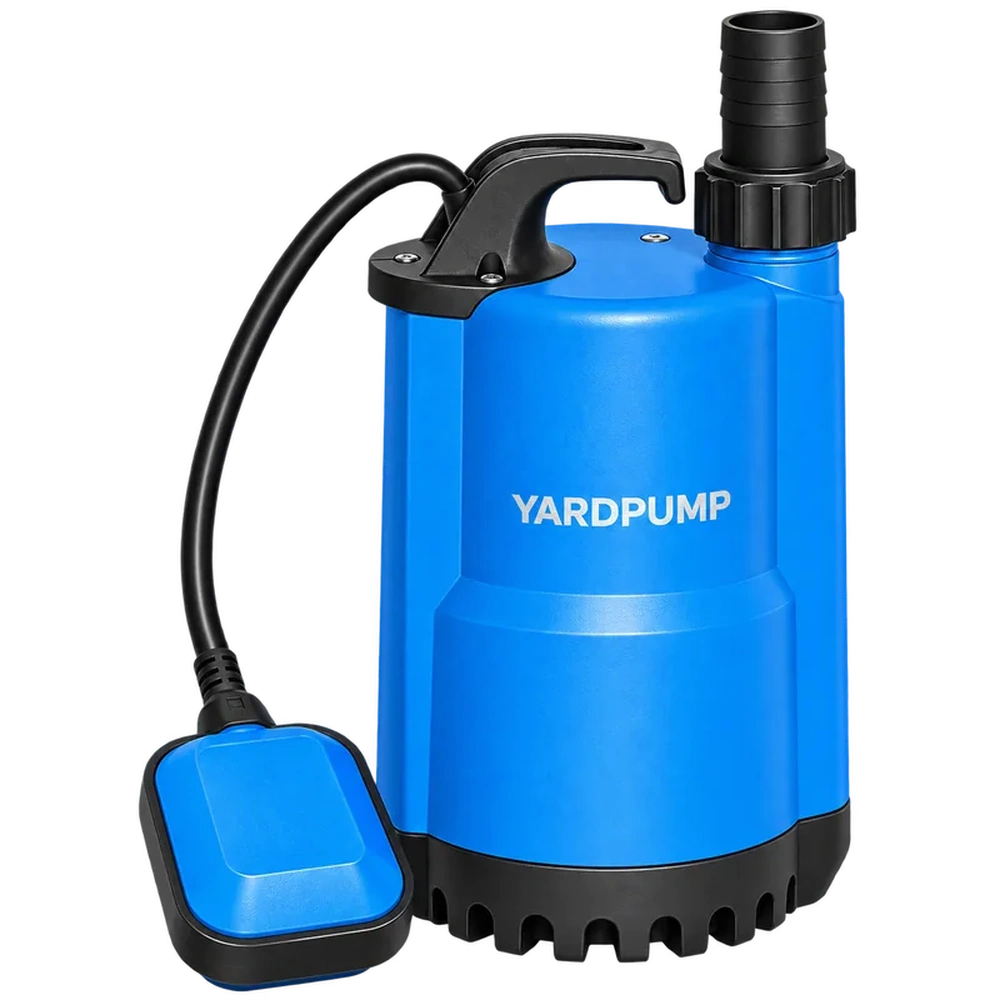
YARDPUMP BOM engineering
“Can we make the pump more premium by changing the motor housing from engineering plastic to aluminum or stainless steel?”
Housing material is highly visible, which makes it easy to use as a quality shortcut. Yet submersible motors rely on the housing to stay sealed, hold geometry and transfer heat into the surrounding liquid.
Choose the housing from the cooling path, environment and structural duty. Then validate sealing interfaces, impact, wall thickness and corrosion—not just appearance.
Think of it like this
The motor housing is both armor and a radiator
It protects the motor mechanically, but it also becomes part of the heat path from the winding to the surrounding water.
Grundfos explains that submersible cooling jackets move heat away from the stator housing through the pumped or surrounding liquid. Material and geometry therefore influence thermal behavior as well as strength.
A material that looks tougher but traps heat or complicates sealing can create a different problem.
A composite product upgrade
The heavier housing that added cost but no real service-life margin
Imagine a compact household pump moved from polymer to stainless mainly for shelf appearance. The market likes the look, but the application is clean indoor drainage with low impact and mild water chemistry.
The heavier housing adds cost and weight while seals, cable entry and motor temperature remain the actual reliability limits.
The upgrade may still support positioning, but it should not be described as universal durability improvement.
Cooling
Metal can help heat transfer, but the installation still controls cooling
Aluminum is attractive where thermal conductivity and low weight matter. Stainless offers different corrosion and structural properties but is not selected primarily for heat transfer.
Submersible cooling also depends on whether water actually moves around the housing and whether the motor remains sufficiently covered.
For OEM work, a housing change should trigger temperature-rise validation under the intended submergence and duty.
Corrosion and structure
Material grade, coating and interfaces matter more than “metal”
Xylem product specifications use stainless, cast iron and engineered composites in different locations because each solves a different combination of strength, corrosion and wear.
Plastic avoids red rust but can crack at bosses or age under heat and UV. Aluminum needs corrosion and galvanic consideration. Stainless needs correct grade, wall thickness and control of seams and crevices.
The complete housing design has to be matched to the exposure.
What QC should prove
Drop tests, wall checks and temperature matter more than tapping the shell
A practical validation set includes wall thickness, impact or drop tests, coating adhesion where relevant, sealing-surface checks and motor temperature under rated duty.
If the material changes, grounding and certification implications may also change.
That is how a housing becomes an engineered option rather than a cosmetic upgrade.
Where housing choice stops
Housing material does not redefine the liquid the pump can handle
A stainless housing does not automatically make the impeller, shaft, seals, fasteners or cable entry suitable for seawater, chemicals or sewage.
Keep the claim tied to the validated complete construction.
Engineering decision layer
What to lock before you approve this component.
The narrative explains why the decision matters. This reference layer turns that reasoning into BOM, validation and supplier-control points.
- Engineering polymer housing — corrosion resistant, light and cost effective for compact utility pumps when structural and temperature limits are respected.
- Die-cast aluminum housing — good thermal conductivity and stiffness at moderate weight, but coating and galvanic/corrosion details matter in wet service.
- Stainless-steel housing — strong corrosion positioning and premium appearance, but grade, thickness, welds and crevices determine real durability.
Polymer usually minimizes machining and finishing cost after tooling. Aluminum sits in the middle. Stainless generally adds raw material, forming/welding and finishing cost.
Housing affects structural stiffness, heat transfer, impact resistance and corrosion behavior. It does not by itself determine hydraulic performance.
Polymer can avoid red rust but may age under heat/UV/chemicals; aluminum can pit or corrode if coating is damaged; stainless life depends on grade and environment.
Common failures are cracked plastic bosses, coating blistering, galvanic attack around fasteners, dented thin shells and corrosion at seams.
Check drop/impact samples, wall thickness, coating adhesion and corrosion exposure appropriate to the target market.
Specify resin grade or alloy, wall thickness, coating system, salt-spray/chemical expectations and whether the housing is actually wetted or only a motor shell.
Housing changes can alter motor cooling, sealing interfaces, dimensional tolerances and electrical grounding, so they require engineering review.
YARDPUMP expert takeaway
Housing material should solve a real thermal, structural or corrosion problem. Validate the complete motor enclosure instead of treating metal weight or appearance as a durability score.