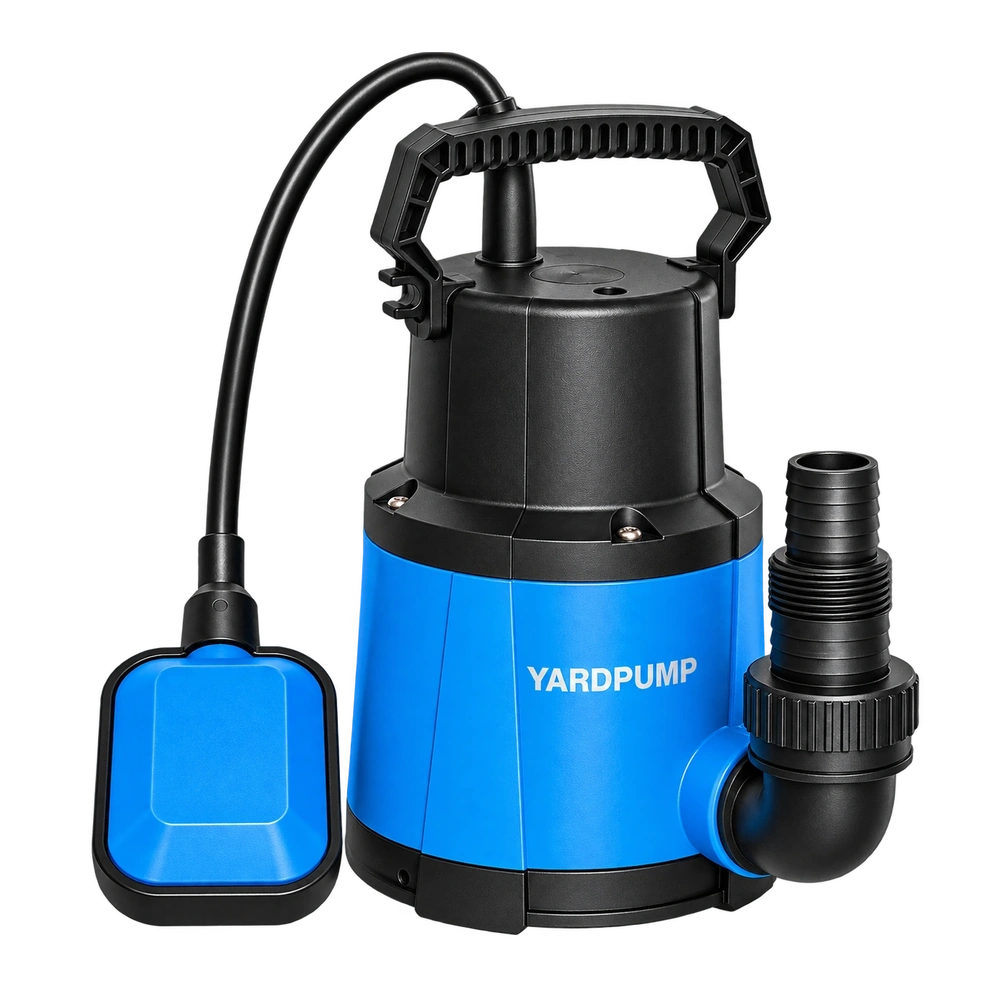
YARDPUMP BOM engineering
“If the pump has automatic thermal protection, can the customer safely let it run until it trips?”
Automatic-reset protection is common in compact motors because it can interrupt current during overheating and reconnect after cooling. That convenience is also easy to misunderstand: repeated trip-reset cycling is evidence of an unresolved fault, not normal operating strategy.
A thermal protector limits exposure after temperature or overload becomes excessive. It does not remove the cause. Persistent blockage, dry running, low voltage or overload must still be corrected.
Think of it like this
A thermal protector is a circuit breaker for heat, not an air conditioner
When the motor gets too hot, the protector opens the circuit and stops current. After the motor cools, an automatic-reset version can close again.
That action prevents some thermal damage, but it does not cool the motor during normal operation or repair the condition that caused the temperature rise.
Using repeated trips as normal control is like relying on a household breaker instead of fixing an overloaded circuit.
A composite field failure
The pump that “protects itself” every five minutes is still in trouble
Imagine a drainage pump with a partially blocked inlet. The motor heats, the protector trips, the pump cools and automatically restarts. The user sees this cycle and assumes the protection is doing its job.
In reality, each restart returns the motor to the same overloaded condition. Contacts cycle, the winding experiences repeated thermal stress and the blocked hydraulic problem remains.
The correct action is to remove the fault, not to celebrate the reset function.
How the protector works
Bimetal protection responds to temperature, current or both depending on the design
Sensata describes motor protectors that use a bimetallic snap-action disc. Motor heat and current-related self-heating raise the protector temperature until a calibrated setpoint opens the contacts.
After cooling to the reset temperature, automatic-reset versions close again. Other protection concepts can use manual reset or self-hold behavior when unintended automatic restart would create a hazard.
This means trip temperature, current rating, mounting location and reset logic all matter to the finished pump design.
Placement matters
A protector cannot sense winding temperature well if it is thermally disconnected from the winding
The closer the protector tracks the actual motor thermal condition, the more meaningful the trip behavior becomes. Poor placement or weak thermal coupling can make protection late or inconsistent.
At the same time, the protector must handle the motor current and electrical environment for which it is intended. A random device with the right temperature number is not automatically suitable.
For OEM work, the protector is part of the electrical construction and should be treated as a controlled component.
What validation should prove
Trip time and reset behavior belong in engineering tests, not just the datasheet
A controlled validation can examine blocked-flow or locked-rotor scenarios using safe engineering methods, recording current, winding temperature, trip time and reset behavior.
The purpose is to confirm that the protector interrupts the dangerous condition before insulation reaches unacceptable exposure while avoiding nuisance trips during valid operation.
If the pump repeatedly cycles under a persistent fault, the product instructions and system design should make clear that the condition requires correction.
Where thermal protection stops
A protector is not a substitute for application limits or external safety devices
Dry running, stalled impellers, wrong voltage, excessive starts and operation outside the allowed duty can still damage a pump. Some applications also require external overcurrent, leakage or system protection beyond an internal thermal device.
For the current YARDPUMP range, thermal protection should be described according to the verified model behavior, including the automatic-reset characteristic where applicable.
Engineering decision layer
What to lock before you approve this component.
The narrative explains why the decision matters. This reference layer turns that reasoning into BOM, validation and supplier-control points.
- No internal thermal protector — lowest cost but places full responsibility on external protection and correct operation.
- Embedded bimetal / automatic-reset protector — common in compact pumps to interrupt current if winding or motor temperature becomes excessive.
- Sensor-based or manual-reset protection — can offer more controlled behavior in professional systems but adds control complexity.
Thermal protection is a small BOM item relative to a motor replacement, but trip temperature, current capacity, reset logic and placement determine value.
A protector does not make dry running or overload harmless; it limits thermal exposure after a threshold is reached. Repeated trips still indicate an installation or selection problem.
Correct protection can prevent some insulation damage, while nuisance cycling or incorrect placement can create reliability complaints.
Failures include protector contact fatigue, poor thermal coupling, incorrect set point and repeated auto-reset cycling under a persistent fault.
Test stall/blocked-flow scenarios safely in engineering validation, record trip time and winding temperature, and confirm reset behavior.
B2B buyers should specify trip/reset behavior, test method and whether protection is integral to the certified electrical construction.
Protection changes may affect certification and safety documentation; it should not be treated as a casual optional accessory.
YARDPUMP expert takeaway
Thermal protection should buy time, not normalize a fault. Specify the trip and reset behavior, validate it with the motor, and treat repeated trips as a problem that still needs a root cause.