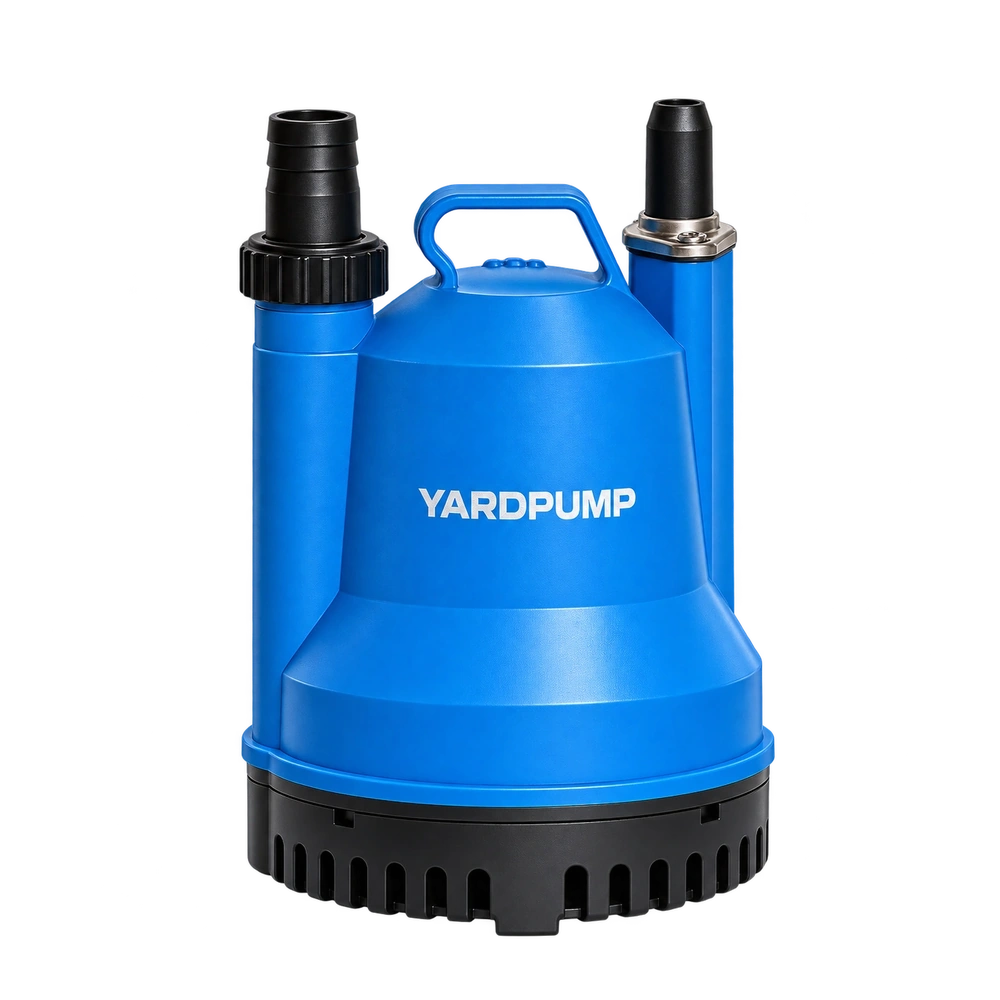
YARDPUMP application expert
“My basement is filling with water. What pump should I use, and why is the pump I have running without moving much water?”
Emergency drainage creates pressure to act fast, but official flood guidance warns that electricity and structural pressure can make “pump it out as fast as possible” the wrong first move. Pump troubleshooting only begins after the space itself is safe.
Do not enter or energize equipment in a flooded area until electrical hazards are controlled. For significant basement flooding, pumping may need to be gradual because saturated soil outside the walls can create dangerous pressure differences.
Safety first
A flooded basement is an electrical and structural event before it is a pump problem
Floodwater can reach outlets, appliances, extension cords and wiring. Official recovery guidance advises against using flooded electrical equipment until it has been checked and emphasizes shutting off affected power safely.
There is also a less obvious risk: if the ground around a basement is saturated, removing all the water inside very quickly can leave outside soil pressure pushing inward on the walls and upward on the slab. FEMA and Red Cross guidance both warn about rapid basement pumping under these conditions.
For substantial flooding, follow local emergency guidance and qualified contractor advice. A portable pump is useful only after the pumping plan itself is safe.
Think of it like this
The water inside the basement can temporarily be part of the pressure balance
Imagine pushing on both sides of a thin panel with equal force. Now remove the force from one side instantly while the other side remains. The panel suddenly sees a much larger net load.
A flooded basement can face a similar pressure-balance issue when surrounding soil remains saturated. Pumping changes the inside water level faster than the outside groundwater pressure can disappear.
This is why maximum pump speed is not automatically the safest goal during major flood recovery.
A composite emergency sequence
The pump runs, but no water moves: diagnose the path in order
Assume the area is electrically safe and the pump is permitted to operate. You lower the pump into standing water, the motor runs, but little or no water appears at the discharge. Randomly unplugging, shaking and reconnecting it can waste critical time.
Start at the intake: is it submerged and free of debris? Then follow the water path: is the hose kinked, blocked, frozen, elevated beyond the pump’s useful head or fitted with a closed valve? Next consider air lock if the installation and pump design make that possible.
Only after the hydraulic path is checked should you suspect internal damage, incorrect electrical supply or a pump that is simply outside its performance range.
Air lock versus blockage
A running motor does not prove the pump is moving water
Some submersible installations can trap air in the pump or discharge path. Manufacturer troubleshooting manuals often list air lock separately from clogged intake, obstructed impeller and float problems because the symptoms can look similar from outside.
The correct remedy depends on the model and installation. Some designs use anti-airlock features or specific venting requirements. Do not drill, modify or improvise a vent unless the manufacturer specifies it.
A systematic diagnosis protects both the pump and the user: intake, discharge, head, air, control, then internal fault.
Do not run the wrong pump dry
Emergency use is not permission to ignore operating limits
As the water level falls, the pump may begin to uncover. Some pumps are designed for low-level or intermittent shallow-water operation; others depend on submergence for cooling or lubrication.
Continuous-duty and dry-running tolerance are separate specifications. A pump can be rated for continuous operation while properly submerged and still be unsuitable for continuous dry running.
The final cleanup stage may therefore need a different tool from the bulk dewatering stage.
Where this guide stops
Contaminated floodwater, sewage and damaged electrical systems need professional handling
Floodwater may contain sewage, chemicals, sharp debris or biological contamination. Structural movement, gas odors, damaged wiring or active sewage backup move the situation beyond normal household pump troubleshooting.
Use official local emergency guidance and qualified trades where those hazards are present. Pump selection is secondary to safe recovery.
YARDPUMP expert takeaway
In emergency dewatering, the fastest pump is not the first decision. Make the space safe, understand the pressure and contamination risks, then diagnose the water path in a fixed order instead of improvising around an energized pump.