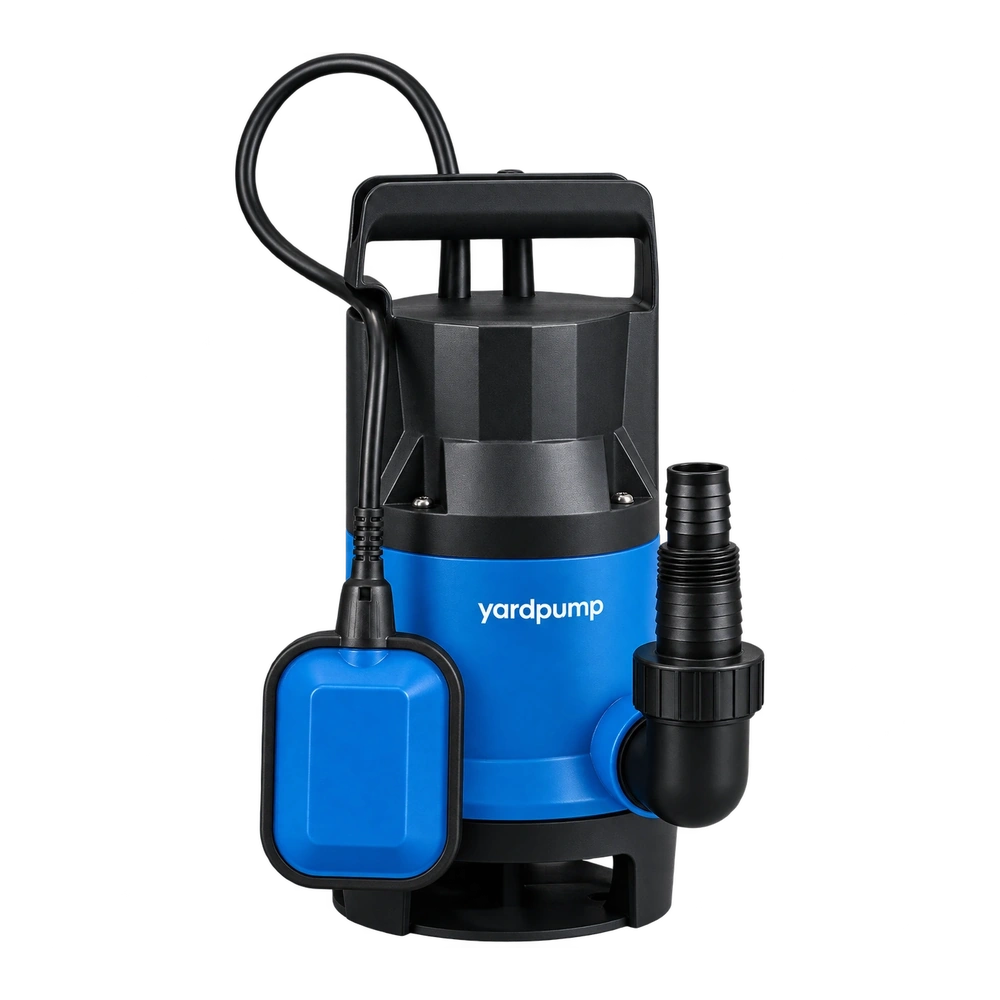
YARDPUMP BOM engineering
“The cable jacket is waterproof, so why do we need a special molded or anti-wicking cable entry?”
Submersible-pump manufacturers devote specific engineering to cable entry because sealing the outer jacket is only the first barrier. If the cable is damaged, water can travel along conductor paths unless the design includes another stop.
A reliable entry seals the cable mechanically, resists movement and blocks capillary water migration. The entry must be validated as part of the complete submerged enclosure.
Think of it like this
A cable can behave like a drinking straw for water
If the outer jacket is damaged, tiny spaces between conductors and insulation can form a capillary path. Water does not need a large visible hole to travel along that path.
This is why anti-wicking designs add a second barrier inside or around the conductors instead of relying only on the outer cable jacket.
The pump entry therefore has to stop both external leakage and internal migration.
A composite return analysis
The pump leaked even though the cable gland looked tight
Imagine a returned pump with a tight-looking gland and moisture inside the motor cavity. The obvious assumption is that the gland seal failed.
Closer inspection finds a cut farther up the cable. Water migrated along the conductors and bypassed the outer-jacket seal.
This is the failure mode that anti-wicking conductor blocks or epoxy barriers are designed to interrupt.
First barrier
Compression around the cable must be consistent without damaging it
Flygt describes cable-entry sealing as a controlled compression between the grommet, cable and pump body. The geometry and assembly force have to be repeatable.
Too little compression risks leakage. Too much can damage the cable or elastomer and create another failure mechanism.
That makes gland material, dimensions and assembly process part of the enclosure design.
Second barrier
Anti-wicking design protects against damage outside the pump
Some submersible pump specifications use a secondary epoxy or isolated-conductor barrier so that even if the outer jacket is damaged, water cannot migrate freely along the conductor path.
Xylem also warns that unsealed wire ends can allow water to travel down conductors into a pump housing in bilge applications.
This is a powerful reminder that electrical cable can become a fluid path unless the design explicitly blocks it.
QC at the entry
Pull, bend and immersion tests reveal more than visual inspection
A cable entry that looks correct may leak after repeated bending, twisting or pulling. Handling tests therefore belong with immersion or leak validation.
Returned entries should be sectioned when possible to identify whether water passed around the jacket, through damaged rubber or along the conductors.
For OEM sourcing, this evidence is more useful than simply specifying “IP68 cable gland.”
Where this guide stops
Cable-entry architecture can affect certification and cannot be casually substituted
Changing cable diameter, jacket, gland or molded entry can alter compression, strain relief and enclosure performance. The exact construction should be revalidated after changes.
For users, the rule is simpler: never lift the pump by the cable and replace damaged submerged cords rather than patching them informally.
Engineering decision layer
What to lock before you approve this component.
The narrative explains why the decision matters. This reference layer turns that reasoning into BOM, validation and supplier-control points.
- Compression gland / stuffing-box entry — economical and serviceable when correctly sized and assembled.
- Molded cable entry — can improve repeatability by sealing around the cable geometry.
- Anti-wicking conductor block — adds a barrier to reduce capillary water migration along damaged cable conductors.
Cable-entry cost is small compared with a flooded motor, but molded or anti-wicking designs add tooling and process steps.
The entry does not change pump flow; it protects the electrical cavity from a common water-ingress path.
Long-term reliability depends on compression, rubber aging, cable movement and whether water can wick along conductors after jacket damage.
Failures include loose glands, cut grommets, cable twist, capillary ingress and water tracking to terminals.
Perform pull, bend and immersion/leak tests on production samples; section failed entries to find the actual ingress path.
B2B buyers can specify gland material, pull force, pressure/leak test and anti-wicking architecture for higher-spec lines.
Cable-entry changes often affect IP testing and certification.
YARDPUMP expert takeaway
Treat the cable entry as a pressure boundary, not a rubber accessory. Seal the jacket, control strain and block conductor wicking so one damaged cable cannot become a hidden water path into the motor.