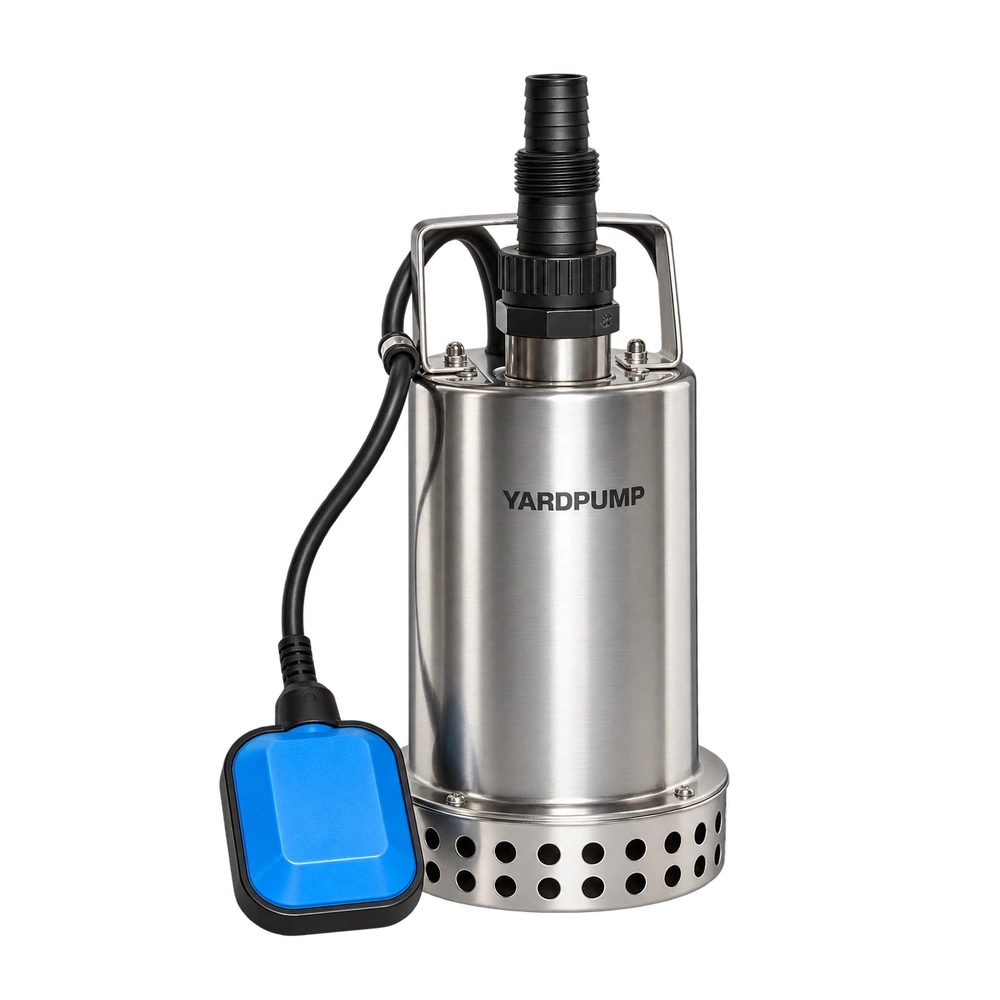
YARDPUMP BOM engineering
“Can we reduce the standard cable from 10 m to 5 m to save cost? Customers can just use an extension lead if they need more.”
Cable length is often treated as packaging or accessory cost, but real pump installations are pits, tanks, basements and outdoor areas where the nearest safe power point may not be close. The shorter the factory cable, the more likely the installation depends on another connection in a wet environment.
Choose cable length and construction from the installation and target market, then validate conductor size, jacket, plug and strain relief as part of the pump—not as an afterthought.
A composite cost-down decision
Saving five metres of cable can move cost out of the BOM and into the customer’s installation
Imagine an OEM program reducing cable length from 10 m to 5 m to hit a target price. The factory saves material and carton volume. In the target market, however, many users place the pump in pits or outdoor tanks farther from the outlet and add whatever extension lead is available.
The product is now cheaper, but the installation contains an extra connector, unknown conductor size and another point exposed to handling and moisture.
That does not mean every pump needs the longest cable. It means cable length should be a deliberate application decision rather than an invisible cost-down.
Think of it like this
The cable is the pump’s bloodstream and its lifeline at the same time
The conductors carry current to the motor, while the jacket and entry protect that path through a wet and mechanically demanding environment. Making the cable longer changes voltage-drop margin and packaging; making it tougher changes flexibility, abrasion and chemical resistance.
Damage near the pump end is especially serious because the cable entry is part of the water barrier. A cable that looks fine in the middle can still compromise the pump if its gland, molded entry or strain relief is poorly designed.
This is why lifting a pump by the power cable is a reliability problem, not merely bad handling etiquette.
Jacket and environment
PVC-style and heavy-duty rubber constructions are designed for different service expectations
Flexible rubber cable types such as H07RN-F are used broadly in wet, outdoor and mechanically demanding environments. Cable suppliers describe resistance to oil, UV and heavy mechanical stress as key characteristics of these constructions.
A lighter cable construction may be perfectly adequate for a controlled installation. The correct choice depends on destination-market requirements, exposure, flexibility, temperature and mechanical abuse.
The useful BOM language names the cable standard or construction and conductor cross-section instead of using vague descriptions such as “waterproof cable.”
Length changes more than cost
Longer cable adds copper, voltage drop, packing volume and certification implications
Adding cable length increases conductor resistance and can affect voltage available at the motor, especially when conductor cross-section is small or supply voltage is already marginal. It also changes pump weight, carton layout and shipping volume.
Changing plug style or cable construction can affect market approvals and labeling. A seemingly simple 5 m versus 10 m option therefore belongs in configuration control.
For OEM offers, cable length should be paired with conductor size and target electrical market rather than quoted as an isolated accessory.
QC at the cable entry
The most expensive cable failure may start in the cheapest centimetres
A cable can meet its nominal specification and still fail at the pump if the gland is loose, the bend radius is poor, the conductor is damaged during assembly or water can wick along a damaged path.
Useful validation includes pull force, bend/flex checks, visual inspection of cable markings and conductor size, and leak or immersion testing of the complete entry.
For returned pumps with water ingress, sectioning the cable entry can reveal more than replacing the motor and recording “electrical failure.”
Where this guide stops
Cable suitability and electrical safety are market-specific
Required cable types, plugs, grounding, protective devices and installation practices differ by market and product scope. The correct BOM must be checked against the applicable electrical and safety requirements.
Do not infer that one cable designation is universally required or suitable simply because it is heavy-duty.
Engineering decision layer
What to lock before you approve this component.
The narrative explains why the decision matters. This reference layer turns that reasoning into BOM, validation and supplier-control points.
- Shorter 5–6 m cable — lower cost and easier packing when the outlet is close to power.
- Longer 8–10 m cable — reduces extension-cord dependence and is often better for pits, tanks and outdoor drainage.
- PVC-style cable constructions — economical for many controlled environments.
- Heavy-duty rubber cable such as H07RN-F-type constructions — flexible and intended for demanding wet/outdoor/mechanical environments when required by market design.
Cable cost rises with copper cross-section, length, jacket compound, approvals and molded plug. Ten meters can materially change BOM cost in a low-cost pump.
Too-small conductors or long extension leads create voltage drop and heat. Jacket flexibility affects handling but not hydraulic performance.
Cable life is affected by flexing, oil/chemical exposure, UV, abrasion, strain relief and water entry at the pump end.
Failures include cracked jackets, broken conductors at the gland, loose molded plugs and water migration along conductors.
Inspect cable markings, conductor cross-section, bend/flex performance and pull-out force; test the complete entry, not only the cable.
OEM buyers should specify length, conductor size, jacket standard, plug, approval marks and pull/strain-relief testing by destination market.
Longer or different cable may affect packaging, certification and motor voltage-drop margin.
YARDPUMP expert takeaway
Cable length and jacket belong in the engineered product definition. Choose them from the real installation, then verify conductor size, entry sealing and market compliance instead of pushing the risk into an extension lead.