YARDPUMP BOM engineering
“Which control should we offer as the premium option—tethered float, vertical float or electronic sensor?”
Real sump discussions show why there is no universal premium control. Tethered floats need room, vertical floats use less space but typically have shorter travel, and electronic sensors can fit compact installations while introducing sensing and fouling considerations.
Choose control architecture from the available space, desired start/stop levels, inflow pattern and liquid condition. “More advanced” does not mean “better” when the control cannot achieve the required cycle in the real pit.
A real market pattern
The narrow pit that turned switch travel into the main pump specification
A homeowner with a narrow, deep sump described the pump cycling roughly every 15 seconds during heavy rain. A standard switching range removed only a small water volume before restarting, while a wider electronic high/low arrangement promised a much larger working volume.
The problem was not simply whether electronic sensing was newer technology. It was whether the control could use more of the available pit height without interfering with the inlet or backup strategy.
This is exactly how an OEM control choice should be framed: geometry, levels and cycle behavior first; technology label second.
Think of it like this
A level control is a thermostat for water volume
A thermostat does more than detect temperature; its on/off band affects how frequently equipment cycles. Pump level control is similar. The distance between start and stop determines how much water is removed per cycle.
A very narrow switching band can create frequent starts in a fast-filling basin. A wider band can reduce cycling but may require more physical space and may allow a higher water level before the pump starts.
There is no best band in isolation—only the band that fits basin volume, inflow and the allowed high/low water levels.
Mechanical floats
Tethered and vertical floats trade swing space against switching travel
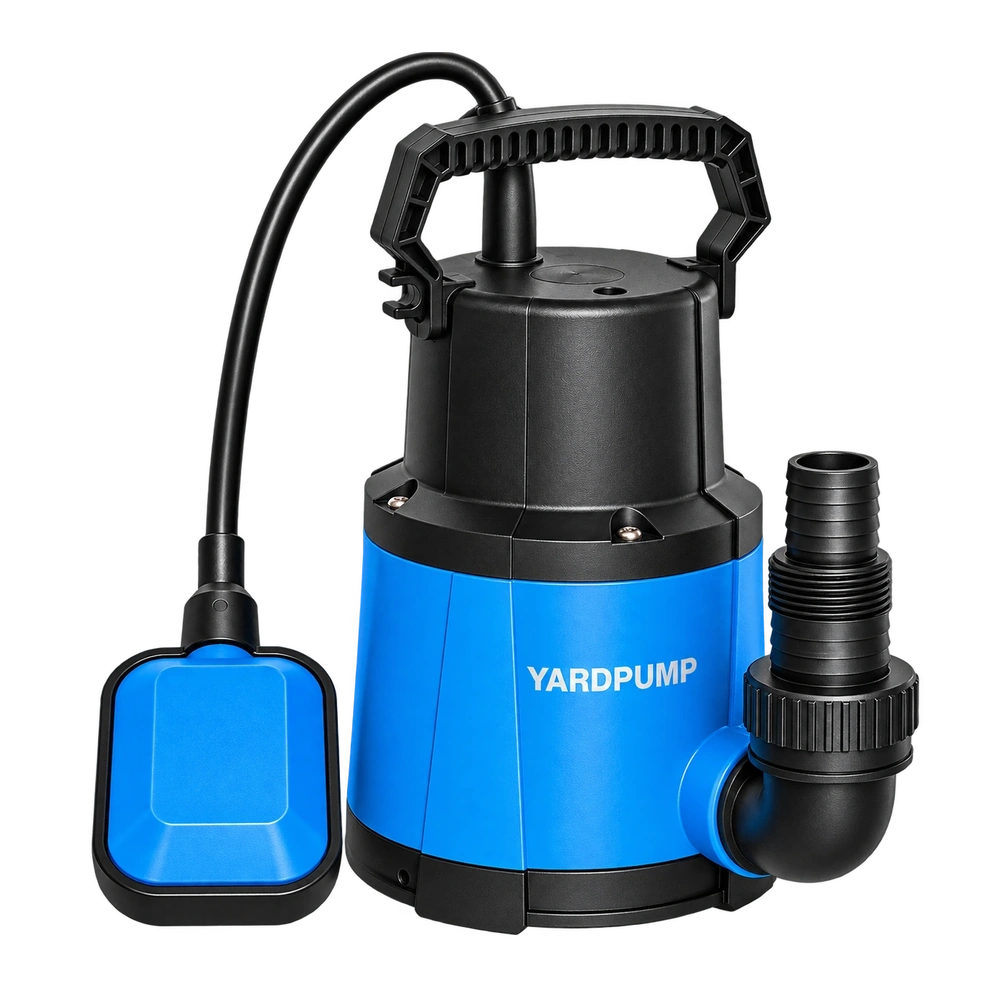
A tethered float is simple and proven but requires room to swing without hitting walls, pipes, cables or a second pump. Its cable length and attachment point become part of the switching geometry.
Vertical or compact floats fit tighter pits because they move within a smaller footprint, but the travel and resulting working volume may be more limited.
Manufacturer guidance on float placement emphasizes clearance, spacing and start frequency because mechanical control reliability depends directly on the physical installation.
Electronic sensing
Removing the large float removes one failure mode and introduces others
Electronic water-level sensors can fit compact spaces and avoid a swinging mechanical body. Their performance depends on the sensing principle, water properties, contamination, electronics protection and control logic.
Conductive or fouling liquids can behave differently from clean water depending on the sensor design. A failed sensor also needs a defined fail state: off, on, alarm or another controlled behavior.
For an OEM program, the correct comparison includes cycle endurance, contamination testing, start/stop repeatability and behavior after power interruption.
QC is about repeated behavior
One successful bucket test proves almost nothing about an automatic control
A switch that starts and stops once on the inspection bench may still stick after thousands of cycles, behave differently with debris or change its trigger level when cable routing shifts.
A meaningful control validation repeats cycles, measures actual start and stop levels, checks minimum pit geometry and introduces representative contamination where appropriate.
The goal is to validate the complete pump-plus-control behavior rather than the switch as a separate purchased part.
Where this choice stops
High-consequence drainage needs system-level backup and alarms
A reliable float does not make one pump a complete flood-protection system. Where water damage consequences are high, backup capacity, power-loss planning, high-level alarm and discharge capacity may matter more than the primary switch type.
Control selection should therefore fit the risk level as well as the pit.
Engineering decision layer
What to lock before you approve this component.
The narrative explains why the decision matters. This reference layer turns that reasoning into BOM, validation and supplier-control points.
- No float / manual pump — simplest and compact, but requires supervision or external control.
- Tethered float switch — inexpensive and robust, but needs swing space and can snag on walls/cables.
- Vertical or compact float — fits narrower pits but usually has a shorter switching travel.
- Electronic water sensor — compact and convenient with no large moving float, but depends on sensing logic and water conductivity/design.
Manual designs have the lowest BOM cost. Mechanical floats add switch/cable cost; electronic sensors add circuitry, potting and validation.
Control type affects start/stop behavior and unattended operation, not the pump curve itself.
Mechanical floats wear at hinges/cables; sensors can foul or behave differently with contaminants. Frequent cycling can shorten motor and switch life.
Failures include stuck floats, cable interference, welded contacts, fouled sensors and rapid cycling.
Cycle-test controls, verify start/stop repeatability, test minimum pit size and include representative debris where appropriate.
B2B buyers should define start/stop levels, switching cycle endurance, fail state, cable length and target-market electrical approval.
Changing control can alter residual water level, pump geometry and certification.
YARDPUMP expert takeaway
Do not sell control technology as a hierarchy. Specify the water levels, pit dimensions, working volume and liquid first, then choose the simplest control that can repeat that behavior reliably.