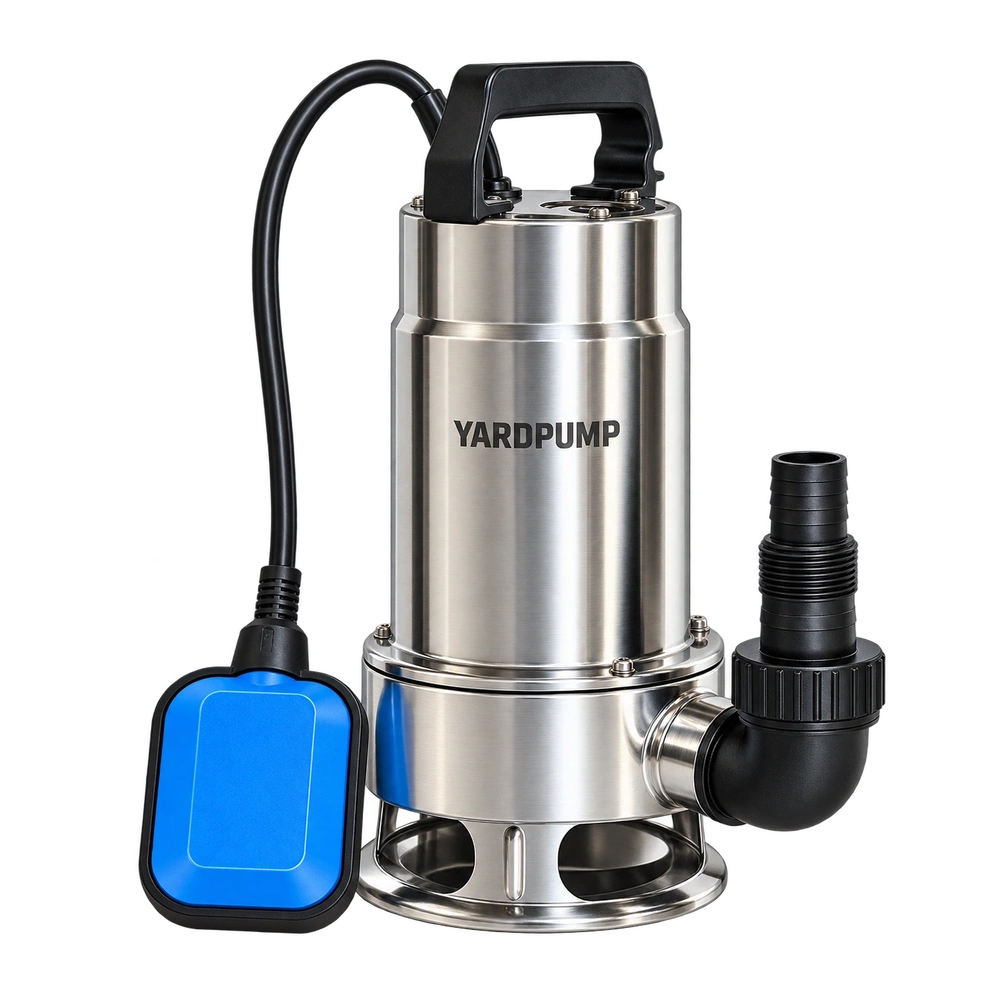
A replacement impeller slides onto the old shaft of a dirty-water submersible pump. The supplier says its diameter, bore and vane direction match, so the original nut should work. Before ordering, check what locates the impeller, how the threads engage and what keeps the assembly from loosening. A fitting bore establishes only part of the geometry. A nut that starts on the shaft can still reach a stop without clamping the hub against its intended face. Verify the approved combination before the water test.
Do not infer the fastener from the running direction
Impeller rotation and thread hand are separate pieces of information. A pump may use a shaft nut, screw, threaded hub or another retention arrangement. Do not guess that it must tighten itself during rotation, or use a different nut, omit a locking part or change motor wiring to suit a spare. Match the model and serial to the approved drawing. Confirm the shaft end, fastener specification and thread hand, specified hardware, locating faces and running clearance.
Retention can also depend on a seating face, sleeve, washer or approved locking process. A bore match does not establish that the dimensions still match after tightening. If the old part is worn or its service history is unknown, use the approved drawing and kit. Do not assume an unidentified washer removed from a return was part of the original design. Have the manufacturer or authorized service assess an older pump with missing documentation. Do not make a spare fit by recutting threads, enlarging a bore or adding arbitrary washers.
Check what the fastener actually clamps
In an illustrative comparison, two impellers have equal diameter and bore, but the replacement hub is shorter along the shaft. Torque can rise because the nut reaches the end of its travel rather than because the hub is clamped. With a longer hub, the original washer arrangement may instead leave insufficient thread engagement. Both can look tight from outside. Do not release either on the final torque reading alone. Qualified staff check seating, effective engagement and clearance against the drawing, separating actual clamping from bottoming or contact elsewhere.
Ask the supplier to show the shaft shoulder, hub faces, washer and fastener contact points and the critical dimensions after assembly. Use the actual revision for a trial fit under the approved method. Verify part identities and orientation. If the part is intended for several shaft versions, confirm each permitted combination. One verified unit does not cover pumps with the same housing and a different shaft end.
Verify the complete pump after fitting the approved parts
Have qualified service isolate the equipment and relieve pressure as required before disassembly. Confirm assembly, retention and running clearance before using the approved wet test. Check flow, head, load and unusual rubbing under the allowed conditions. For a dirty-water pump, also check the agreed passage and delivery conditions. Users should not run a motor in reverse as a trial or substitute unapproved locking hardware. The release record should identify the impeller, shaft hardware and compatible pump versions together. If retention is still unresolved, keep the approval open. The fact that the impeller slides onto the shaft is not sufficient for sale.
Keep removed nuts and washers in a bag marked with the pump serial, and photograph both sides and the original orientation. That evidence helps reconstruct the assembly but does not authorize reuse. Ask the supplier for the approved shaft assembly detail or a dimensioned service confirmation. Record the old stack thickness, the new installed position and the locking part number. A photograph that does not show the seating face is not enough to approve a batch.
Frequently asked questions
Does running direction tell me whether the retaining thread is left- or right-hand?
There is no general rule. Use the approved shaft, hardware and drawing for the exact version.
Does the specified tightening torque prove the hub is clamped?
No. A stop or interference can raise torque. Check seating and effective thread engagement.
Must I replace the locking washer with every impeller?
Follow the approved parts and service instructions. Replacement and reuse depend on the particular retention arrangement.