The buyer’s starting point
Signing off a sample proves that you accepted that particular pump. It does not, by itself, ensure that every production order will be built to the same configuration. An OEM buyer needs to approve a reproducible product revision—not merely a good-looking sample.
A good sample can still lead to a difficult second order
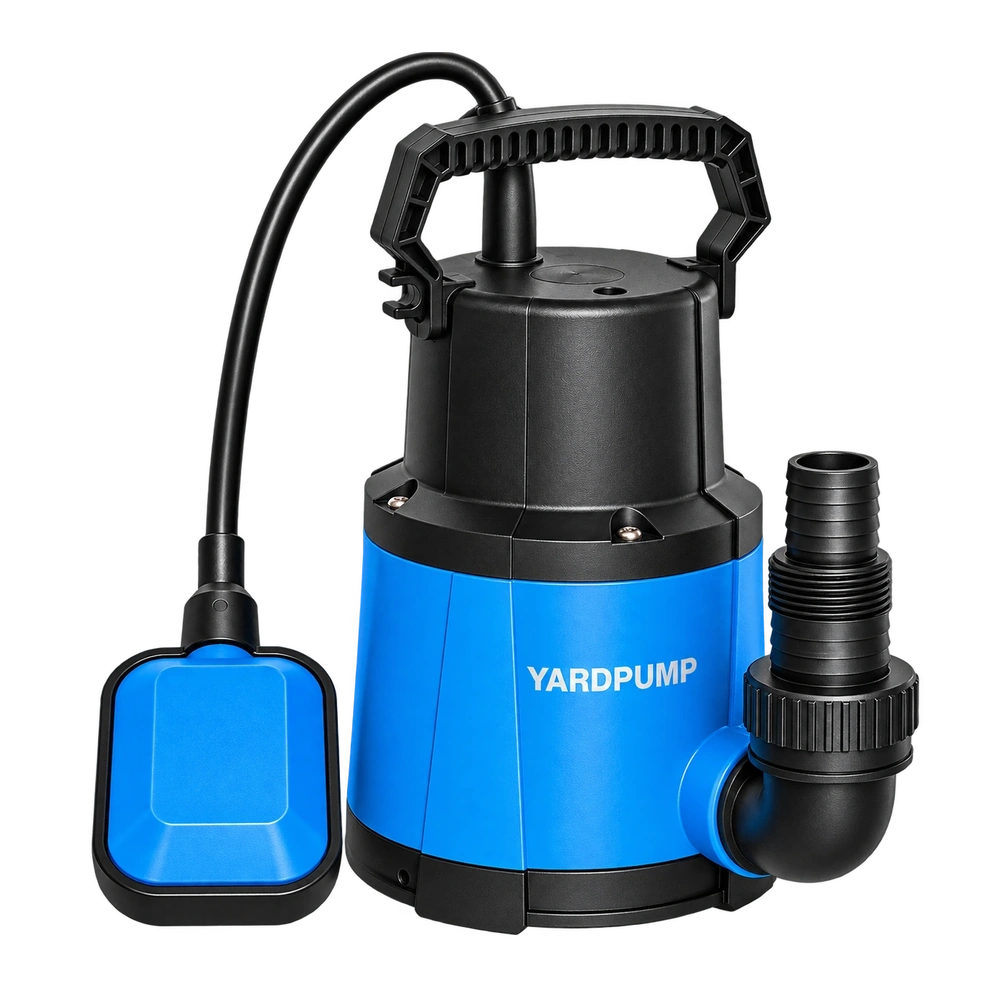
Consider an illustrative scenario. A private-label brand approves a 750 W submersible pump after reviewing its appearance and operation. Months later, the next shipment carries the same model number and body color, yet the plug, cable length or supplied hose adaptor differs from the original sample. The retailer sees one SKU. The service desk has to explain two different packages. This is a hypothetical procurement example, not a claim about any YARDPUMP shipment.
The weak link is often not the sample itself but the approval record. If the team cannot identify the sample number, revision, electrical configuration, product markings, packaging artwork, inspection criteria and permitted substitutions, purchasing, production and after-sales may each be working from a different version of the truth.
Make the golden sample a controlled approval package
A golden sample is most useful when it is connected to an approved written specification. Similar wattage and appearance do not prove equivalent duty-point performance, liquid compatibility, control behavior or electrical suitability. Ask for a short, unambiguous record of the following:
| Control point | What to freeze | What can go wrong |
|---|---|---|
| Identity | Family, model, power version, sample ID and revision | Different builds share one sales name |
| Application | Liquid, solids limits, required duty point and operating mode | Maximum flow is mistaken for delivered flow |
| Electrical | Rated voltage/frequency, plug, cable type and length | Wrong destination-market version |
| Interface | Float/manual control, outlet, adaptor and accessories | Installation does not match the listing |
| Construction | Approved critical components and substitution rules | Undocumented part changes |
| Retail package | Nameplate, manual, barcode, box, carton and languages | Listing and service information diverge |
| Acceptance | Inspection points, criteria and traceability marks | No evidence when a claim arrives |
A sample approval is not blanket approval for future changes
After sign-off, a supplier may propose a different capacitor, seal, cable, connector, package or label. The buyer should first ask whether the change affects electrical safety, performance, regulatory requirements, compatibility or an end-customer promise. Not every cosmetic change calls for a complete requalification; equally, “it works the same” is not a substitute for documented review.
Use a concise engineering-change record: before/after configuration, reason, affected model and batches, risk assessment, documents or tests to repeat, approving person and first applicable order. Changes touching electrical safety, sealing or critical performance need competent technical review and applicable market-specific checks.
Four handovers between sample and shipment
| Stage | Evidence to request | What is insufficient |
|---|---|---|
| Sample review | Sample ID, photos, test conditions, open issues | A positive chat message |
| Specification freeze | Approved revision, critical configuration, artwork | A quote listing only wattage |
| First-production check | Difference list against approved revision | Photos of sealed cartons only |
| Batch traceability | Order, batch, change record and inspection outcome | Tracking number alone |
A question buyers can send to the supplier today
“Please confirm the sample ID and specification revision for this order, including electrical version, outlet and accessories, critical components, packaging/nameplate revision and pre-shipment checks. List any differences from the approved sample before production and hold those differences for written approval.”
This is not paperwork for its own sake. A common version record lets sourcing, manufacturing, retail operations and service teams discuss the same product. If a distributor later receives a complaint that a new batch differs from an old one, the team can establish whether the difference was approved or needs investigation.
How this applies to a YARDPUMP sourcing project
Start with a confirmed QDX, WQD or other current product family and define the destination market, duty point, electrical version, markings and packaging requirements. Customization feasibility is model- and project-specific; this article does not imply that every component, control or compliance option is available on every pump. Including the sample and revision expectations in an RFQ often leads to a more meaningful comparison than requesting a unit price by wattage alone.
The buyer’s takeaway: the golden sample is the starting point. Brand protection depends on an unbroken chain from sample to specification, approved change and production batch.