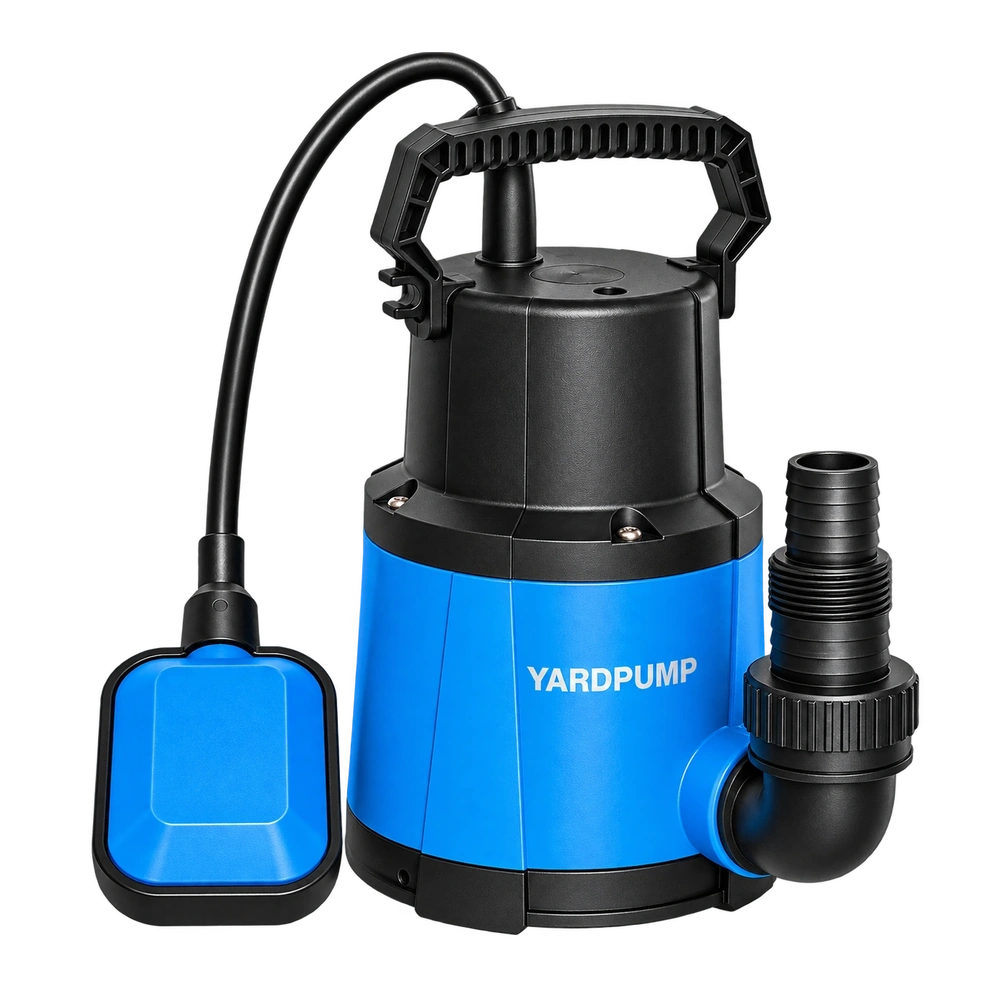
The buyer's answer first
A pump family may be offered with different electrical configurations, but a catalogue line reading “110–240 V, 50/60 Hz” does not prove that one physical pump is universally interchangeable across those supplies. An importer should approve a separate, traceable SKU for each confirmed combination of destination market, model, voltage, frequency, motor and thermal protection, cable, plug, rating label and document revision. Changing the plug is not a substitute for verifying the complete electrical version.
This matters because supply frequency and motor design can affect speed, current, temperature rise and the hydraulic duty point. The plug, protective arrangements, cable and instructions also have to fit the destination's applicable requirements. Approval for one market cannot simply be copied onto another market's carton.
Two orders with the same housing are not necessarily the same product
Imagine a private-label buyer who wants one compact plastic-pump appearance in two sales channels. Project A requests a 230 V / 50 Hz configuration; Project B requests a 120 V / 60 Hz configuration. These are illustrative procurement conditions, not a statement of the full regulations of any country or proof that YARDPUMP stocks both versions.
The projects may share a housing colour, brand mark and packaging concept. Whether they can share a motor, impeller, thermal protector, cable, plug or pump curve is a separate engineering decision. Treating “same appearance” as “same electrical product” creates an avoidable problem when a factory sample, retail listing and replacement-parts record no longer refer to the same configuration.
The release matrix a purchasing team can actually use
| Approval field | Project A — illustration | Project B — illustration | Evidence to retain |
|---|---|---|---|
| Market and application | Market A; clean-water drainage | Market B; clean-water drainage | Destination and duty brief |
| Electrical supply | 230 V / 50 Hz example | 120 V / 60 Hz example | Variant-specific rating plate and controlled specification |
| Motor and protection | Engineering confirmation pending | Engineering confirmation pending | Motor/protector part IDs and agreed verification |
| Hydraulic performance | Curve for A's exact variant | Curve for B's exact variant | Flow at the required working head |
| Cable and plug | Market-specific set pending | Market-specific set pending | Cable construction, length, plug drawing and sample |
| Marking and documents | Revision A | Revision B | Instructions, warnings and applicable compliance evidence |
| Golden sample | A sample ID and date | B sample ID and date | Signed sample record, BOM revision and change log |
A voltage/frequency range on a family page is a discussion starting point, not evidence that every permutation has already been designed, tested or priced. Ask which exact combinations are deliverable and which still require engineering review.
Release the SKU in five controlled steps
First, select the hydraulic family by liquid, required flow at working head, installation and controls. Do not choose a plug before confirming the job. Second, define the destination market and electrical version. Third, request the variant's rating-plate artwork, cable and plug specification, motor/protection details, pump curve and a list of applicable technical or compliance documents. A document's existence and applicability must be checked for that precise variant; never infer certification from a standard mentioned in an RFQ.
Fourth, approve a physical sample against one configuration record. The pump, its label, plug, cable, carton and instructions must all identify the same revision. Fifth, reference that revision in the purchase order, artwork approval, distributor product-information file and service-parts list.
A change to voltage, frequency, motor, protector, cable or plug should trigger a documented impact review. Some changes may require further performance, safety or market-compliance verification before production approval. “Please use the new version” in an email is not adequate configuration control.
What the distributor and sales representative gain
Give the channel team a one-page SKU card containing the actual rating-plate photograph, plug image, intended market, duty-point data and replacement-parts identifier. When a retailer asks, “Can this pump be used in our market?”, the salesperson checks the released SKU rather than guessing from wattage or housing colour. If the requested variant is not on the release list, the correct answer is “pending technical confirmation,” not “universal.”
This also prevents a common information problem: the factory quotes one electrical version while the e-commerce listing, carton and customer-service script describe another. The simplest safeguard is a single approved configuration identifier that follows the product from sample to after-sales support.
Buying decision: A multi-market OEM programme is not one pump plus a bag of plugs. It is a set of separately verified deliverable configurations. YARDPUMP can discuss electrical, cable, plug, branding and packaging options around existing compact submersible-pump families; availability, performance, price and documents must be confirmed per project. Use the verified internal pages /oem/, /products/ and /contact/ to start a variant-specific discussion.