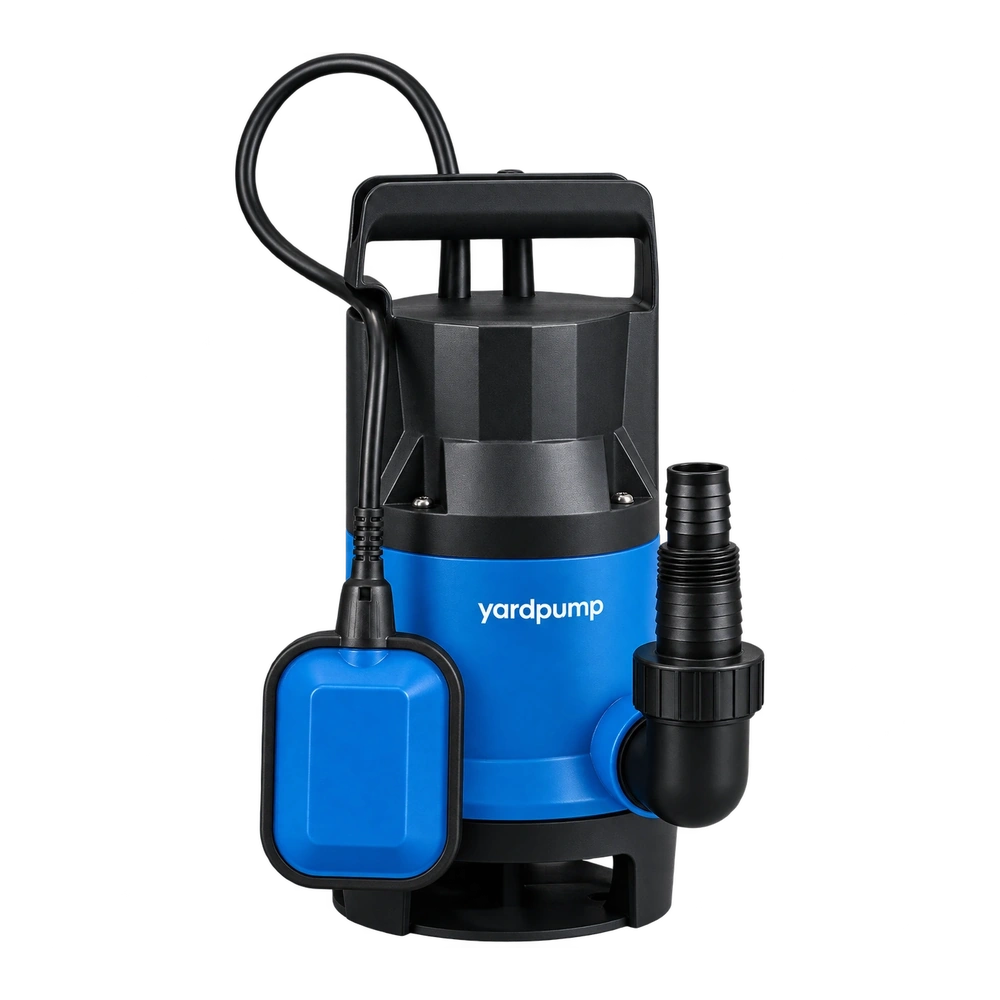
Suppose a distributor receives a service request for a discontinued automatic drainage pump. A current model has the same wattage and fits through the pit opening, so it looks like a direct replacement. Approve it against the site’s actual operating points and the original installation’s controls before promising a drop-in replacement. Power and envelope are useful information. Neither establishes the flow available at the actual head or when the new pump will start and stop.
Build the substitution around the job
Record what the original pump was meant to do. For a drainage pit, collect the liquid and solids limits, outlet height, pipe and fittings, the normal range of water levels, observed inflow and the required time to lower the pit. If the original pump failed or was undersized, do not use its last poor performance as the target. Check the required duty independently. Compare the curves at the relevant heads, including the lowest operating source level or highest receiving level where those change the lift.
Mechanical fit is more than the opening. Check the pump’s footprint, float movement, removal path, outlet direction, connector and how pipe loads are supported. Compare start level, stop level and minimum immersion. A pump that leaves more water after stopping may still suit some pits but fail a site that needs more storage for the next storm. With the same stop level, a lower start level reduces working volume and can increase cycling. Compare control compatibility, alarm input and restart behavior; a built-in automatic float is not interchangeable with all remote controllers.
Compare a pair at more than one point
For illustration, assume the installed system needs 55 litres per minute at 4 metres of head during ordinary operation and at least 42 litres per minute at 6 metres during a high receiving-water condition. Two hypothetical pumps both deliver 58 at 4 metres. At 6 metres one delivers 44 and the other 35. The second is not equivalent for that application, even if its box has a larger maximum flow. These are sample values only. A supplier should present curves and model evidence for the exact voltage and frequency of the replacement.
Make the acceptance sheet use three decisions: fits without change, fits with specified approved changes, or unsuitable. A threaded adapter may fit if it is approved for the joint, but it can change losses or outlet height. A required control modification belongs in the second category, with a revised drawing, validation and qualified installation. A failed electrical or liquid compatibility check should not be resolved by a field workaround. Never adapt a plug or bypass the protective function simply to fit a replacement.
Confirm what happens when it actually runs
Where safe, have the installer test the replacement under a controlled fill and drawdown. Record the start and stop water levels, delivery path, alarm behavior and measured cycle time. Review whether the same sensor and high-water reserve still work. On a critical or unattended installation, confirm the power-return behavior and failure contingency with the owner and qualified staff. The supplier’s part-number cross-reference should be tied to a stated installation boundary, not treated as proof for every historical site.
The distributor can keep one approved substitution sheet per operating envelope and flag exceptions at order entry. That helps the next salesperson distinguish a replacement with the same job from a new installation that needs engineering review.
Frequently asked questions
Is equal rated wattage a sufficient match?
No. Check actual delivered flow at the required heads, the limits of the liquid and the applicable electrical version.
Can a slightly different stop level be acceptable?
It depends on pit volume, intake limits, cycle frequency and reserve. Verify the actual behavior before calling it equivalent.
What if no approved curve is available for the old pump?
Start from the site’s required duty, control and physical conditions. Do not infer a curve from the old maximum flow and maximum head alone.