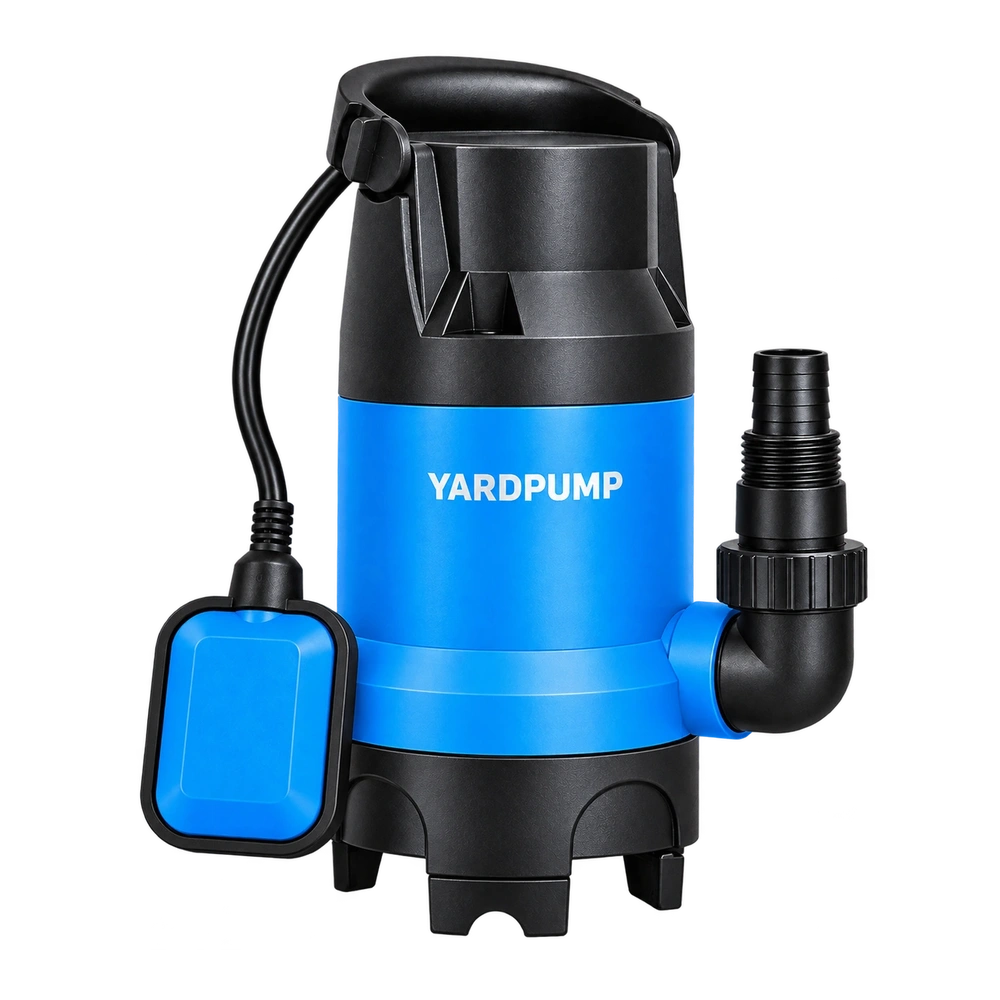
An importer plans two kits around a clean-and-dirty-water pump. The straight kit is for open installations. The elbow version turns the hose sideways where height is limited. Can both quotes use the same bare pump curve and promise the same delivery? Specify the fitted duties separately. The elbow bore, how the hose seats and the shape the hose takes in the available space affect delivery. An elbow is not automatically worse: it can preserve flow where a straight tail would force the hose into a sharp fold.
Buy the installation space as well as the waterway
Specify the connector part, material, assembled minimum bore, actual hose inside diameter and length, approved seals and clamps. Record the outlet direction, headroom to make the turn and how the hose will be supported so that it does not tip the pump or hang from the outlet. For water containing approved soft solids, the assembled restriction and internal shoulders matter too. A particle allowance stated for the pump cannot establish the same passage through the kit. Define duty using source water height, outlet height, delivery conditions and required flow. If the agreement instead uses an equivalent test head, show how it represents that route.
| Check | Straight kit | Elbow kit |
|---|---|---|
| Installed geometry | Tail, hose bore and room for the first bend | Elbow orientation, actual bore, seals and support |
| Delivery acceptance | Minimum flow with the stated route and head | Measured by the same method; agree its own minimum |
| Revision | Recheck before substituting a similar looking hose or tail | Recheck fit and delivery if the elbow or routed layout changes |
Compare two complete configurations
Use the same pump variant in the approved rig. Establish a base operating point, then install each kit in turn while keeping the source level and discharge arrangement comparable. Match the intended bends and supports and record stable flow, together with input or other limits if agreed. Keep bare pump curve, fitted measurements and sales claims in separate fields. A rigid pipe on a bench does not automatically reproduce a flexible hose squeezed into a small site. If the fixture differs materially from the installation, document the difference and run a representative fit and flow trial. For service with solids, verify the intended passage through the full kit under a controlled, approved method.
Consider an illustrative purchase requirement of 45 litres per minute. With room to route the hose properly, the straight kit delivers 51 and the elbow kit 47 under the specified conditions. Both pass that requirement. In a small compartment, the straight hose might fold and deliver only 32. A dealer can then restrict the straight kit to installations with the required clearance and offer the tested elbow layout for the compact job. The figures are not ratings. They show why judging the kit by a loose fitting on a counter cannot settle the actual installation.
Keep the buying and shipping records connected
Tie each quote to the actual combined part list, duty requirement and delivered flow. Put the kit version and distinguishing part on the packout record so an elbow bag cannot travel under the approval for a straight kit. If a customer changes the route or hose, review the fitted duty again. Compare clean-and-dirty-water pumps first for the liquid and flow required, and then assess the complete kit. The free-discharge endpoint on a bare pump curve does not represent the dealer’s assembled package.
Report the start level and head referenced to the same points for both kits. Changes in outlet height between the trials can make a compact elbow kit seem better or worse than it would be at the customer’s installation.
Frequently asked questions
Do the kits need a test if they list the same nominal size?
Yes, where installed flow is promised. The label does not establish the smallest diameter, insertion depth or loss through the turn.
Can I quote one fixed head loss for the elbow?
Loss depends on actual flow and geometry. Use data tied to the required duty and the installed orientation.
Can both kits use the same part number?
The pump itself can retain its part number. The shipped kits must be distinguishable where they contain different parts or carry different acceptance conditions.