The short answer
No. G1-1/2 usually denotes a parallel pipe thread under the ISO 228 family, while 1-1/2 NPT denotes a different tapered pipe-thread system. Their similar nominal size labels do not make the thread form, pitch, taper or sealing arrangement interchangeable. Never write “universal 1½-inch fitting” on a private-label pump carton without confirming the actual joint.
Why similar-looking fittings become a channel problem
A brochure may show “50 mm”, “G1-1/2” and “1½ inch” near the same discharge outlet. A buyer or listing editor then chooses a locally common NPT hose connector on the strength of the nominal number alone. It might engage part of the way, but that does not establish a sound seal or safe assembly. Forcing the mismatch can damage plastic threads or create leaks. This is an illustrative failure mechanism, not a report of a verified YARDPUMP customer case.
Keep four quantities separate in every specification: nominal pump outlet, thread standard, adapter connection and hose inside diameter. None of those fields can safely stand in for all the others.
The five checks that belong on the purchase order
| Field | Supplier confirmation | Buyer check |
|---|---|---|
| Thread standard | G / NPT / other, with drawing revision | Match the target-market fitting |
| Connection gender | Male or female ends shown on both sides | Verify the complete adapter chain |
| Seal mechanism | Face gasket, O-ring or approved thread-seal design | Do not substitute sealing methods by guess |
| Carton contents | Adapter material, count, part number and revision | Match physical pack to packing list |
| Hydraulic bore | Nominal outlet, adapter passage and hose ID | Avoid unreviewed flow restrictions |
A photo of the actual end connection and a controlled drawing revision are more useful than the phrase “standard outlet.” Buyers should request both.
What the WQD-SD outlet specification actually establishes
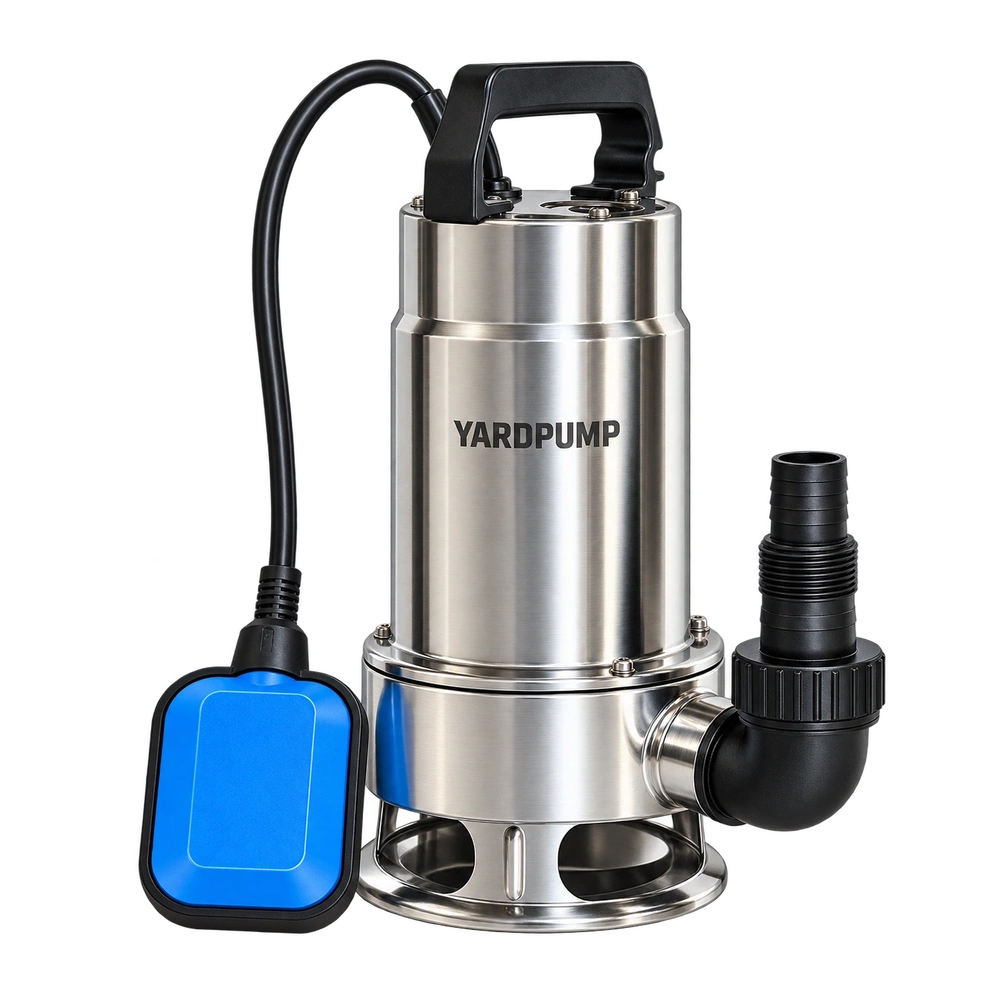
The currently confirmed WQD-SD listing for the 550 W and 750 W variants shows 50 mm / G1-1/2. This is the published outlet designation, not permission to mate it directly with every NPT fitting in the importing country. Nor does it prove that a particular reducer or adapter is included in every carton. The delivered assembly must be defined by the specific approved model drawing, accessory specification and purchase-order revision.
If a sales market requires NPT, raise it as an engineering and sourcing requirement. Get confirmation of a suitable approved connector arrangement before promising availability or pricing; do not treat the mere possibility of OEM customization as a stock feature.
Make fitment part of sample approval
Assemble the sample using the customer's actual target-market hose and connector. Confirm engagement, seal location, installation space and the manufacturer's approved fitting procedure. If the fitting binds, cross-threads or requires abnormal force, stop rather than tightening harder. Record photographs of both ends and the fitted sample against a dated configuration record.
Carry the verified interface into the SKU bill of materials, operating instructions, retailer product listing and carton packing list. Any replacement adapter requires a compatibility review, not just a procurement price comparison.
A buyer's decision rule
“1½-inch connector included” is not an adequate specification. “Thread family, male/female end, seal design, included adapter, hose compatibility and approved revision” is much closer to a verifiable promise. That clarity makes supplier quotes comparable and gives a distributor an actionable answer when a customer asks which fitting will actually work.
For a market-specific YARDPUMP quotation, provide the model, destination market, mating-fitting photograph or drawing, hose ID and anticipated order quantity.