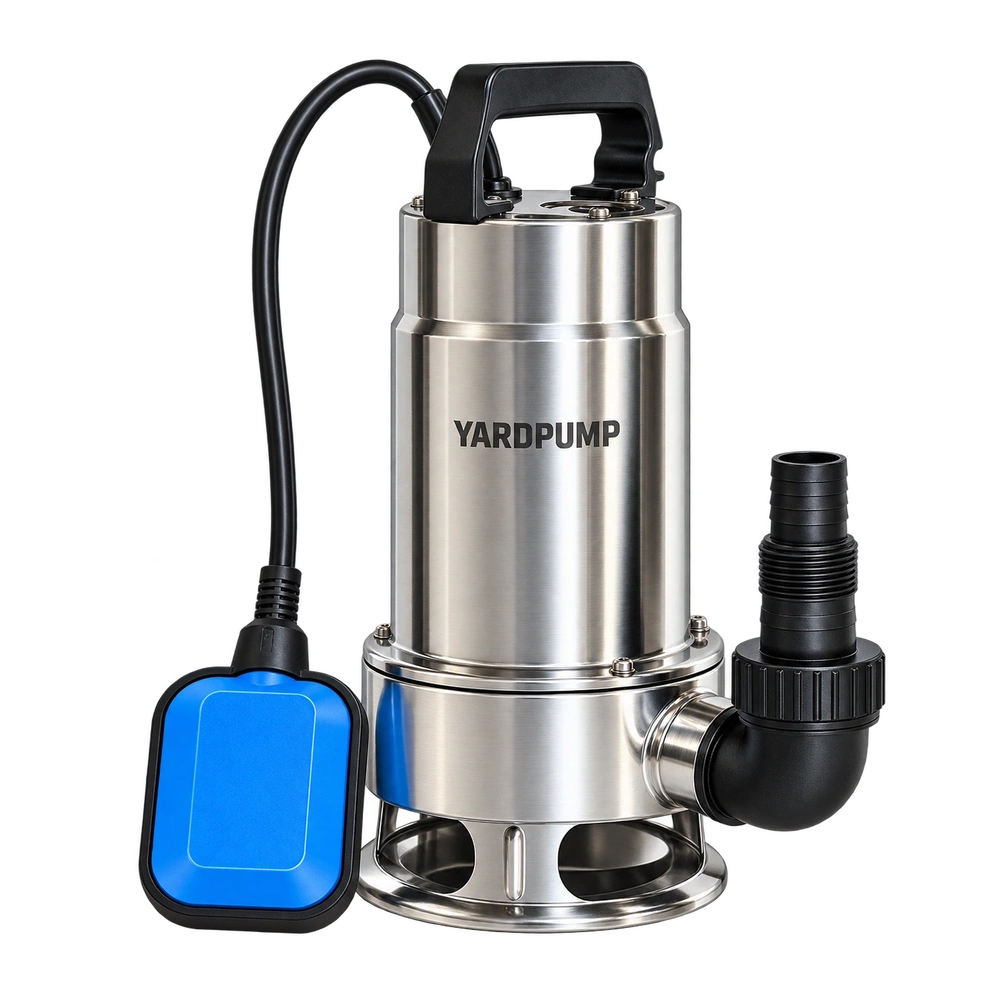
Consider a typical installation: an automatic submersible pump in a rainwater container was switched to manual drainage shortly before a power cut. When power returns, will it resume manual running or wait for the automatic start level? The word automatic does not answer that question. Verify the exact version’s retained mode, power-up sequence, water level and protection state. Acceptance must establish both delivery when required and stopping when required, rather than merely hearing the motor restart.
Automatic operation and mode memory are different features
In a system directly controlled by float contacts, the response to restored supply depends mainly on contact state, the protection circuit and whether the motor can start. An electronic level controller may also perform a power-up check, wait through a delay, load saved parameters or retain a fault lockout. Both arrangements can provide automatic drainage without having the same recovery sequence. Instructions for a similar-looking unit or another brand do not establish this one’s behaviour.
An electronic version may retain the last selected mode or return to a preset mode. Ordinary manual, timed manual and automatic modes can also have different retention rules within one product. Ask separately whether the controller saves operating mode and switching levels. An unverified statement that unplugging restores automatic operation is an inadequate basis for leaving an installation unattended.
Define the expected states before testing
Record the complete switch or controller identity, relevant hardware and software revision, manual revision, supply arrangement and external interlocks. Make a state table for automatic operation above the start level, automatic operation below it, manual operation and an existing fault indication. For each, state what is selected before interruption and what should happen afterwards. Do not impose electronic memory or a manual mode on a version that has neither feature.
Installers or acceptance personnel should follow an approved procedure using the normal supply control from a dry, safe location. Maintain required water coverage, stable support, an open discharge path and supervision. Isolate power before moving the pump, arranging its float or working on wiring; qualified personnel perform electrical checks. Do not handle plugs with wet hands, bypass protection or deliberately jam or overheat the pump to create a fault.
Example: two valid responses can require different handover decisions
The following is an illustrative record, not a specification or customer test result. Sample A is interrupted for ten seconds while in automatic mode above its start level. On restoration it follows its documented startup sequence, delivers water and stops at the intended condition. Sample B is interrupted for ten seconds in manual mode and retains manual operation afterwards. Both could conform to their own instructions. For a site requiring automatic stopping, however, configuration, training and acceptance decisions differ.
Do not end the observation at the first motor sound. Record mode indication, the beginning of delivery, sustained flow, stopping as the water falls and renewed response on the next rise. Motor operation without water delivery calls for separate checks of hose filling, air release and the discharge route. No motor operation calls first for checking actual level, selected mode and fault indication. Neither observation alone proves a winding fault.
Separate restored power from cleared protection
Restoring supply does not remove the original cause of a fault. Thermal protection, a controller alarm, an abnormal level signal or an external interlock may still prevent starting. Some controls require acknowledgement; others recover under defined conditions. Follow the exact version’s procedure. Repeated unplugging is not a repair, and a successful restart does not establish that the initiating fault has disappeared. Preserve the displayed alarm and preceding state for service.
Before handover, restore the confirmed mode required by the site and complete one supervised automatic start-and-stop cycle under safe conditions. A sump that needs continuing protection also requires appropriate independent warning and a plan for supply interruption; mode memory does not replace either. After a controller, float assembly or relevant software change, reassess the affected recovery behaviour. For a compact automatic clean-water or low-level pump, this is a control-function check. It does not authorize extended dry running or establish that every configuration in its family has electronic memory.
Frequently asked questions
Does automatic start and stop guarantee mode memory?
No. Level response, parameter retention and the default power-up state are separate features.
Will unplugging change manual mode back to automatic?
Do not assume so. Some controls retain manual settings; restore and verify the mode using that version’s instructions.
Does failure to restart prove the pump is damaged?
No. Confirm level, supply, mode, protection and interlocks before qualified fault diagnosis.
Does one successful restart justify unattended use?
No. Also verify normal stopping, the next start, warning arrangements and suitability for the installation.