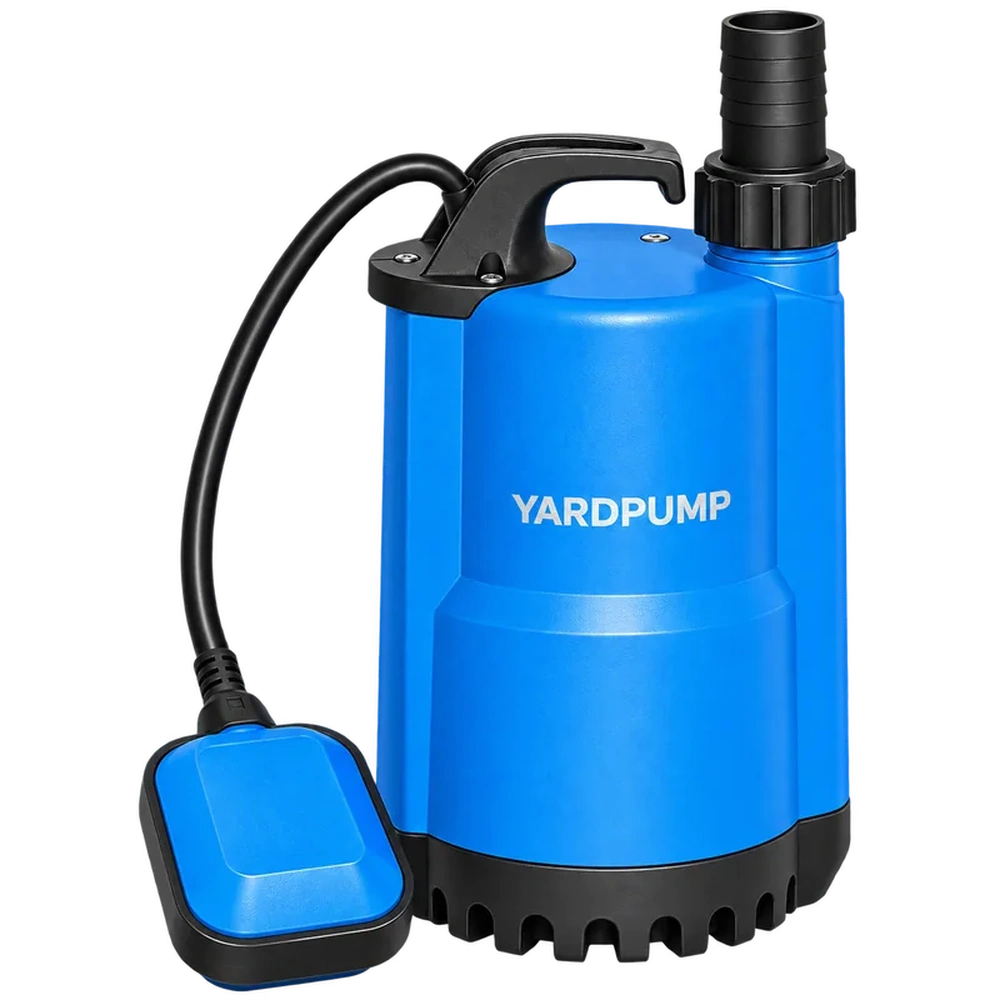
Residual, starting and stop levels are not interchangeable
A customer sees “7 mm residual water” on a submersible pump listing. They place the pump in a shallow puddle, expecting it to switch on by itself. Nothing happens. Is the specification wrong?
Not necessarily. Three different water levels are often squeezed into one short product claim: the level a pump can drain down to, the level it needs to begin pumping, and the level at which its controls switch it off. They describe different parts of the job.
Residual water level is the depth left when the pump can no longer effectively remove water under its specified test and installation conditions. Think of it as the finish line for drainage.
Minimum starting water level is the condition needed for the pump to begin operating properly. Depending on the hydraulic design, the intake and impeller area may need sufficient water. If an automatic sensor is fitted, its activation conditions matter too. Think of this as the starting line.
Automatic stop level is determined by the selected float switch, sensor or external controller. It is a control decision, not necessarily the lowest water level the hydraulic end could reach during supervised operation.
A single “7 mm” claim does not establish all three values. A responsible product sheet states the control configuration and the test conditions beside the number.
Why clean-water and dirty-water pumps leave different amounts behind
Low-level clean-water pumps are designed to collect water close to the floor. Dirty-water pumps often leave more clearance around the inlet and impeller path so they can pass the specified soft particles. These are different design priorities. A dirty-water model should not be sold as a flat-suction floor-finishing pump merely because both are submersible.
YARDPUMP's published model information illustrates the distinction. The QDX-PT is a compact clean-water model with a listed 7 mm residual water level and a confirmed manual, no-float configuration. The QDX-PH clean-water family also lists 7 mm residual water, but buyers should check the start/stop conditions for the selected control version. QDX-PP lists 10 mm residual water. In contrast, WQD-SD is a clean-and-dirty-water model with a listed 90 mm residual water level and a different liquid/solids duty.
These are model-specific published figures, not guaranteed field results across every floor, hose route or electrical configuration. None should be relabelled as a minimum starting level without supporting documentation.
“There is water on the floor. Why didn't it start?”
First check whether the model is manual or automatic. A manual pump does not sense water and start itself. A tethered float needs the water depth and free space required to move. A sensor-controlled model must meet its sensor's specified conditions. Never assume a low residual-water claim overrides the controller.
Next, check whether water can actually reach the intake. Uneven flooring, a soft cloth, sediment or debris around the base can prevent normal entry. A shallow puddle elsewhere on the floor does not guarantee enough water at the pump inlet. Do not force a pump to run in insufficient water to chase a lower residual level.
A four-column buying checklist
For a retail listing or OEM specification sheet, put these fields side by side: residual water level; minimum starting water level; automatic stop level; and control method. Add the test configuration and evidence source. If a value has not been verified for the exact SKU, mark it “to be confirmed.”
This approach helps the sales team explain a low-level product without creating an unrealistic promise. It also prevents a mismatch between the carton, online listing and instruction manual.
Safe use comes before the last few millimetres
Disconnect the electrical supply and follow the manufacturer's instructions before moving or inspecting a pump. Keep plugs and electrical connections out of standing water and use protection appropriate to local electrical rules. Never enter a pool or flooded area while equipment remains electrically connected. Do not bypass float controls, block the intake or deliberately run a pump dry to reach a lower water line. If the water contains grit, chemicals or salt, verify the liquid limits and all wetted materials first.
The practical takeaway for distributors
Customers are not simply buying “7 mm.” They are buying a predictable finish to a drainage job. Ask for the starting water depth, desired final level, water condition, control preference and hose route, then confirm the exact pump and version. That prevents more complaints than a bigger number on the box.
FAQ
Does 7 mm residual water mean automatic start at 7 mm? No. Starting and control thresholds must be specified separately.
Can a dirty-water pump dry a floor to a few millimetres? Do not assume so. YARDPUMP WQD-SD lists 90 mm residual water and is not the same duty as a low-level clean-water model.
Does a pump without a float stop itself? Do not assume automatic stopping. QDX-PT's confirmed configuration is manual and has no float switch.
Why is there still a puddle beside the pump? Intake location, floor slope, local low spots, debris and control settings may all matter. The remaining water alone does not diagnose a motor failure.