Start with the watering job
You have a rain barrel collecting roof runoff and want to connect a hose. Search results offer both “rain barrel submersible pumps” and “garden pumps.” Both can move water, but they may differ sharply in how they take in water, where they can be installed and what pressure they deliver. The useful question is not which label sounds stronger. It is where the water starts, where it must go and what is attached at the outlet.
Separate three jobs before shopping: transferring water into a watering can or another container, hand watering through a hose, and operating a sprinkler or drip-irrigation circuit. The first job is mainly about flow and lift. The others also require the pressure needs of the hose and end devices to be checked.
The biggest difference is at the inlet
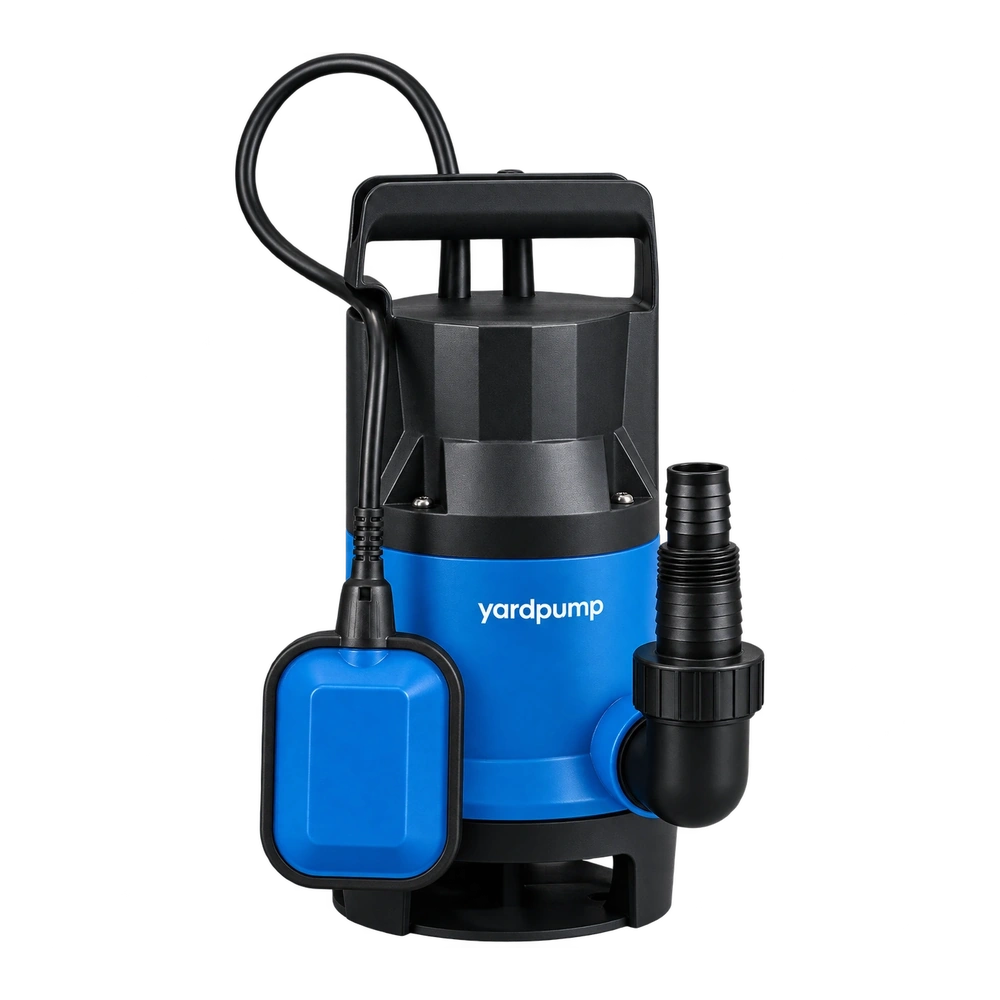
A submersible pump sits in the stored water, with its inlet submerged. It generally does not need to draw water through a long suction pipe from outside the barrel. That can simplify intake arrangements, provided the barrel offers enough room and the pump remains within its permitted submergence, cooling and minimum-water-level limits. Check how sediment is kept away from the inlet, how the unit is retrieved, and what stops it before the water becomes too shallow.
A surface garden pump stays outside the tank and draws through a suction hose. This can make external plumbing and servicing convenient, but the installation must meet the model’s priming, suction-lift, airtightness, foot-valve and weather-protection requirements. Air leaking into the suction line, excessive suction lift or a blocked strainer can interrupt delivery even when the motor appears powerful. “Self-priming” is not a promise of unlimited suction height.
Neither arrangement makes roof runoff automatically suitable for pumping. Leaves, silt, grit and other contaminants can enter a storage system. Inspect screens and sediment, then compare the water with the exact model’s published liquid and solids limits.
Why maximum flow cannot prove sprinkler performance
Consider a hypothetical sprinkler that needs about 1.5 bar at its inlet. That pressure represents approximately 15.3 metres of water head. Add a 2-metre elevation difference from the lowest operating water level and an estimated 3 metres of hose-and-fitting loss at the target flow. The system then needs about 20.3 metres of total head. These are teaching assumptions, not tested requirements for a specific sprinkler or YARDPUMP model.
A drainage pump with an 8-metre maximum head cannot be presented as suitable for that duty merely because its maximum-flow number is high. Maximum head and maximum flow are generally measured at different ends of a performance curve. The real decision requires the sprinkler’s flow and pressure requirement and the pump curve at that same flow.
Hand watering may require less pressure, but water leaving a hose is not the same as a satisfactory spray pattern. Drip systems introduce their own filter, regulator and emitter operating limits. The complete system matters.
A practical selection sequence
Record the barrel’s usable depth, opening size, sediment condition and safe power location. Measure the lift to the outlet and note hose inside diameter, length, bends and fittings. Then define the task: fill containers, use a handheld nozzle, run drippers or operate sprinklers. Ask the outlet-device supplier for its required flow and pressure where relevant.
Eliminate pumps that cannot handle the water or installation. Among the remaining options, compare delivered flow at the required total head, not headline wattage. For unattended watering, confirm level control, loss-of-water protection and permitted running time. Never defeat minimum submergence or cooling requirements to empty a barrel further.
A narrow barrel may not give a tethered float room to move. An outdoor site prone to flooding may not be suitable for a surface pump intended for sheltered installation. The installation must satisfy the actual manual and local electrical rules.
Rainwater and electrical boundaries
Roof-collected water is not drinking water and should not be assumed safe for contact with edible produce. Roof materials, animal droppings and other sources can introduce contaminants. Follow local public-health and agricultural guidance for edible crops, and avoid spraying untreated runoff onto edible portions. Use insect-resistant screening, maintain filters and follow local rainwater-harvesting rules.
Keep electrical connections protected and dry. Isolate the power before moving a pump, cleaning an inlet or changing a hose. If a supply or connector is wet or submerged, do not enter the water to handle it.
For distributors and OEM buyers
Treat “garden watering” as an application, not proof that every drainage pump is a sprinkler pump. An effective sourcing brief states water source, installation type, flow at required outlet pressure, electrical version, controls and destination-market requirements. The exact model’s data and curve must establish its suitability.