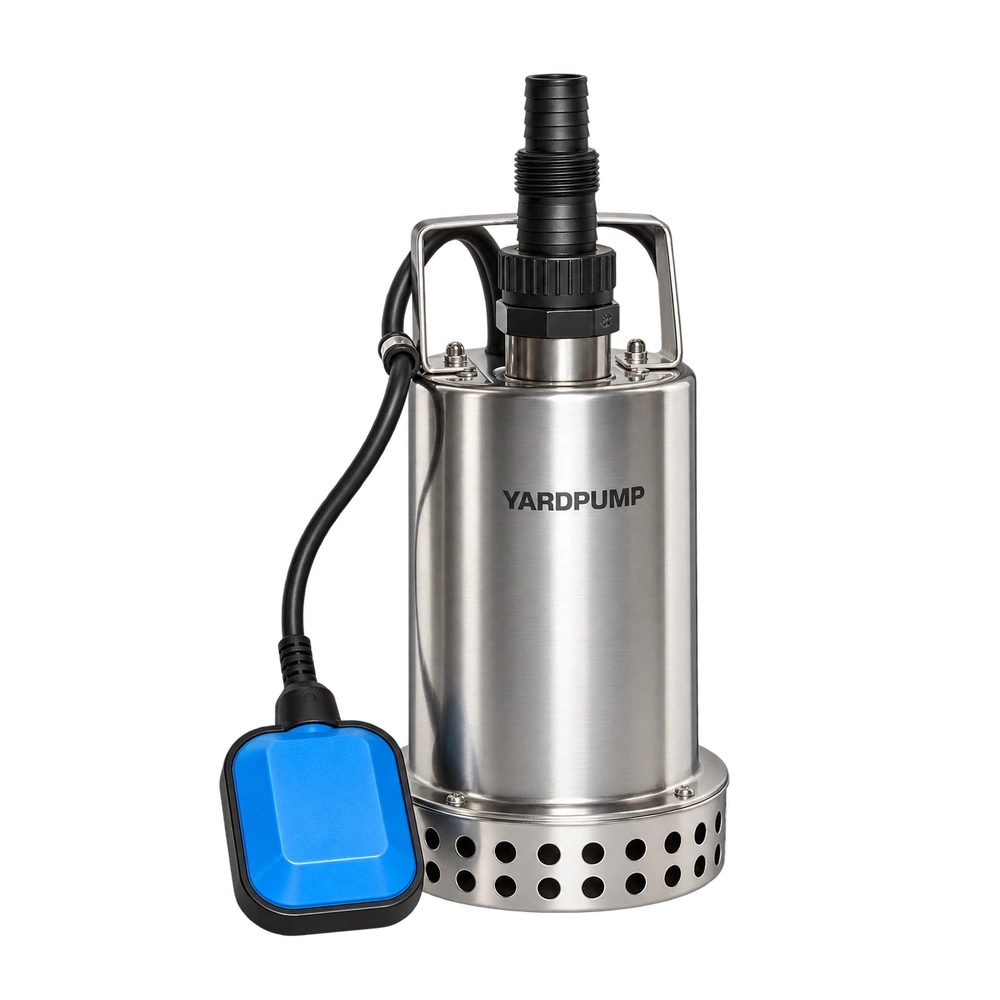
Take a clean and dirty water pump after it has drained water containing grit. The user moves the base towards its low-suction position, but it jams halfway. It does not easily return either. Stop and isolate the pump instead of using a longer tool. The base must reach and retain the correct position. Grit on the travel path, a cocked filter basket and a damaged latch can all leave it short of that position.
Halfway is not an operating setting
Some designs turn, slide or rearrange a base to change the intake opening or clearance. A low-suction position may bring the intake closer to a hard floor so it can remove a thin layer of clean water. The other position may provide a different opening for drainage, within the model’s limits. A partly engaged base can misalign the intake, sit unevenly or move while the pump is carried or used. A motor that will start says nothing about whether the base is secure. Do not run it to shake the base into place.
Consider where the obstruction stops the movement. Grit may sit in a guide or just ahead of the stop, and a leaf strip can lie across an external joint. Once cleaned as instructed, an undamaged mechanism should reach the specified position with the parts aligned. A latch with a cracked edge, distortion or no holding force needs assessment for that model. A click on one side does not prove both sides are seated, and a different pump’s click or feel is not the inspection criterion.
Inspect the external areas the instructions allow
Stop and isolate power from a dry position. Wait until the pump can be retrieved safely and use its approved handle or means of lifting. Do not pull its supply cable. If the plug, control or power supply area has been flooded, have qualified personnel isolate and check it. Relieve pressure before disconnecting discharge parts when required. Record the model, original setting, point of resistance and pictures before cleaning. Users should only clean the areas that the manual makes accessible. Do not open the sealed motor or use a hard tool to pry out the basket.
If permitted, clear visible sand and leaf fragments and inspect the guide. Look for matching position marks, even seating and a firm base on a level surface. If one end position works but the other does not, look for debris on the remaining path, a distorted stop or an incorrect assembly orientation. A base that cannot safely hold both specified positions needs service. Ask for the correct part number and keep the photographs and damaged component. Do not break off a latch or assume a removable part is optional.
Verify the setting and the conditions separately
In one illustrative case grit is visible in an outer guide after a dirty-water run. After isolation and approved cleaning, the base moves into its full position and holds. If a low-suction test is appropriate, use clean water, a stable floor, and the starting depth and control method allowed by the model instructions. Watch delivery and stopping without reaching into operating equipment. Record the floor and mode with the result. In a different case the guide is clean but the base keeps dropping back to an intermediate position. Keep the pump out of use and have the retention mechanism checked. A brief powered test cannot diagnose that mechanical fault.
This applies to portable models that allow the user to change the intake arrangement. It does not establish what any model can pass or how low it can start. A minimum residual level after pumping differs from the starting depth, and an automatic stop may leave more water than an approved attended procedure. If sediment remains, deal with the dirt under the permitted method before trying to remove a shallow final layer.
Frequently asked questions
Should I lubricate a base that is difficult to turn?
Use only what the instructions approve. The wrong lubricant can collect grit or affect the materials. Check cleanliness and complete engagement first.
Can I operate with the base almost in position?
No. Confirm the base has reached and retained its specified setting. Keep it out of service if it does not lock as designed.
The base is set correctly. Why will it not start in very shallow water?
Check starting or priming depth and any automatic control requirements. A residual depth reached after operation is not a starting depth.