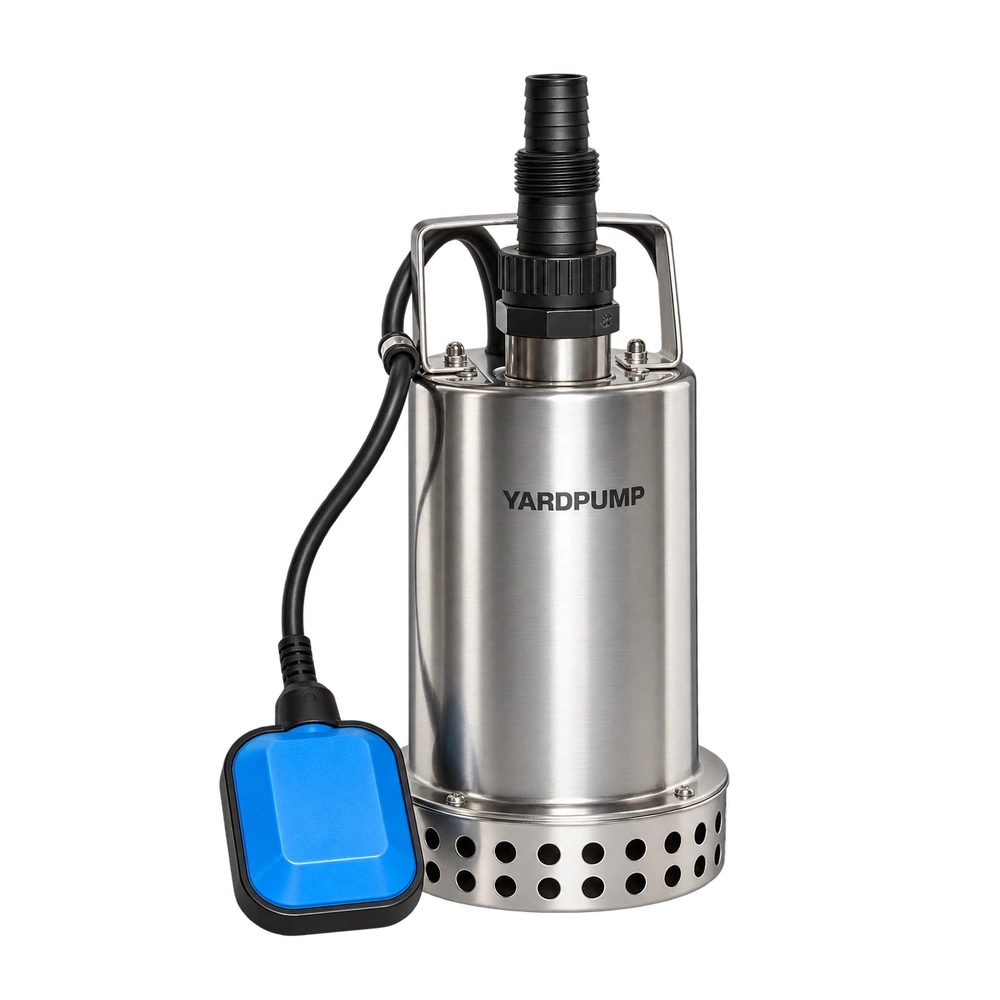
A pump hums without rotating, and someone repeatedly reconnects the plug or taps the housing to get it moving. That can accelerate winding overheating. A jam needs diagnosis: is the rotating assembly mechanically restrained, or is an electrical problem preventing starting? Stop operation and safely isolate the supply before investigating.
Record the symptom before dismantling
A silent pump can involve supply, float control, wiring or protection status. Humming without rotation can involve mechanical restraint, the starting circuit, supply conditions or an internal motor fault. Rubbing after rotation begins suggests another set of possibilities. Stopping and restarting later also requires investigation of protection and thermal behaviour.
Sound is evidence, not a conclusion. Record the pump revision, liquid, recent cleaning or repairs, first occurrence and any protective-device operation. Do not keep energising equipment merely to obtain a longer fault video.
Debris is one possibility
Sand, stones, twigs, fibres or film can interfere with an inlet or impeller. A blocked strainer, however, may reduce flow without locking the rotor. A restricted discharge is another distinct condition. Failure to deliver water does not by itself establish a jam.
Remove the pump only after safe isolation and in accordance with its instructions. Consumer cleaning should remain within the access and methods explicitly permitted by the manufacturer. Do not reach towards an impeller that could restart, remove a guard while energised or involve children in the task.
Review mechanical resistance when no debris is found
Bearing damage, a bent shaft, abnormal seal friction, incorrect assembly or inadequate operating clearance can increase resistance. Temperature and immersion-related dimensional changes can make a problem appear only when warm. Recent impeller, seal or spacer changes are particularly relevant.
These checks often require qualified dismantling and measurement. Being able to move a component by hand does not establish complete operating fitness. A cold assembly can move despite developing interference at its working condition. Grinding an impeller or loosening retention hardware to create space is not an appropriate substitute for an approved repair.
Electrical problems can sound like a mechanical jam
Capacitor, auxiliary-winding or connection faults can impair a single-phase motor's starting behaviour. Low voltage or an unsuitable long extension arrangement can also matter. Appropriate personnel should assess the actual motor rather than fitting a larger capacitor by assumption. Protector operation and winding damage can cause different symptoms at different times on the same unit.
Internal examination involves wiring, stored electrical charge and potentially wet components. Maintain isolation and follow the relevant safety procedures. Repeated starting, bypassing a float or defeating protection does not constitute diagnosis.
Verify the cause before returning to the same installation
If unsuitable debris is confirmed, reassess the liquid and intake arrangement. Long fibres, hard sand and concentrated sludge present different problems. A particle-diameter statement does not describe all of them. Removing the object and reinstalling the pump unchanged can reproduce the same failure.
Before return to service, restore guards, fasteners and seals as required and complete applicable electrical and running checks. A few seconds of rotation on a service bench does not establish performance after immersion, at the real head or for the declared operating period.
For a distributor, a specific finding also improves future support. Distinguish an incompatible application, a damaged component, an assembly issue and a fault that remains unconfirmed. A generic note that the user jammed the pump loses the information needed to prevent recurrence and can assign responsibility without evidence.
Also confirm that guards and retention hardware remain complete after service, so cleaning does not leave a new mechanical hazard.
Questions buyers ask
Can tapping the housing free the impeller? It can damage housing, bearings or seals and does not establish the cause; avoid it as a repair method.
Can the pump go straight back into water after removing a stone? Check for damage and restore the required assembly and safety condition first.
Should a burnt-smelling motor be tried again? No. Remove it from service for professional assessment rather than repeatedly testing whether it recovers.