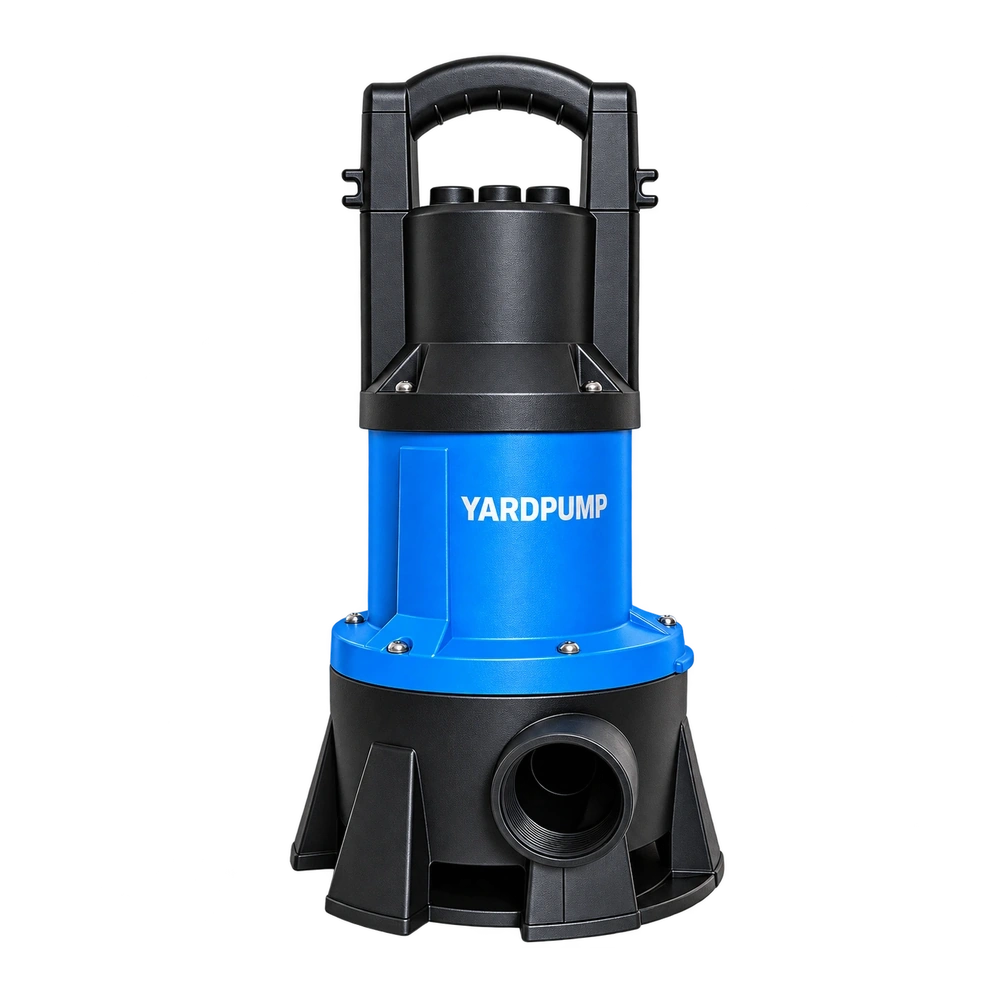
A pump permits particles of a stated diameter but blocks in the field. Does that automatically prove an inaccurate specification? First identify the actual material. Particle diameter mainly describes a geometric passage condition. Long fibres, thin film, hard sand and cohesive sludge behave differently and cannot be represented by one millimetre figure.
A sphere does not describe a length of string
Suppose a particular model permits five-millimetre particles. That is an illustrative specification here; the actual model documentation remains controlling. Short, rounded particles and much thinner but longer fibres behave differently around an impeller and chamber. Fibres can hook, wrap or bridge, while film can cover the intake area.
The fact that a piece of debris is less than five millimetres at its narrowest point does not prove suitability. A sphere-passage result cannot become a promise to handle wipes, string or bags. Review the complete inlet, impeller, casing, outlet and accessories rather than the largest opening visible in one part.
Sand may pass while progressively causing wear
Hard grains can move through the pump yet erode vanes, mating surfaces and other regions over time. Abrasion depends on hardness, angularity, concentration, velocity and exposure. Occasional small contamination and sustained sand-bearing service are different duties.
Wear can change clearances and progressively alter flow and efficiency. A complaint that the pump has become weak does not necessarily mean the motor suddenly lost its rated capability. Check the actual duty, inlet and discharge restrictions and component condition instead of relying on whether the shaft still turns.
Sludge introduces concentration and flow behaviour
The word sludge may describe loose sediment or a cohesive mixture containing fibres. Viscosity and solids concentration can change transport resistance, pump operation and starting demands. A clean-water curve cannot be adopted as a concentrated-sludge curve without assessment. A generic dirty-water description is not evidence of a suitable specialised design.
A finer screen may intercept some debris while increasing screen blockage and intake restriction. Raising an intake can reduce sediment pickup but needs stable support and adequate operating depth. Choose an intervention for the identified material instead of treating every blockage as a request for more motor wattage.
Ask different questions for different materials
| Material | Priority information | An incomplete basis |
|---|---|---|
| Hard sand and grit | Concentration, hardness, exposure and settlement | Maximum particle diameter |
| Fibres and film | Length, shape and wrapping or covering location | Material thickness |
| Cohesive sludge | Concentration, flowability and mixed contents | Maximum clean-water flow |
Record required flow, total head, pipe bore, fittings and discharge accessories too. Material that passes the pump may still accumulate in a narrow downstream adapter or bend. An installation drawing can explain more than an isolated photograph of the impeller.
Agree a representative validation and service process
Confirm manufacturer suitability before using a liquid outside an existing approved range. Where testing is necessary, define material, concentration, introduction, duration, performance and cleaning criteria. Do not randomly add unidentified debris. Evaluate progressive flow loss, wear and maintenance access as well as complete stopping.
Following a failure, safely isolate the equipment and retain the material, its location and the original condition. Qualified personnel should examine it using permitted methods. Do not keep a stalled motor energised to demonstrate blockage resistance, and do not ask someone to reach into an impeller that might restart.
The useful outcome is an identified conflict between liquid behaviour, installation and pump construction. That supports a different intake arrangement or a more suitable complete pump, rather than an unsupported promise based on a larger particle number.
Questions buyers ask
Can a pump handle continuous sand if grains are below its particle limit? Not automatically; abrasion and duration need separate evidence.
Can vortex pumps handle every fibre? No. Their routes and constructions still have limits and do not establish cutting capability.
Will a bigger motor solve thick sludge? Not by itself. Passage, viscosity, wear and controls require assessment together.