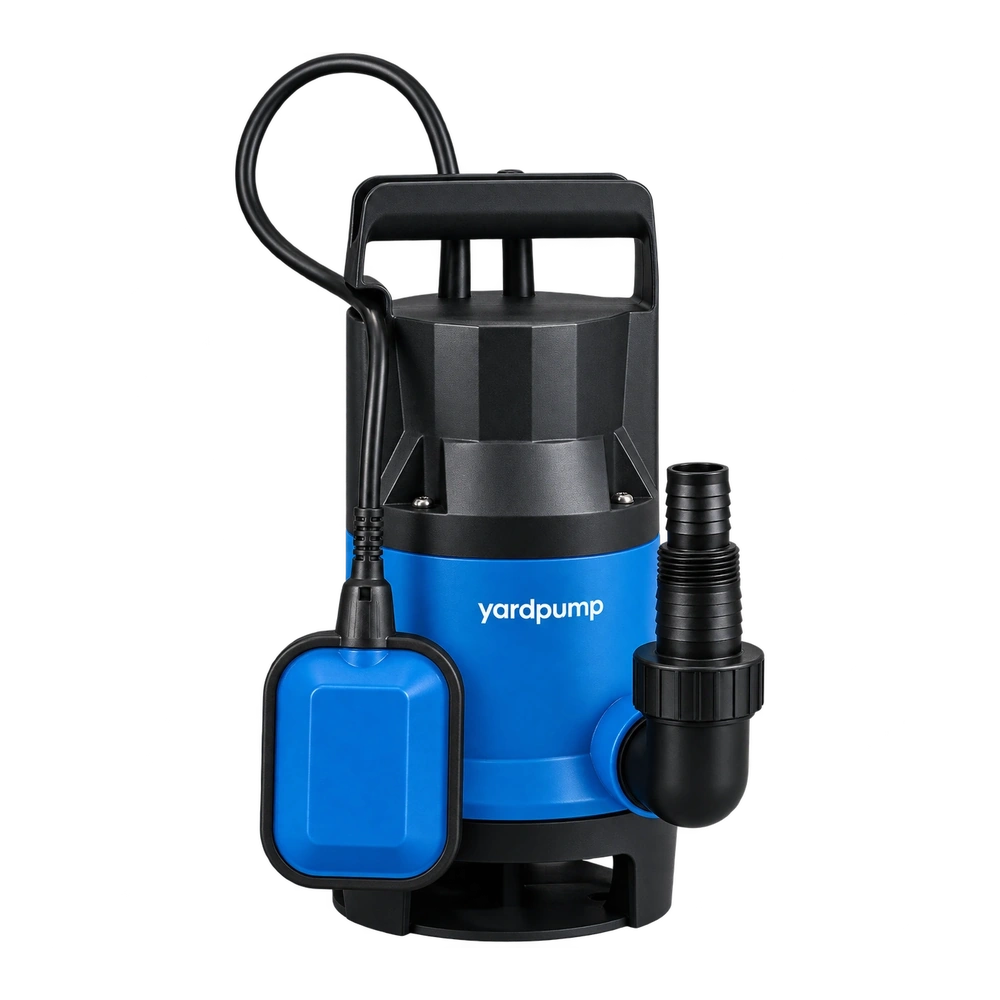
Two pumps carry the same particle-size statement, but one uses a vortex arrangement and the other a channel impeller. Their prices differ. Asking which passage is bigger is only the beginning. The buyer needs to understand how the actual debris passes through the complete pump and what that capability costs in energy, size and maintenance.
Two ways of transferring energy
A channel impeller guides liquid through passages within the rotating component, where the vanes act directly on it. A recessed vortex arrangement places the impeller away from much of the principal through-passage. Rotating liquid transfers energy into the chamber, reducing the need for some debris to travel directly through the vane region. This does not mean that no liquid or debris ever touches the impeller.
Think of a defined handling track compared with a more open transport area. Keeping the main route open can reduce certain trapping opportunities, but it does not automatically produce lower losses at the same useful duty. Efficiency still depends on the complete assembly and its operating point.
A particle diameter is an incomplete description
Free passage is often expressed as a sphere diameter or another specified dimension. That describes a geometric condition. Long fibres, thin film, leaves and sand behave differently. Fibres can bridge an edge; film can cover an inlet; sand can pass through while progressively wearing clearances. A restricted discharge adapter may be the controlling obstruction in the complete route.
Consequently, two statements allowing five-millimetre particles do not establish equal wastewater suitability. Five millimetres is an illustrative comparison here, not a new product rating. Specify particle shape, concentration, temperature and intended service. A sphere-based description cannot resolve the problem of wipes in domestic wastewater.
Put cleaning and energy on the same worksheet
Suppose two systems deliver the same required water volume. One consumes an additional 80 watts at the relevant duty and runs three hours daily for 250 days each year. The difference is 60 kilowatt-hours annually. This example explains the calculation without assigning that difference to either impeller category.
Add cleaning labour, access costs and any backup arrangement before discussing total ownership cost. Avoiding a particular blockage can be valuable where equipment is difficult to reach. For relatively clean, long-running transfer duty, operating efficiency may deserve greater weight. Without evidence, do not invent a percentage reduction in blockages to justify an energy penalty.
Validate both performance and debris behaviour
First obtain comparable clean-water curves and electrical input measurements. Then evaluate the agreed contaminated service using an identified inlet, impeller, casing, discharge and accessory configuration. Testing needs a defined debris type, introduction method, duration and acceptance criteria. Uncontrolled material thrown into a tank produces little evidence for a repeatable purchasing decision.
Inspect the equipment afterwards. Look for material on leading edges, film covering the inlet, wear on specific surfaces and debris near the shaft interfaces. Recording only that the pump never stopped completely can miss progressive flow loss or difficult cleaning. Retain the sample condition and photographs so that the result can be associated with the tested version.
Explain the service limits to customers
A distributor reduces avoidable disputes by describing the liquids the approved assembly can handle. A promise that a pump never blocks is much harder to defend. Long-fibre service or concentrated abrasive material may require a different pump, rather than an improvised change in impeller position accompanied by the old performance curve.
The decision should finish with a shared task description: required flow and head, actual debris, expected running time and realistic maintenance access. Vortex and channel designs offer different opportunities. A defensible purchase records the validated compromise rather than declaring a universal winner.
Questions buyers ask
Does a vortex arrangement eliminate wrapping? No. Inlets, vane edges, shaft regions and outlets can still encounter unsuitable material.
Does a large free passage permit thick sludge? Not automatically. Viscosity, concentration, abrasion and motor loading require separate assessment.
Is a channel design always more economical? Compare measured complete-pump input at the same useful duty; its name is insufficient.