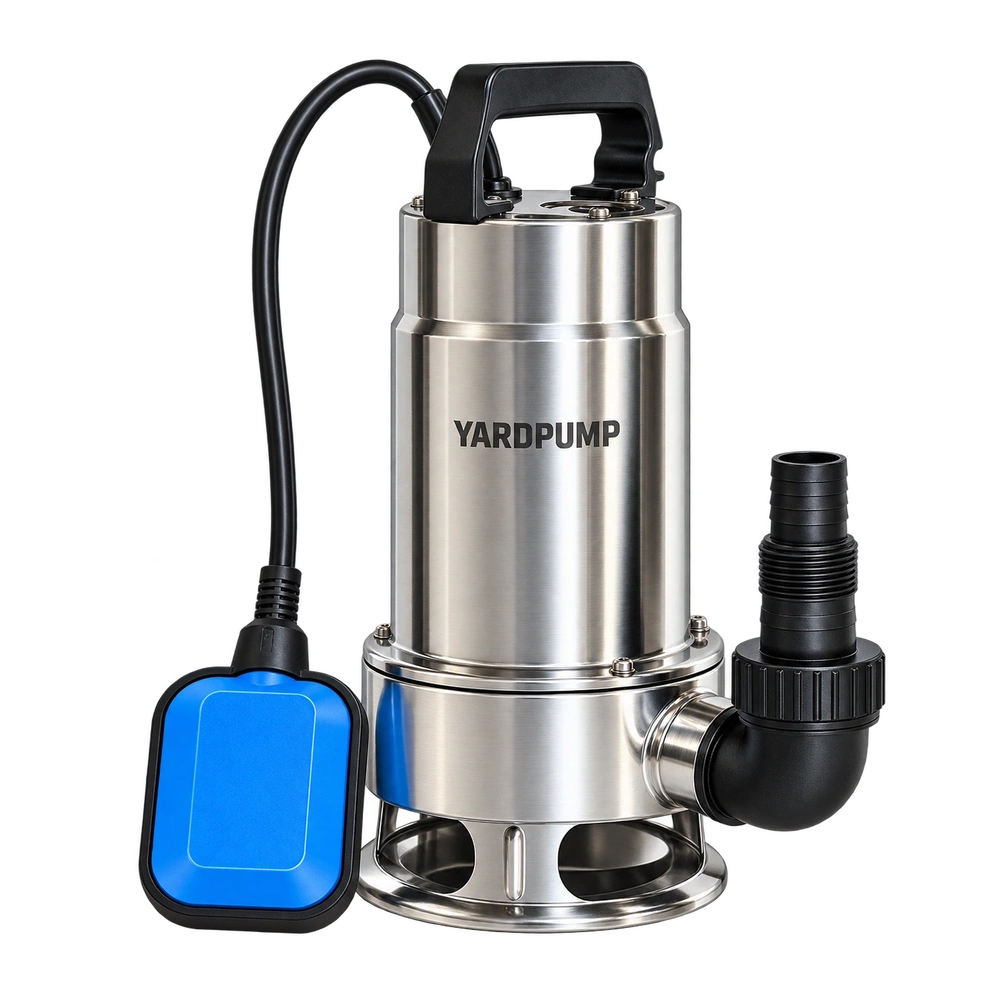
Two quotations both describe a 750-watt plastic submersible pump, yet their unit prices differ considerably. Asking one supplier simply to match the lowest price can leave the delivered product undefined. Effective comparison starts with the actual duty and controlled configuration, then examines accessories, inspection, delivery and subsequent operating cost.
First align the useful task
Define liquid, required flow and total head, running period, controls and supply. Identify the wattage convention rather than grouping shaft rating, electrical input and other figures together. Maximum flow and maximum head are also not a simultaneous duty requirement.
A cheap pump that cannot deliver at the customer's required head may offer little value. Conversely, a modest task does not justify paying for a larger nominal wattage without a demonstrated benefit. Use performance and application fit to establish suitable alternatives before comparing prices.
Give the important components equivalent clarity
Agree a useful specification level for motor, cable, seals, bearings, impeller, housing and control. Every component need not be identical between suppliers. The purchase must nevertheless identify mandatory requirements, alternatives that can be validated and the evidence supporting each alternative.
If one proposal includes a long copper-conductor cable while the other leaves conductor and length unspecified, comparison is incomplete. Seal materials, actual liquid limits and duty also affect value. Premium and economy are commercial labels, not inspectable technical definitions.
Align accessories and commercial boundaries
Check plugs, adapters, floats, cartons, manual languages, labels and required documents. Then align quantity, currency, delivery rule, named place, lead time and payment arrangement. Separate one-time tooling or customisation charges from recurring unit prices.
List scope differences and ask suppliers to complete or explain them. A price excluding accessories is not automatically a cheaper equivalent configuration. Different transport responsibilities also should not be mistaken for evidence of lower manufacturing cost.
Define inspection rather than accepting a slogan
Establish sample configuration, production sampling, performance points, applicable electrical-safety assessments and discrepancy handling. One demonstration sample does not establish consistent production. A general certificate does not replace the actual model and revision scope.
Make inspection proportionate to the task and risk: neither vague nor indefinitely expanding. Without agreed criteria and retest procedures, an argument after delivery about slightly different flow can impose avoidable cost on both parties. A clear agreement helps the supplier price the required control work realistically.
Calculate operation against the same duty
For illustration, suppose two suitable assemblies consume 0.35 and 0.42 kilowatts at the same operating point and run 1,600 hours annually. Their example energy difference is 112 kilowatt-hours. Actual cost requires the applicable local tariff. This arithmetic is not an annual saving promise for any particular product.
Review cleaning access, spare parts, return handling, responsibilities and consequences of downtime too. Do not invent complaint rates to make one quotation appear preferable. Life and reliability evidence require relevant conditions. Initial price, operating difference and service exposure are comparable only when they refer to the same task.
Give every price difference an explanation
A mature worksheet should show what the higher price provides, what the lower price removes or improves, which differences have been validated and which remain unresolved. This gives the buyer a route towards a stable configuration rather than an endless negotiation over an undefined pump.
It also gives suppliers a constructive way to propose savings. They can identify a supported change in geometry, accessories or order arrangement while preserving mandatory capability, instead of quietly changing a hidden component to meet a target number.
Keep quotation dates and revisions with the comparison, so subsequent negotiation concerns one defined requirement rather than a mixture of prices and configurations from different versions.
Questions buyers ask
Can price per watt compare the offers? Not reliably. Definitions and useful delivery may differ, while lower consumption need not mean lower capability.
Should the highest price always win? No. Assess task fit, controlled configuration, delivery evidence and acceptable cost.
How can a buyer reduce price without damaging quality? Define mandatory requirements and assess proposed design, accessory or order improvements separately, with validation of changed function.