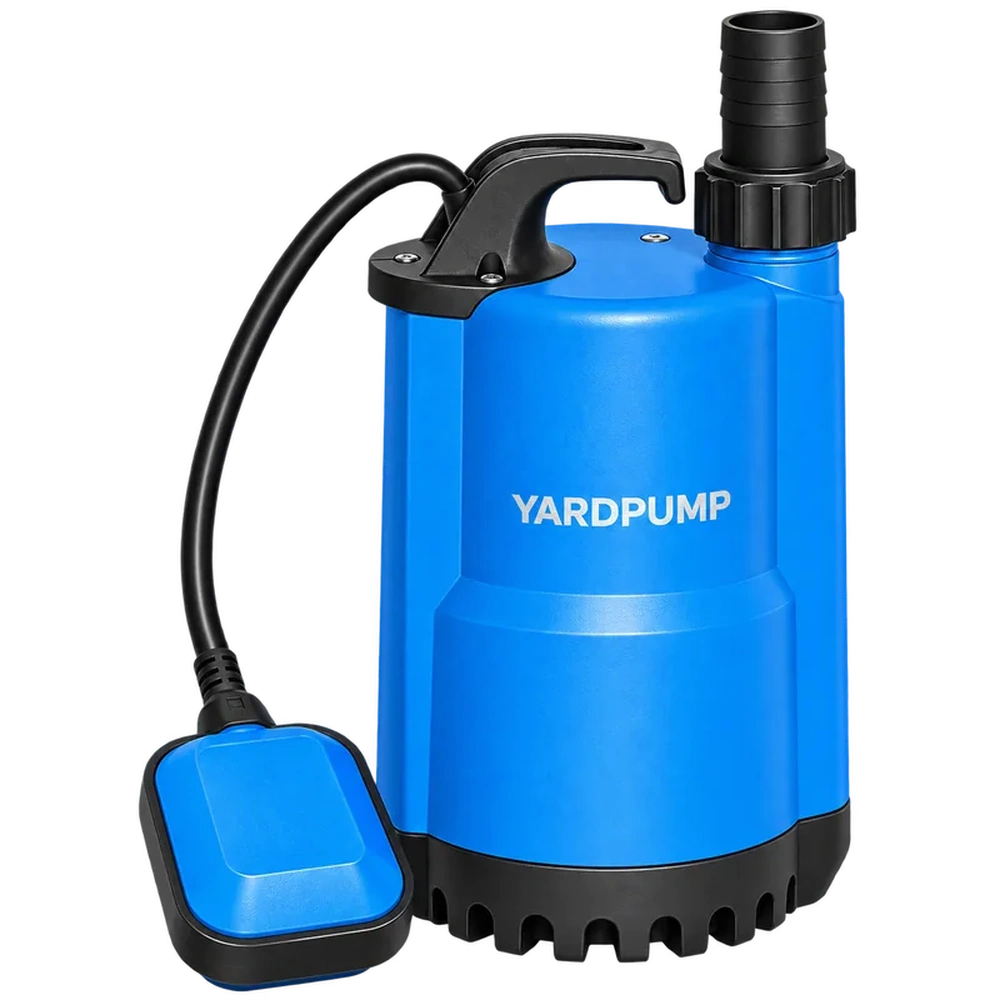
Why can two similar-looking plastic submersible pumps have substantially different factory prices? Start with the motor assembly and cable, then examine the hydraulic parts and housing, seals and bearings, controls, manufacturing and inspection. These groups explain more than a nameplate wattage. There is no universal percentage breakdown that applies to every compact pump.
Define the cost boundary
A bill of materials identifies components and materials. A factory quotation also covers processing, assembly, testing, scrap, packaging, overhead and margin. Tooling recovery, order quantity, packaging revisions and delivery terms can change the unit price. A raw-material list therefore cannot establish what another factory must charge.
Compare the same currency, quantity, configuration and quotation boundary. Separate one-time charges from recurring unit costs. If one proposal includes ten metres of cable, a plug, float and printed carton while another supplies a bare pump, the difference cannot be explained by saying both are 750-watt products.
Break the motor into meaningful subgroups
Relevant motor items include winding conductor and quantity, electrical-steel grade and active stack length, rotor, shaft, capacitor, thermal protection, insulation and treatment processes. They influence cost and function together. Copper winding is a useful material statement, but it is not a complete motor acceptance result.
Connect configuration to shaft rating, starting, temperature rise and duty. Equal lamination count, mass or label does not establish identical motors. A validated structural or manufacturing improvement can legitimately reduce material or processing cost; reduced weight alone is not proof of an undisclosed downgrade.
Cable length can change the economics
Cable cost depends on effective length, conductor identity and area, insulation, sheath, plug, internal connection and entry design. Additional length can also affect voltage loss and connection requirements. Multiplying a price per metre by length misses complete-cable suitability and any necessary entry or configuration assessment.
For cables sold at the same nominal length, confirm how length is defined and what is delivered. Outside diameter is not a measure of copper quantity. Conductor identity, resistance, mechanical performance and the approved complete-product revision are more useful purchasing controls.
Small components can control a large service consequence
| Group | Main cost drivers | An inadequate comparison |
|---|---|---|
| Housing and hydraulic parts | Material, local geometry, tooling and moulding quality | Similar appearance or total weight |
| Seals and bearings | Specification, material pairing, precision and assembly | Seal count or a brand name alone |
| Float and controls | Switching duty, cable, mechanism and validation | The word automatic |
| Assembly and testing | Process control, inspection scope and traceability | Whether the motor turns once |
A sealing ring may represent a small purchasing amount while controlling an important water boundary. Choosing the cheapest ring without controlling its groove or shaft interface can move an apparent saving into future repair costs. A more expensive elastomer can also be poor value if incompatible with the actual liquid.
Build a useful cost-comparison worksheet
Request configuration information at the same level from each supplier. Identify mandatory materials, dimensions and functions, and list proposed alternatives separately. Ask what each change affects, what validation is necessary and whether the quotation includes that work. Commercially sensitive information can be discussed through agreed cost groups without demanding disclosure of every internal margin.
Prioritise large items that change complete-pump capability while retaining controls on inexpensive components with significant failure consequences. Obtain actual amounts from current supplier quotations and order costing rather than an attractive generic percentage chart found online.
The purpose of BOM analysis is to understand what the money buys and whether a proposed saving preserves the agreed task. It should support a reproducible configuration rather than a contest over the largest nameplate number or heaviest sample.
Questions buyers ask
Must the motor represent more than half the cost? No universal share applies; cable, construction, materials and order conditions change the balance.
Does a lighter pump necessarily mean cheaper and worse? No. Validated material, geometry or process changes can reduce mass.
Is the most expensive item always the most important? No. A low-cost seal, insulation component or connection can control reliability or safety.