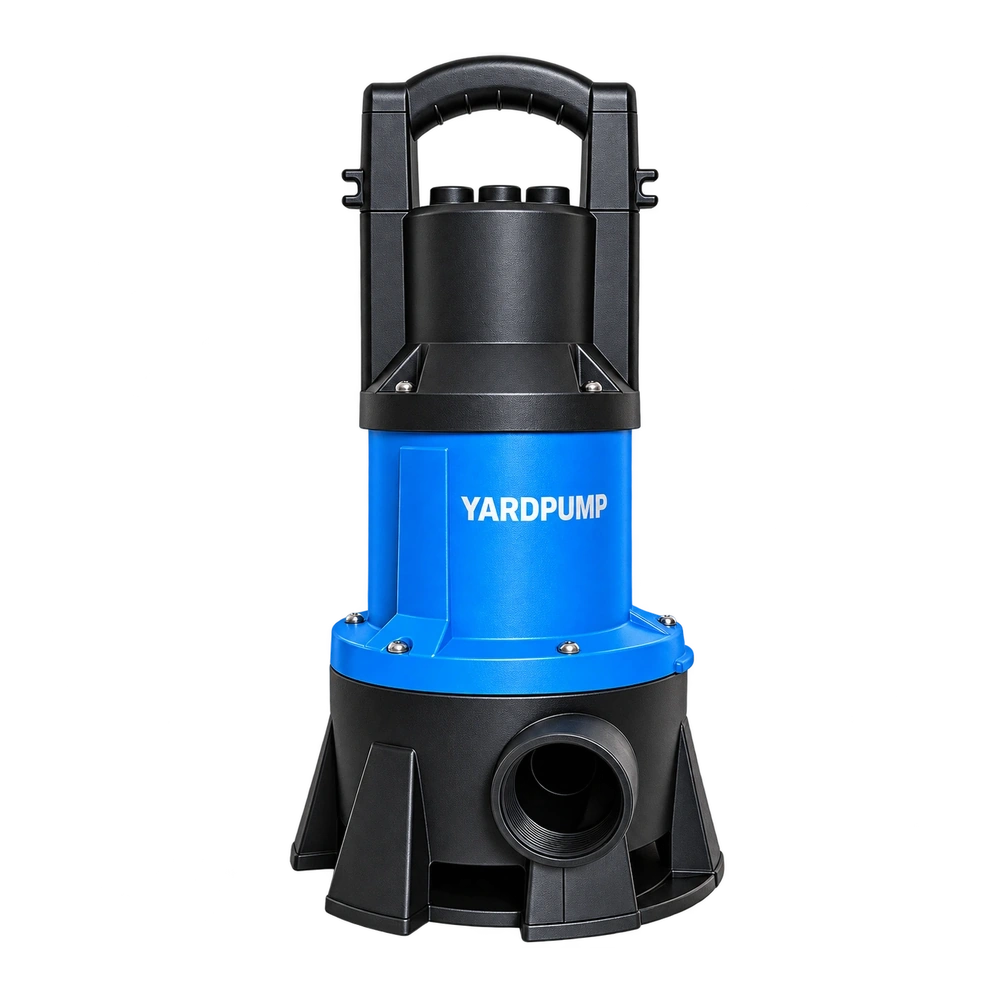
A drainage pump runs for several minutes, stops and later starts again. The distributor is asked to replace the capacitor or protector immediately. Thermal protection is one possibility, but level control, supply conditions and other faults can produce repeated stopping. A timed account of what happened usually provides more value than an early guess about one component.
Separate level-controlled stopping from an abnormal stop
If water falls to the specified stopping condition, a float opening may be normal. If water remains high and the control should still call for pumping, examine supply, protection and motor behaviour. Not every automatic restart is a thermal event, and the ability to restart does not establish absence of a fault.
Record device markings, indications, water level and float position. Establish whether anyone operated a plug or controller. A pump said to recover by itself may actually restart because the level rose, or because a protective device reset. Those explanations need different investigations.
Temperature depends on losses and heat removal
Motor losses must leave through the intended cooling paths. Water temperature, immersion, flow arrangements, sediment around the housing and declared duty can affect the result. A surface that feels moderate does not establish the absence of winding hotspots. Temperature limits from another motor cannot be adopted automatically.
For a product dependent on specified water cooling, minimum operating level and duty are important. Nevertheless, protector operation does not prove insufficient water. Winding, capacitor, supply or mechanical-friction problems can also cause abnormal heating. Consider the complete set of conditions.
A valve position is not a complete load description
The pump and system curves determine the operating point. Discharge restriction, pipe size, water level and intake conditions all influence operation. Power curves differ between designs, so neither a universal closed-valve overload claim nor an unrestricted-flow safety claim is justified.
A low-flow condition can have reduced electrical input while still creating an impermissible internal thermal state or operating restriction. Use the manufacturer's permitted flow and discharge conditions. Do not deliberately close valves or run without sufficient water to repeatedly trigger protection as a diagnostic demonstration.
Build a timed record
Starting from a cold condition, record water temperature, level, supply arrangement, running duration, changes in delivery, sound and the device that operates when stopping occurs. Note whether restarting requires manual action or follows another condition. Current, real input and temperature measurements belong with appropriately equipped personnel.
For example, runs approximately twelve minutes, stops before the normal low-level point, then resumes after eight minutes is more informative than intermittently faulty. Those timings illustrate a record format; they are not an approved operating cycle and do not justify repeated fault trials.
Follow the evidence rather than replacing parts by guesswork
If the problem occurs only with a long extension or one supply, investigate voltage and connections. Rubbing, debris or a repair history points towards mechanical assessment. A change with water level or temperature calls for review of cooling and application limits. Each remains a hypothesis until appropriate evidence supports it.
Maintain safe isolation during examination. Capacitors, windings and potentially wet internal parts require qualified handling. Raising a protector's temperature threshold or increasing capacitance can postpone operation without correcting the heat source and must not be treated as a general remedy.
Verify the corrected system on its intended task
After an approved repair or installation correction, assess the actual load, cooling and running period under the applicable conditions. A brief bench run or video cannot substitute for that verification. Retain the finding, correction and result. A symptom that cannot be reproduced is not proof that the original observation was false.
Questions buyers ask
Can an automatically recovering pump remain in service indefinitely? Investigate abnormal cycles rather than relying on repeated protection.
Must the capacitor be faulty? No. Supply, windings, cooling, mechanical resistance and controls can all matter.
Will deeper installation always solve it? Follow the model's immersion and cooling limits without exceeding permitted depth; location changes do not replace diagnosis.