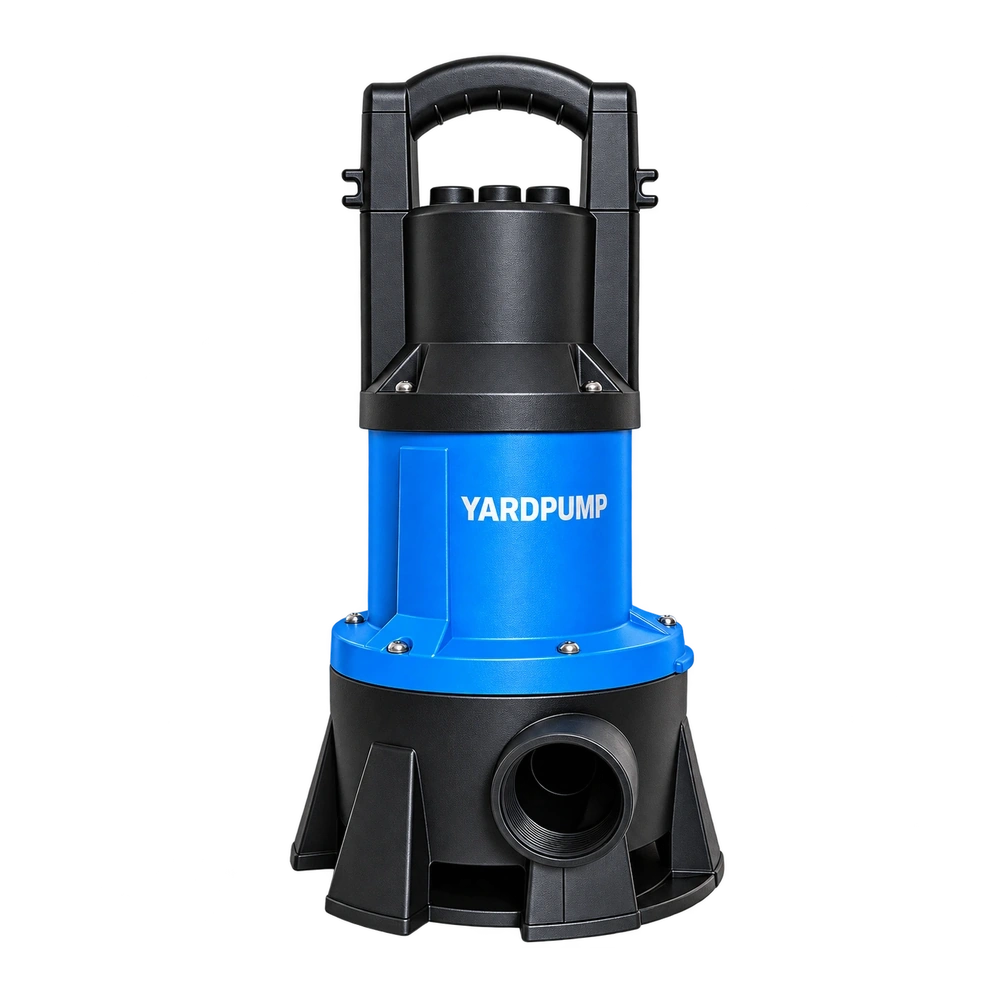
Does adding a float switch to a manual drainage pump make the installation completely unattended? Its main function is to turn a water-level change into a start or stop command within a specified operating range. That can reduce manual switching, but the float is not a liquid-quality detector and does not establish protection against every fault, low-water condition or power failure.
Understand the control action
In a common drainage arrangement, rising water permits starting and falling water causes stopping. Confirm the actual logic, mounting and connections for the model; filling applications may use different logic. Seeing a float on the surface does not prove that every possible product must be energised.
A tethered arrangement uses float behaviour, cable length and restraint position to define movement and switching levels. A vertical float may need less lateral swing, but still requires suitable guidance and freedom from obstruction. Other sensors introduce their own contamination, control and maintenance requirements. None removes the need for a suitable installation.
The benefits are practical
Where water repeatedly enters a sump, level control can reduce the need for someone to watch and operate a switch. Appropriate separation between start and stop provides usable storage volume and can reduce very short operating cycles. For a distributor, clear switching levels and installation dimensions explain more than the word automatic.
The float itself does not increase flow or head. Continuing water rise can involve insufficient pump duty, a restricted discharge, lost power or a control fault. A raised float does not prove adequate drainage. Critical unattended applications may also need alarms, backup arrangements and a defined response.
Check three installation conditions
First, establish the full movement envelope. Walls, pipes, cables and floating debris can obstruct the switch. Second, match stopping behaviour to the pump's minimum operating level and cooling requirements. Third, provide stable restraint: movement of the pump or float cable can change the switching levels.
Do not tie a float into an operating position or bypass it simply to achieve a lower water level. That can allow running below permitted conditions. Tether adjustments must remain within the manufacturer's requirements rather than being accepted because the float can still move slightly.
Compare the control arrangements
| Arrangement | Potential benefit | Required checks |
|---|---|---|
| Tethered float | Understandable mechanism and useful level differential | Swing space, restraint and debris |
| Vertical float | Reduced lateral movement requirement in some layouts | Guidance, obstruction, level range and access |
| Other level sensor | Fit for certain compact or specialised installations | Sensing compatibility, controls and maintenance |
| Manual operation | Suitable for approved, attended tasks | Continuous supervision and low-water limits |
Choose against the site rather than assuming a physically larger float must be more reliable. Buoyancy, mass, mechanism, switching duty and actual liquid all matter.
Demonstrate the installed function
Under safe, controlled conditions consistent with the instructions, confirm actual start and stop levels, free movement and useful water delivery. Check that the installed cable and pipework do not interfere. Record maintenance requirements. Lifting a float by hand once does not validate the complete installation.
Where hazardous flooding, abnormal supply or suspected electrical leakage already exists, isolate and obtain qualified assistance before intervention. Do not enter water to move a float for a live trial. During service, contamination, sediment and installation movement can change the original condition, so inspect and maintain it as instructed.
A float switch is most valuable when its function is clearly understood and its physical operating conditions remain available. That allows the control to do its intended job without turning automatic into an unsupported promise of total protection.
Questions buyers ask
Does a float guarantee dry-run protection? Only its appropriate level-control function can be relied upon when correctly installed and matched to operating limits; it does not replace all protection.
Will an automatic pump drain almost completely dry? Residual water and automatic stopping level are different specifications.
Can a tethered float fit a small pit? Check the complete movement envelope, not only pump diameter or the opening.