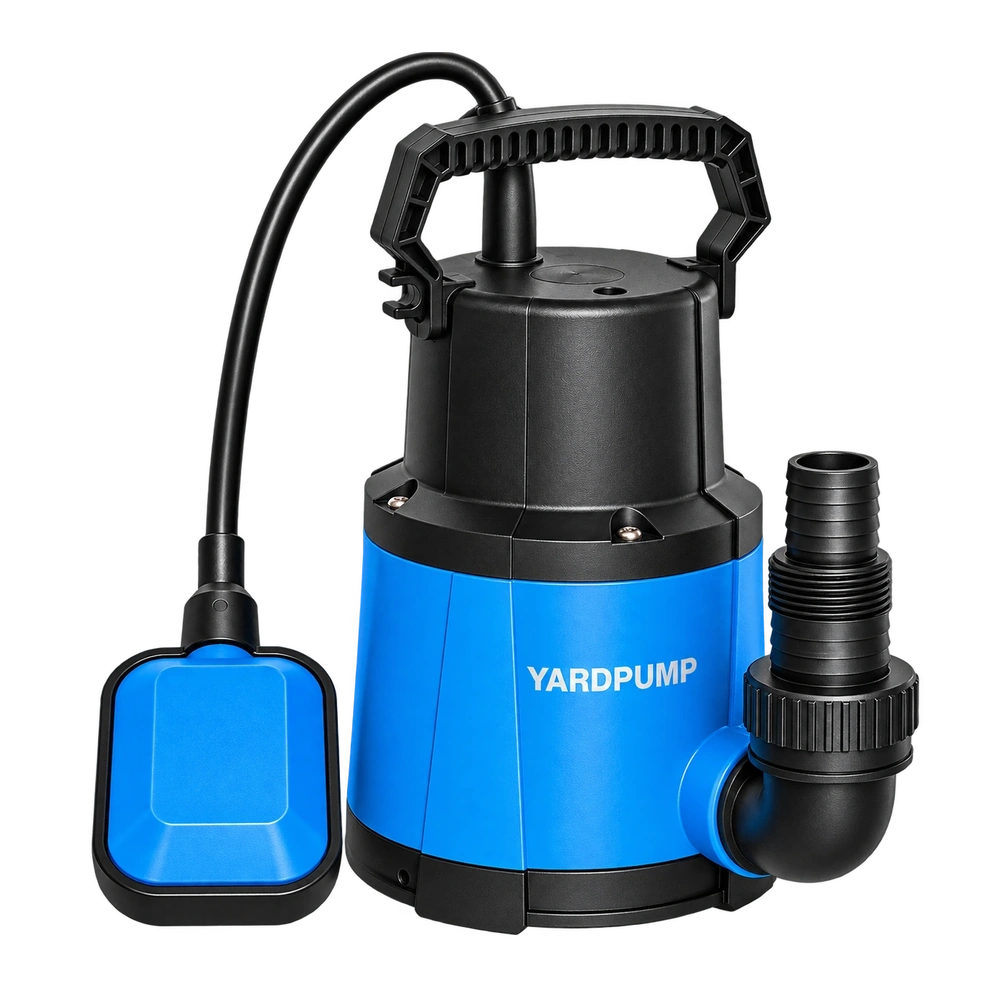
“If the primary pump failure triggers an alarm, do we still need a backup?” When a property is unattended, someone must receive the warning and respond before water reaches a damaging level. An alarm does not remove water.
Evaluate normal pumping, pumping during defined failures and notification as separate functions. They can work together within one system, but they do not provide the same protection.
Identify the failure the backup must address
A primary pump can lose mechanical function, encounter obstructed level control or lose electrical supply. A second pump on the same failed supply may not address a power outage. Two pumps sharing an obstructed discharge can also experience the same common failure.
List the intended failure scenarios before choosing the backup. A battery-operated backup pump or a manufacturer-confirmed alternative supply has particular capacity, starting and maintenance requirements. Pairing an arbitrary inverter with an arbitrary single-phase pump does not establish a reliable backup system.
The choice should identify both what the arrangement can handle and the conditions that remain outside its capability.
Compare capacity at the actual working head
Assess primary and backup flow against the installed discharge conditions. A backup pump’s advertised maximum flow cannot be compared directly with the primary pump’s flow at its real working head.
Include elevation, pipe and fitting losses, check devices, lowest operating water level, liquid suitability and permitted running duty. Test the configuration intended for use rather than an unusually short open discharge.
Consider an illustrative pit receiving eight litres per minute. After the primary pump stops, forty litres of usable space remain between the alarm level and the overflow level. With constant inflow and no other drainage, that gives approximately five minutes.
Real storm inflow can increase, and the effective pit area may change with height. The calculation nevertheless demonstrates why a message received on a phone may not leave enough time to return home.
Accept each function independently
The primary pump needs to manage the normal inflow and control cycle. The backup needs to start under the specified failure condition and deliver its required capacity at the installed head.
The alarm needs an appropriate sensing location, a functioning notification path and a responsible recipient. Check its supply too. A connected alarm may lose its intended communication route when the router loses power.
The relationship between backup and alarm activation levels depends on the system design. Both should preserve useful margin before overflow. Floats and sensors need room to move or sense correctly without interfering with one another.
When pumps operate simultaneously, losses in a common discharge increase. The combined flow cannot simply be assumed to equal the sum of two separate open-pipe tests. Confirm the approved discharge and check-valve arrangement so operation does not send water back through an idle branch.
Specify backup duration as a tested duty
A battery’s nominal capacity does not independently establish a number of pumping hours. Discharge conditions, age, temperature, controls, starting requirements and the proportion of time running all affect duration.
Ask the supplier to state the head, cycling pattern, battery condition and supply arrangement associated with any duration claim. This makes it possible to compare the claim with the anticipated outage and inflow, rather than relying on a headline runtime.
Maintain the level controls, backup supply, alarm reception and discharge path according to equipment instructions and site risk. Simulating failure should be a controlled activity for appropriate personnel, not an improvised experiment in a flooded area.
The US National Flood Insurance Program recommends a working sump pump, water alarm and battery-operated backup as complementary measures. For a distributor, a useful system specification explains how those functions work together and how their performance will be checked.
An ordinary manual utility pump should not be substituted for a fixed unattended primary pump without confirming the intended duty, control and installation suitability.
Questions buyers ask
Are two pumps always more reliable than one? Not if the same supply, control or discharge failure disables both. Check common dependencies.
Can an alarm replace a backup pump? No. One communicates a condition; the other provides pumping capacity. Response arrangements determine whether the warning is actionable.
Is a smaller backup pump useless? Not necessarily. Compare its actual-head capacity with anticipated inflow and required duration, and document the situations it cannot cover.