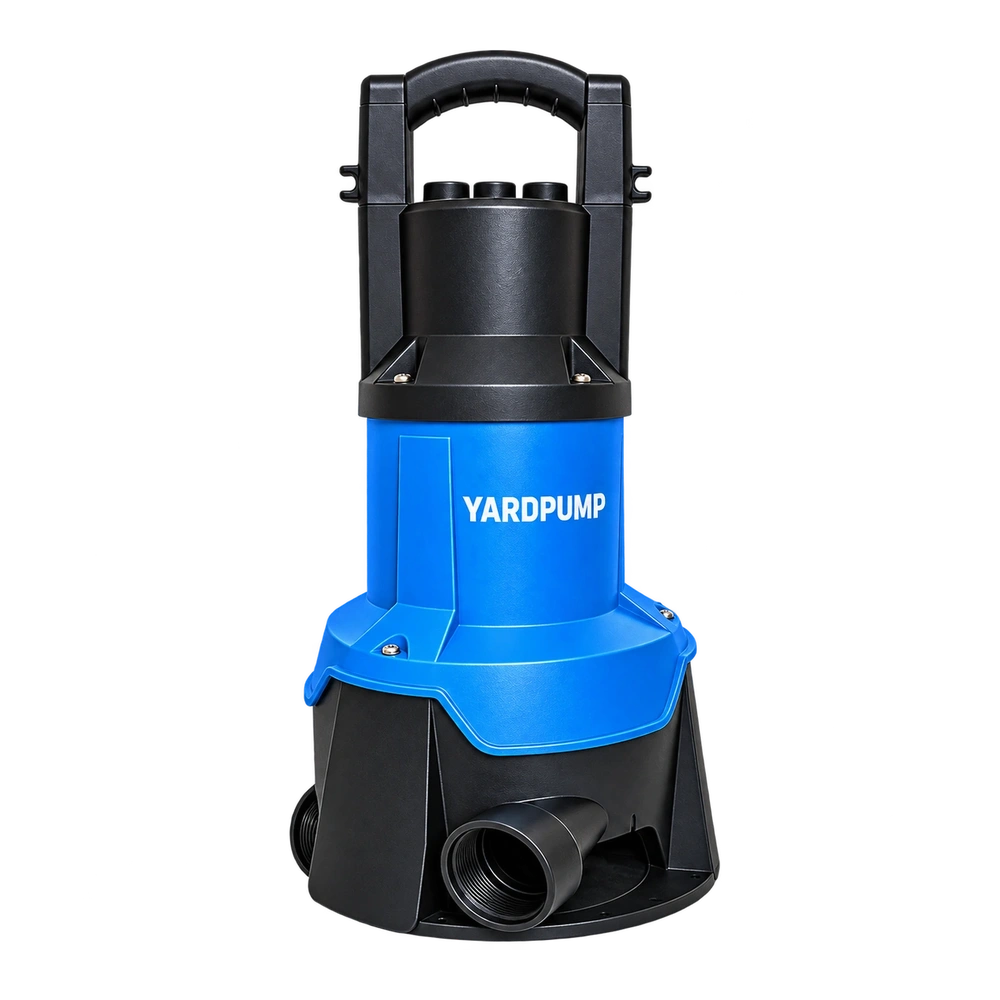
A garden pump shows pressure at its outlet, but a connected Venturi injector will not draw liquid. In this typical irrigation problem, the first explanation should not be insufficient motor wattage. An injector needs suitable inlet and outlet conditions to create suction. One upstream pressure reading neither establishes the required pressure difference nor proves that useful pressure remains at the irrigation outlets.
Measure both sides of the injector
Flow through the injector's internal geometry creates local pressure changes that can produce suction at its intake. Whether it draws, and at what rate, depends on the model, inlet pressure, outlet backpressure, driving-water flow, suction-line resistance and injected liquid.
There is no universal pressure threshold for every injector. Use performance information for the actual model and application. A gas-suction table must not be used directly as a liquid-injection table. Results for water cannot automatically be transferred to a more viscous liquid or one with a different density.
Incorrect flow direction, a closed intake valve or an obstruction can also produce a no-draw complaint. Record the complete arrangement before replacing the pump.
Allocate pressure across the irrigation task
For a hypothetical example, suppose pressure is 3.0 bar before the injector and 2.2 bar after it. The difference is 0.8 bar. These numbers illustrate pressure allocation; they do not establish that any particular injector will draw liquid.
Check the actual model's operating range at those conditions. Then account for downstream pipe losses and the pressure required by the irrigation equipment. Successful injection is not useful if the remaining flow or pressure no longer serves the emitters.
Excessive outlet backpressure can prevent the necessary suction condition. Conversely, creating more differential by inappropriate throttling can compromise irrigation flow or move the pump outside its permitted range. Do not tell an operator simply to keep closing a valve until suction appears. Commission the system using its approved adjustment procedure.
| Record | Decision supported |
|---|---|
| Pressures immediately before and after the injector, plus driving flow | Whether the actual model is in its working range |
| Irrigation-end pressure and flow | Whether the delivery task remains satisfied |
| Suction lift, line bore and accessories | Additional resistance on the intake side |
| Liquid properties and temperature | Relevance of performance data and material compatibility |
A bypass does not create free pressure
A bypass can provide suitable injector conditions in a designed arrangement, but bypass flow, adjustment valves and the main circuit interact. Normal pressure at the pump outlet does not establish correct flow through the injector.
Draw the real circuit and identify pressure-tapping locations. Measurements from unrelated points must not be combined into an imaginary operating condition. Include any changes to valve position, main demand or tank level when comparing tests.
On the suction side, air leaks, blocked strainers, sticking valves and an unsuitable liquid level can prevent reliable drawing. Stop and isolate equipment and release pressure by the approved method before inspection. Electrical and chemical work requires the appropriate competence. Never use mouth suction, contact with an unknown liquid or bypassed protection as a diagnostic method.
Put compatibility and backflow control in the purchase specification
For fertiliser or other chemical injection, confirm that the system and every wetted component are suitable for the intended liquid. Provide appropriate source-water backflow protection under the local requirements. An ordinary garden pump must not be represented as universally suitable for chemical service.
Concentration, contact time and flushing requirements belong to the approved application process. This article supplies no dosing or mixing recipe. Those choices require the responsible specialist and the actual liquid specification.
Acceptance should use an approved test medium and record injection rate, driving-water flow and irrigation-end performance together. A brief video showing movement in a clear suction tube does not establish accurate proportioning or successful irrigation.
Retain the injector model, circuit drawing and complete duty record. Those details allow a distributor to separate pump capability, injector selection, suction accessories and irrigation-network effects when investigating a complaint.
Frequently Asked Questions
Does a 3 bar pump reading prove the injector will work?
No. Outlet backpressure, driving flow and model-specific performance information are also needed.
Can an air-suction figure be used as the fertiliser injection rate?
Not directly. Use data and a confirmed test method appropriate to the actual liquid.
Will a higher-wattage pump necessarily solve the problem?
No. First resolve the pressure and flow budget, suction-side condition and irrigation-end requirements.