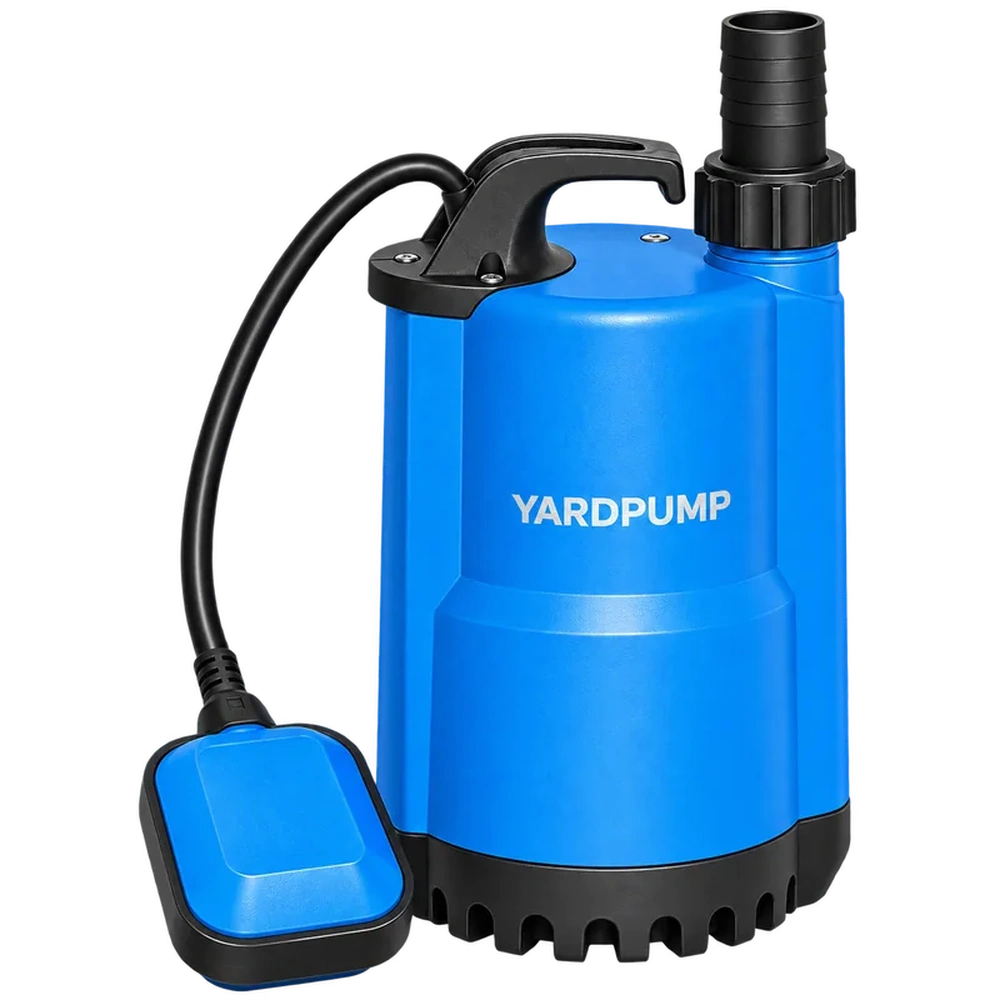
In a typical rainwater installation, flow gradually falls after the pump starts and the plastic barrel wall pulls inward. Increasing pump power or tightening every opening is the wrong response. As liquid leaves a storage tank, gas must replace the displaced volume. Inadequate venting can restrict delivery and damage a container that was never designed for vacuum service.
Liquid removal requires gas replacement
In a near-atmospheric tank, removing water increases the space occupied by gas. With an adequate vent, outside air enters and tank pressure remains close to the surroundings. A sealed lid, blocked vent pipe or dirty insect screen can prevent replacement air from keeping up.
The resulting pressure reduction affects the pump inlet. A surface pump can lose suction pressure margin, develop unstable delivery or lose prime. A submersible pump is not exempt: reduced pressure above the liquid also changes the absolute pressure available at its inlet.
The fact that the pump body is underwater therefore does not establish that a sealed barrel is suitable. The liquid and gas spaces remain part of the same hydraulic system.
Wall deformation is a warning, not a test method
Consider an illustrative duty of forty litres per minute leaving a tank. The vent arrangement must permit corresponding gas exchange under its actual conditions while keeping pressure difference within the container's allowable range. Selecting a small pipe by appearance is insufficient.
Airflow depends on pressure difference, screens, bends, openings and contamination. A vent that works when clean may become restrictive after dust, algae or insects accumulate. The acceptance condition needs a maintenance assumption as well as a nominal opening size.
If walls visibly pull inward, the lid becomes abnormally difficult to release or cracks appear, stop pumping and isolate power. Suitable personnel should follow the container instructions to restore pressure safely and inspect the tank. A pressurised or vacuum vessel requires its own procedure; it should not be opened casually.
An overflow is not automatically an adequate vent
Some arrangements use an overflow path for air exchange, but the actual geometry has to permit it. A submerged outlet, water seal, valve or blocked screen can interrupt that path. Connecting an overflow to another full pipe may also change its ability to admit air.
Do not solve the problem by drilling an arbitrary hole that admits rain, insects and debris. Use a protected vent arrangement appropriate to the storage purpose. Potable-water systems, building services and hygiene separation need their applicable design requirements. The general venting mechanism explained here does not replace tank safety or water-quality design.
A pump test performed with the lid open is a different system condition from operation with a sealed lid. Closing the lid after a successful demonstration can therefore invalidate the conclusion without changing the pump itself.
Inspect the complete air path
Record whether declining flow coincides with tank deformation, falling level or time spent pumping. After electrical isolation, inspect the approved vent path from its protected opening through any pipework to the tank. Do not use hands or face to judge suction at an operating opening.
Where necessary, competent personnel can measure gas-space pressure and vent pressure loss. Retest at the planned maximum withdrawal rate and the lowest relevant water level. Include the normal maintenance condition of screens and openings.
For purchasing, provide tank type, vent arrangement and water-transfer duty together. A single pump-flow requirement cannot establish whether the complete container installation will operate correctly. Correcting venting addresses the cause; adding pumping force can make the pressure difference worse.
Filling the tank also requires gas to leave, so vent design must consider both directions and the intended rates. Screens, valves and protective arrangements should not be assessed only during withdrawal. Bulging during filling and inward movement during pumping are reasons to stop abnormal operation and investigate pressure conditions. Do not use visible container deformation as a way to tune an improvised vent opening.
Questions about barrel ventilation
Can the lid simply be left loose?
That can introduce contamination or contact risks. Use a suitable formal vent arrangement rather than relying on an uncontrolled loose cover.
Why does the system recover after a pause?
Slow air entry is one possibility, but thermal protection or another pump fault can produce similar timing. Record pressure, level and stopping behaviour together.
Can a more powerful pump overcome the vacuum?
It should not be used for that purpose. Greater withdrawal can increase the pressure difference. Restore the tank's intended venting conditions first.