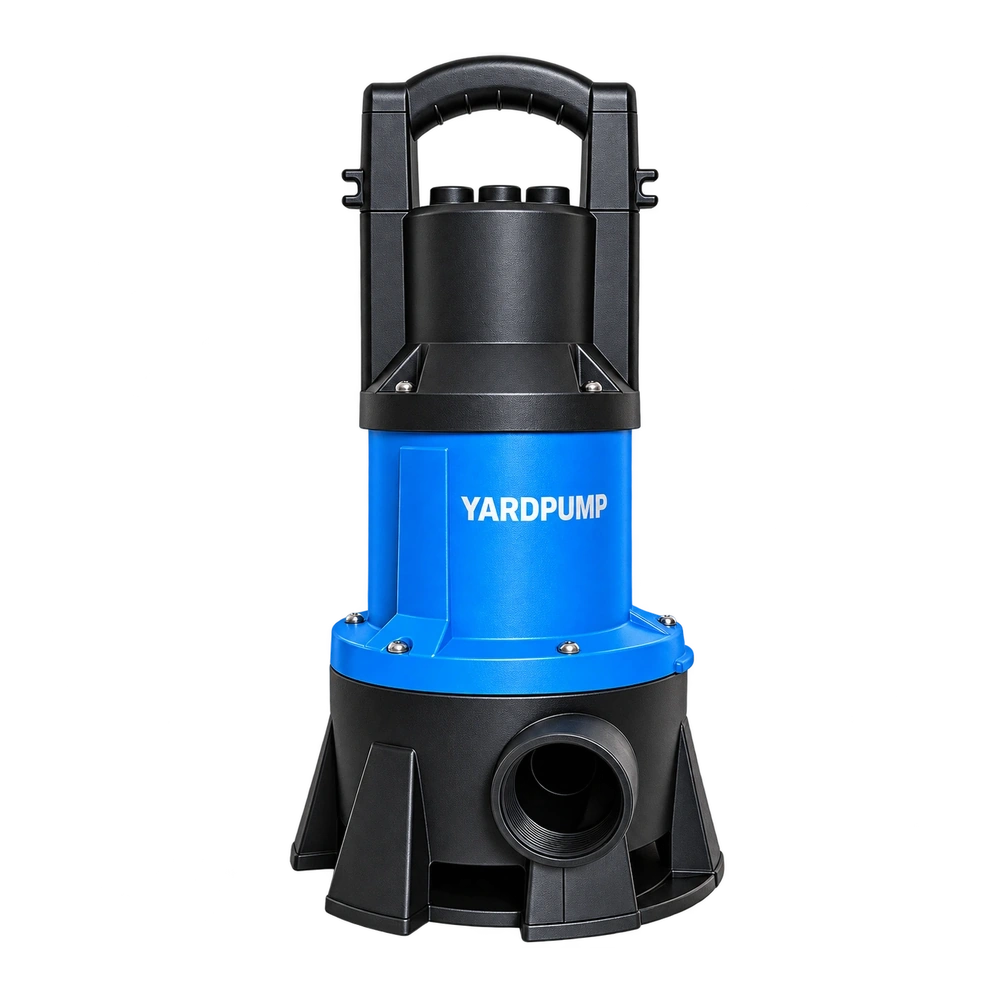
A portable pump seems easiest to place directly in a muddy puddle or on loose gravel. But the inlet flow can carry sediment toward the screen while the feet settle unevenly. Establish a stable, level support allowed by the pump instructions and preserve its inlet clearance. Permission to handle a stated liquid or particle size does not mean the pump may be buried in loose bed material.
Why loose bed material reaches the inlet
Local inlet velocity can move fine sand, soft mud and small stones toward the screen. A solids allowance for occasional suspended particles does not mean the pump can mine a sediment bed continuously. Feet can sink, reducing clearance, tilting the housing, twisting the hose or moving a float toward a wall.
Water accelerates as it approaches the inlet. Fine grains that were stationary on the bed can roll, lift and collect against the screen. Larger stones may never enter the wet end yet still block one side or hold a foot at an awkward angle. A soft bed can also deform gradually under the pump. Being level at placement therefore does not establish stability after part of the puddle has been removed. Increasing the advertised particle passage does not solve these support problems.
A support must be stable and leave water paths open
Isolate power, remove loose debris and confirm the model’s liquid and orientation limits. Use a stable hard surface that will not break apart, float or cover the inlet, and follow the model instructions. Check clearance around the inlet, hose load and control movement before a supervised trial.
A support must carry the load, resist tipping and leave the required water paths open. Use a plate, stand or base accepted for the pump and application. Avoid sharp edges and check that the support does not cover bottom or side inlets. A pile of loose bricks can move; a fine fabric bag wrapped around the pump can blind over. Route and support the hose separately so its filled weight cannot pull the pump off the base.
Raising the pump also raises its intake relative to the surrounding floor. More water may remain even when the pump itself performs normally. Someone who needs both sediment avoidance and a nearly dry finish may need staged cleaning and pumping, or equipment intended for that surface. Do not remove the original screen to reach the last layer. Stop according to the operating instructions when the necessary water coverage can no longer be maintained.
Example: raised placement and remaining water
Suppose a cleaned setup begins with 20 mm around the base. After three minutes, sediment has piled against one side until only 5 mm remains and delivery falls. The figures do not specify a universal clearance; they show why before-and-after sediment and clearance records matter.
For purchasing acceptance, assess the pump, screen, support and supplied hose as an assembled arrangement. Confirm that every foot is supported and that the control moves freely, then check delivery with an allowed clean-water setup. A separate sand-duty assessment needs a defined abrasive material, concentration, duration and wear inspection. One successful session in a muddy hole is not a life test. Retain a sediment sample and photographs if the wet end contains grit after the job.
Include placement in purchasing acceptance
For a compact clean-water transfer pump, a stable base reduces exposure to loose bed material; it does not create a sludge-pumping capability. Continuing mud inflow, migrating coarse sand or the absence of a safe support may require changes to the collection area or different equipment. Isolate power before moving the pump, lift by its intended handle and follow the electrical precautions for the wet location. The correct release decision concerns the whole placement, not simply whether the motor starts.
Frequently asked questions
Does a solids rating permit placement on sand?
No. A passage rating does not approve continuous ingestion from a sediment bed.
Is one brick a suitable base?
Only an approved stable support that cannot tip, crumble or block the inlet is suitable.
If flow returns, is the issue over?
Inspect and clean according to the instructions because sediment may remain in the screen or wet end.