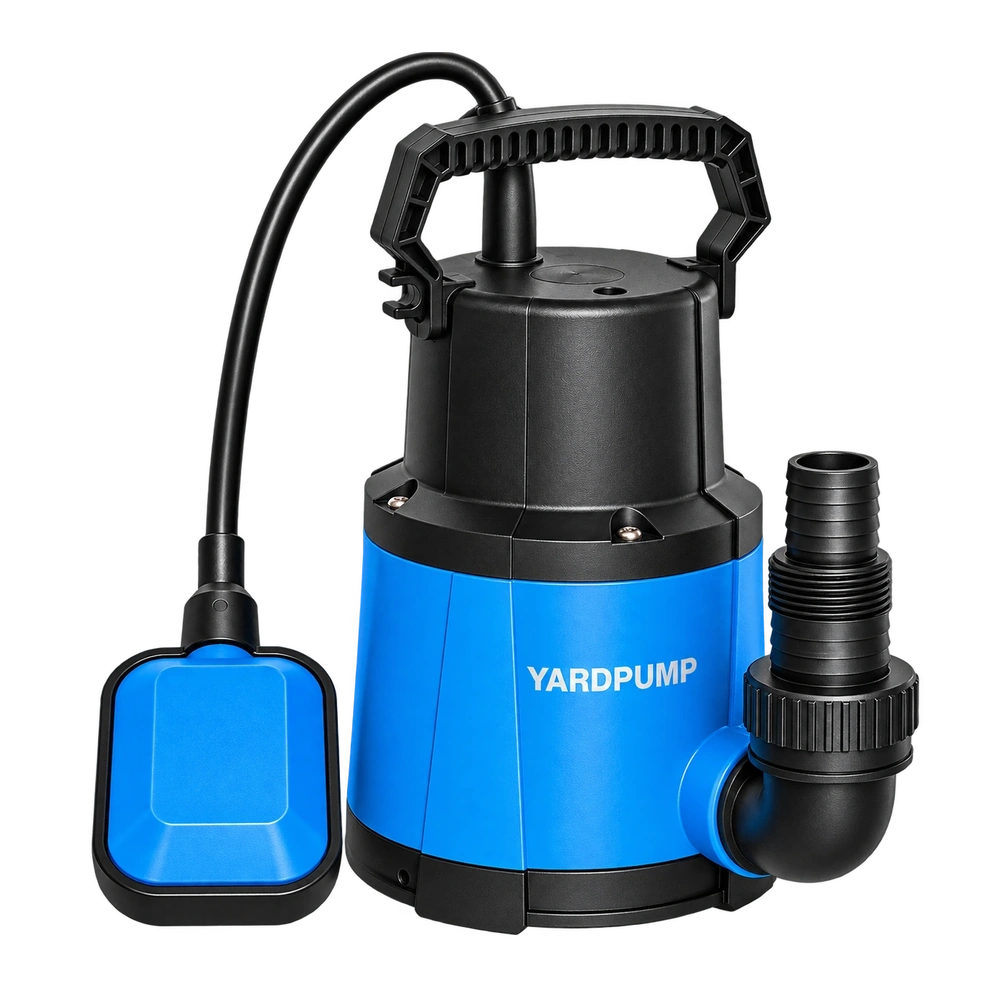
“If we raise the closed impeller and leave space underneath, can we reduce blockage while keeping the original head?” The engineering objective is understandable. However, moving a component does not automatically create a different hydraulic design. A closed impeller still transfers energy through its own passages, and its relationship with the chamber depends on the complete inlet, casing and discharge arrangement.
Closed does not mean rubbing against the bottom
Closed describes the shrouds on the two sides of the vanes. It does not mean that the impeller should touch a bottom plate. A working design preserves appropriate clearances for thermal movement, axial displacement, tolerances and debris. In informal discussion, close to the bottom may describe inlet position or a small interface clearance. A section drawing must identify which one is meant.
Raising the component may change the connection between the inlet and impeller eye, an inlet-side throttling or sealing interface, its position within the casing, and shaft-end retention. Measuring only the distance beneath the impeller cannot capture all those changes. Identify the original dimensional reference before evaluating a revision.
An enlarged space is not a designed vortex chamber
A recessed-vortex assembly coordinates impeller location, chamber volume, inlet and discharge from the beginning. Moving an existing closed impeller by a few millimetres can disrupt its inlet interface or open a return path from a higher-pressure region to a lower-pressure region. It does not necessarily establish the intended indirect energy-transfer mechanism.
Moving a doorway can create floor space without creating a sensible corridor. Similarly, liquid continues to follow the available pressure and resistance paths. More internal circulation can leave the motor doing work while useful external delivery decreases. Conversely, correcting an originally inadequate clearance can remove rubbing. Neither improvement nor deterioration should be assumed from movement alone.
Check the mechanical interfaces too
Review shaft length, retention method, effective thread engagement, bearing location and seal working position. Which interfaces actually change depends on the construction. Adding an improvised washer to raise an impeller is not evidence that seal compression and rotor axial position remain satisfactory.
Changes in hydraulic axial force or vibration also deserve attention. There is no universal number of millimetres that defines a safe modification. A clearance suitable for one assembly can create rubbing, leakage or unreliable retention in another. Mechanical fit and the water-exclusion boundary require assessment alongside the curve.
Evaluate useful delivery rather than reduced amps
Consider an illustrative original assembly delivering five cubic metres per hour at five metres of total head with 480 watts of electrical input. After modification it delivers four cubic metres per hour at that head while consuming 430 watts. Energy per delivered cubic metre increases from approximately 0.096 to 0.108 kilowatt-hours. Lower running power has not demonstrated a saving for the same water-transfer task.
These figures are a calculation example, not a prediction for a real pump. Measure several flow-head points on original and revised samples, recording electrical input, speed, temperature rise and noise. Validate relevant debris and wear behaviour separately. If reduced blockage is the objective, demonstrate improvement in the actual trapping route rather than relying on a photograph of the enlarged space.
Release a defined configuration
Keep drawings, component revisions, assembly instructions and performance data aligned. A revised sample that runs in clean water does not establish performance across production tolerances, abrasive service or extended operation. Any published claim should describe the tested complete configuration.
Keep comparable section drawings before and after the change so installation position, impeller width and chamber dimensions remain distinct variables.
Questions buyers ask
Should a closed impeller be as close to the bottom as possible? No. The specified clearance balances leakage, tolerances and operating reliability.
Does lower current prove the modification worked? Confirm flow, head and thermal behaviour. Current may fall because useful hydraulic work has fallen.
Can a recessed arrangement be developed successfully? Yes, through coordinated hydraulic and mechanical design followed by appropriate validation, rather than assuming that an installation-position change completes the redesign.