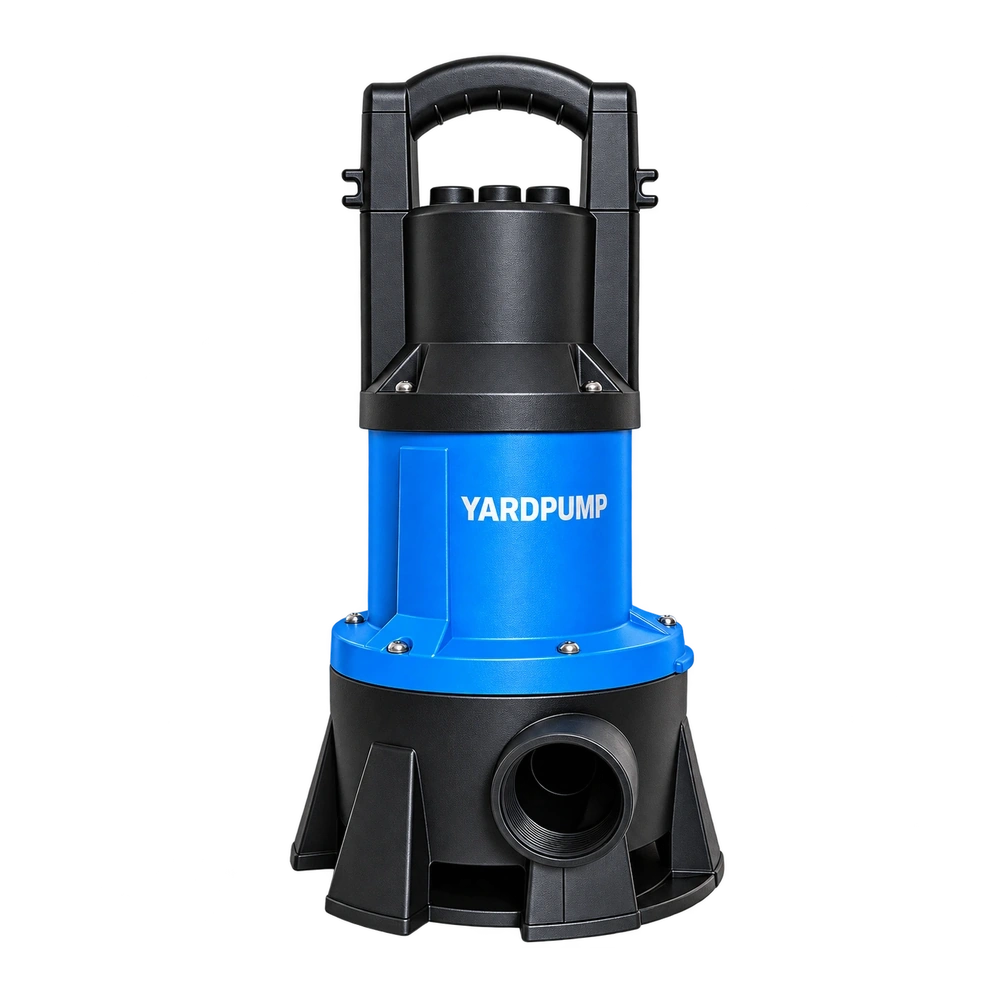
Does a heavier plastic pump housing mean greater strength and less leakage? Thickness matters, but two housings of equal mass can behave differently around bosses, outlets and sealing joints. Assess where material is placed, how it is moulded and loaded, and whether the assembly retains its required geometry over time.
Thickness changes more than material quantity
Local wall thickness influences stiffness, stress and processing. For an illustrative flat-plate bending comparison using the same material and boundary conditions, stiffness varies with thickness cubed. Reducing thickness to ninety percent gives approximately 72.9 percent of the original idealised stiffness. This is not a prediction for a complete curved and ribbed pump housing.
The example shows why a local reduction need not have an effect proportional to the total mass saved. It does not mean every region should be made thicker. Excessive thickness or abrupt transitions can introduce sink, internal defects, uneven cooling and residual stresses. Geometry and manufacturing need coordinated development.
Ribs and bosses control the load path
Appropriate ribs transfer loads into suitable regions rather than concentrating them in an unsupported wall. Screw bosses require suitable root transitions, fastening methods and moulding quality. Additional tightening torque can crack or distort plastic instead of improving joint integrity.
Connected pipework also loads an outlet. Long unsupported rigid pipe, misalignment or installation strain can impose bending on a housing that was not intended to support it. Instructions should explain pipe support and connection requirements. Whether the pump physically fits inside the pit is only one installation question.
A seal needs its geometry to remain suitable
Static sealing depends on groove and mating-surface geometry together with controlled compression. Under sustained load and temperature, plastic can deform over time. Material, stress and environment influence the extent. Changes in cover or boss geometry can alter the ring's original compression.
A newly assembled housing that passes one leak check has not automatically demonstrated long-term behaviour. Consider dimensions and water exclusion after relevant temperature, immersion, assembly and operating exposures. A thicker ring or uncontrolled extra sealant is not an adequate substitute for resolving a distorted joint.
Specify material and moulding together
Resin grade, reinforcement, moisture condition and any approved reprocessing arrangement influence manufacturing and long-term behaviour. Identical generic material names do not establish identical moulding conditions or components. Inspect important dimensions, burrs, weld lines and relevant defects near seals, inserts and vulnerable sections.
Some defects become apparent only after loading, temperature changes or impact. A smooth exterior may not reveal them. Equally, a resin specimen's strength data cannot directly establish complete-housing mechanical or sealing performance.
Compare a lightweighting proposal through its changes
Identify revised dimensions and materials. Determine whether mass was removed through an improved noncritical region or from a sealing interface, boss or connection section. Review sections and the change explanation before applying the appropriate assembly, fastening, restraint, water-exclusion and service-related mechanical or thermal assessments.
Keep approved samples and critical production dimensions. Total housing mass can be a supporting check, but material placed elsewhere can conceal an inadequate local section. Conversely, validated lightweighting can improve material use while preserving function and should not be rejected solely because the component is lighter.
For a buyer, the useful conclusion is a defined geometry and process that maintain the intended load and sealing conditions. More grams or more ribs cannot substitute for that evidence.
Dimension records should identify the conditioning state rather than treating freshly moulded and immersion-exposed parts as equivalent measurements. Retain approved material, moulding and assembly revisions with the batch so a local deformation can be traced to its actual configuration rather than explained solely by total weight.
Questions buyers ask
Do more ribs always make the housing stronger? No. Direction, connections, thickness and processing determine their effect; excessive local material can introduce defects.
Is leakage at a joint always the ring's fault? Check the groove, mating faces, fastening and housing deformation too.
Can total mass be an acceptance item? Yes, as a supporting measure alongside material, critical dimensions and complete-function validation.