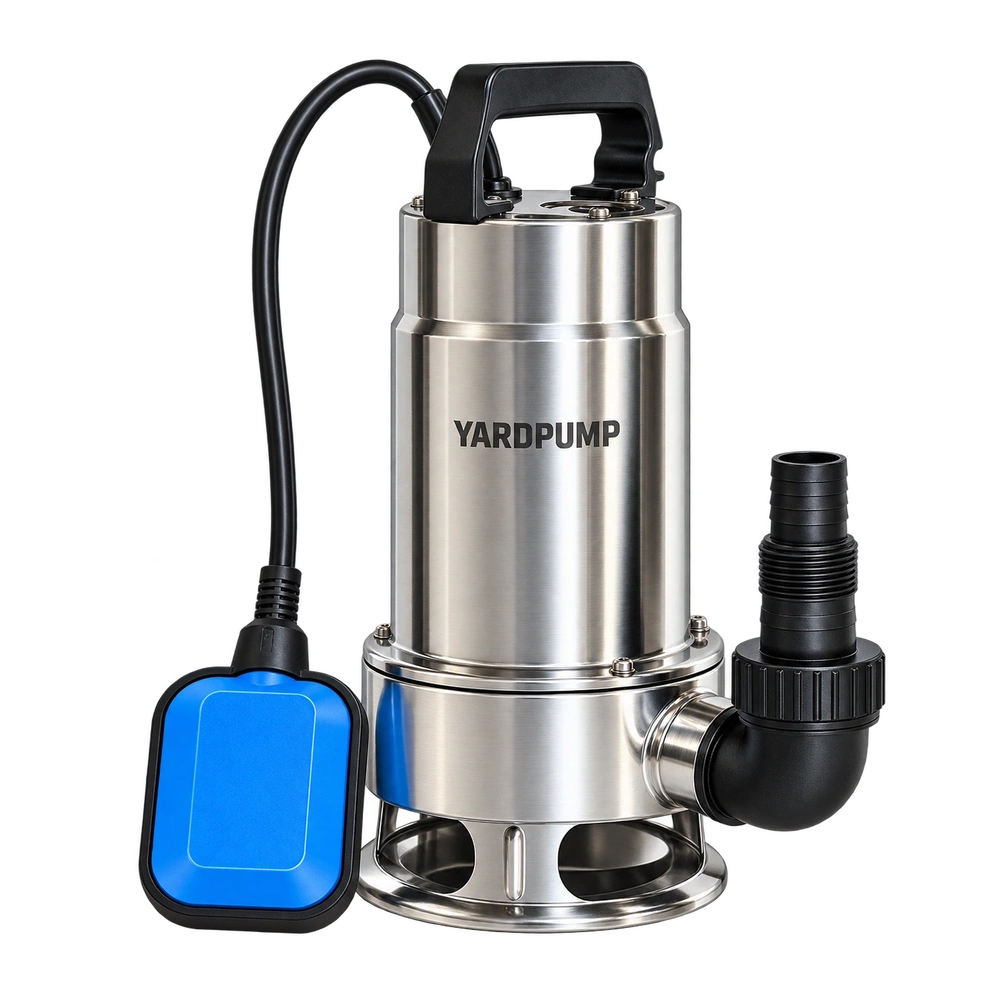
“The outer housing is plastic, so how did water reach the motor?” The material of the outer shell cannot automatically seal every connection. Investigate water ingress by tracing the actual route towards the motor cavity. The five interface groups below are useful inspection priorities, not a ranking of failure rates for every pump model.
Cable entry combines sealing with restraint
An entry may use compression, potting or another construction. Incorrect cable diameter, damaged sheath, incompatible materials or inadequate restraint can compromise the boundary. Carrying the pump by its cable can also transmit force into the entry or internal connections.
Control the cable version, outside diameter and surface condition together with the sealing components and approved assembly method. Verify restraint as well as water exclusion. Tightening a gland further is not a universal remedy: excessive compression can damage the sheath or plastic parts. Potted constructions require control of cleanliness, mixing, curing and adhesion rather than an assessment based on the visible quantity of compound.
Shaft sealing is a moving interface
A rotating shaft crossing the housing needs a dynamic sealing arrangement. Mechanical faces, radial lip seals and combined designs have different requirements. Contamination, shaft damage, eccentricity, misalignment and unsuitable lubrication or cooling can create a leakage route. A second seal does not remove these conditions.
Where an oil chamber exists, assess the outer seal, chamber and motor-side boundary separately. Water in the oil does not by itself prove a wet motor winding. A motor that still turns does not prove sound sealing either. Shaft tolerances, seal materials and working positions need defined specifications.
Covers and housing joints need controlled compression
A static ring can be missing, twisted, cut, trapped by a burr or dimensionally incorrect. Uneven cover loading, uncontrolled screw assembly and long-term plastic deformation can change its compression. A joint that looks tightly closed may still leave the seal outside its intended working range.
Check groove dimensions, ring size, material, cleanliness and the specified fastening process. Forcing a thicker ring into the same groove can distort a cover. Uncontrolled additional sealant can hide a dimensional problem and complicate future service. The ring, groove and assembly process form one system.
Housing weaknesses are often local
Cracks, joint defects, stresses around inserts and fractured screw bosses can form water paths. Dropping a pump, imposing side loads through a pipe, using an incompatible liquid or exceeding temperature limits can damage previously satisfactory components.
Design and production controls should address resin grade, local wall and rib geometry, moulding defects and dimensional stability. Total housing weight cannot reveal every thin section or unsuitable stress concentration near a seal. Validation must also consider relevant handling, assembly and operating conditions.
Other penetrations need a place on the drawing
Depending on the model, fastener holes, sensors, float-switch leads or other penetrations may introduce additional boundaries. Not every pump has all these features. Identify which holes remain external and which interfaces can communicate with an internal cavity instead of focusing exclusively on the shaft seal.
Connect prevention to evidence from returned equipment
Link incoming inspection, assembly controls and complete-product testing. Apply the appropriate water-exclusion, mechanical-restraint and post-operation assessments. Test pressure, duration and method must come from the product's requirements, not a number copied from an unrelated model. One static immersion result does not establish performance after extended running or ageing.
For suspected ingress or electrical leakage, isolate the supply from a safe, dry location. Do not keep restarting the pump or ask a customer to open energised equipment. Preserve a return's original condition before qualified personnel trace moisture, assess electrical condition and establish the route. Associate the entry point, initiating cause and corrective revision so the same issue can be prevented.
Questions buyers ask
Does a wet exterior prove motor ingress? No. Look for evidence crossing the actual protective boundary.
Will more adhesive cure every leak? No. Correct geometry, materials, loading and assembly still matter.
Can a pump return to use after replacing one ring? Establish the cause and complete the applicable water-exclusion and electrical checks first.