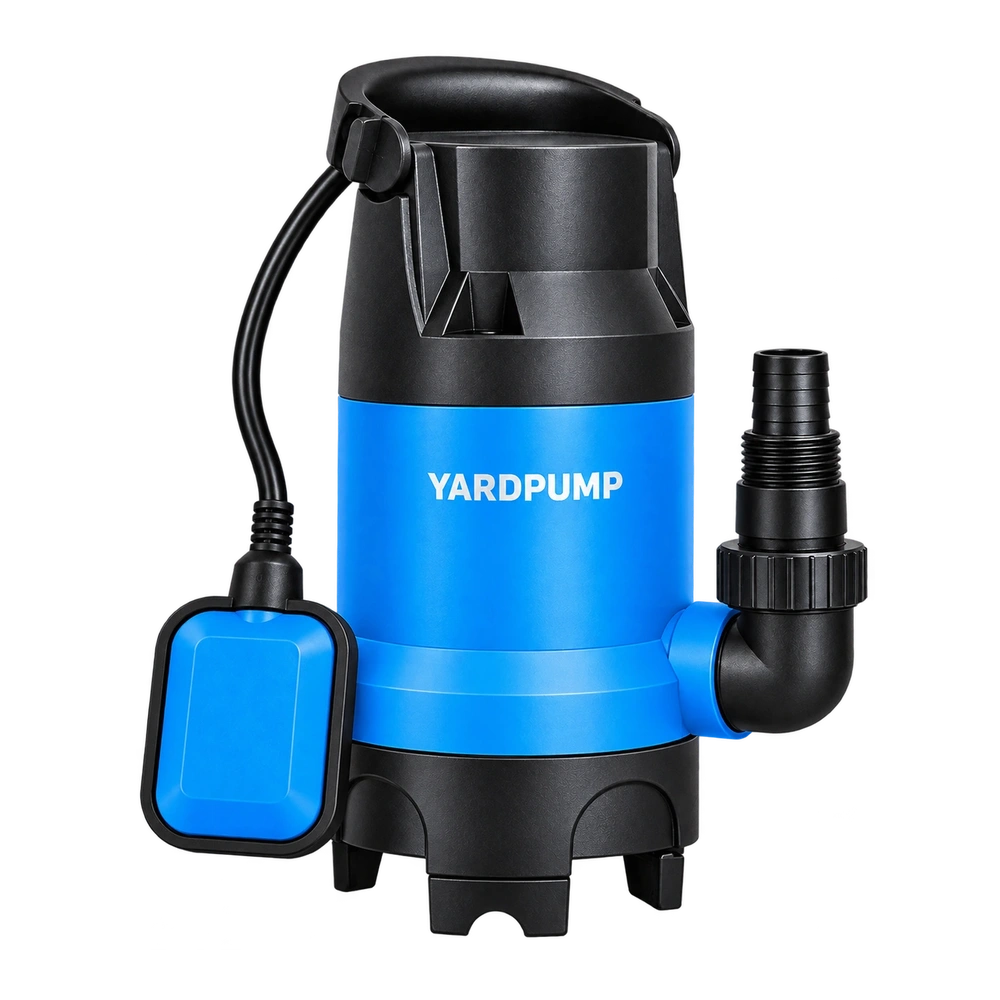
Consider a submersible motor that is quiet when cold, develops a sharp noise when warm and goes quiet again after cooling. If a bearing or end cover was recently changed, check which end locates the shaft and which is intended to accommodate relative axial movement. Shaft and housing do not necessarily grow by the same amount. A spacer, retaining ring or wider replacement bearing can lock an arrangement that was intended to absorb that difference, loading the bearings as the unit warms.
Location and axial accommodation do different jobs
The locating bearing establishes axial shaft position and carries the loads assigned by the design. Another position may accommodate movement through a specified sliding fit or through a bearing whose construction permits axial displacement. Consult the drawing. Some machines instead use paired or preloaded arrangements, to which a generic instruction to free one end does not apply. A floating bearing is not permission to loosen an arbitrary outer-ring fit. That fit still has to handle its load without unintended creep. Identify the interface, available travel and stops.
A shaft that spins easily on the bench can still bind at operating temperature. End-cover shoulder depth, bearing width, wave washer working height and housing distortion can alter the available travel. The assembly check should specify the direction, applied force and measuring datum rather than say the shaft should feel slightly free. Also verify that the permitted motion preserves impeller clearance and seal position. Accommodating thermal growth and allowing unrestricted rotor endplay are different design choices.
Estimate relative expansion, not just shaft growth
Suppose the effective shaft length between bearings is 140 millimetres. For a steel shaft with a 50 degree Celsius rise and an illustrative expansion coefficient of 0.000012 per degree, growth is about 0.084 millimetres. If the bearing seats in the housing move apart by 0.040 millimetres under the same condition, the difference is about 0.044. The assembly must accommodate relative movement, subject to actual temperatures, fits and tolerances. An available travel of about 0.020 millimetres in this example calls for a closer look at hot constraint. These numbers are not generic assembly tolerances.
Have qualified staff document sound, vibration and temperatures through cold start, warm-up, stable operation and cooling in an approved test. Compare with a known good assembly of the same revision while holding water level, load and mounting comparable. Hot noise can also come from seals, rubbing or lubrication. Isolate and verify power off, allow cooling and relieve pressure before dismantling. If there are axial witness marks or a retaining part where the drawing expects movement, investigate that evidence rather than jumping to a different radial-clearance class.
Temperature location matters to the expansion estimate. One spot on the external housing does not give the mean shaft temperature or the full seat-to-seat growth. If external readings support an estimate, identify the assumptions and check relevant extremes. Use a planned professional test where internal measurements are needed. Retain bearing lots, end-cover tightening and washer state for a hot comparison. Record every change introduced by reopening the motor; an improved result could come from reseating the cover rather than the replacement bearing class. If the original drawing does not provide a floating function, send the arrangement back to the designer rather than removing an axial restraint during repair. A designed preloaded system needs a different analysis from a locating and non-locating pair.
Frequently asked questions
Does a floating bearing have no axial limits?
It needs defined travel and limits. The arrangement specifies the moving interface and how it is retained.
Is cold shaft endplay the available travel of the floating bearing?
Not necessarily. A dial indicator can pick up internal bearing displacement, washer deflection and motion of the whole rotor. Check what the setup measures.
Can the unit ship if the noise disappears after cooling?
Confirm what produced the hot symptom and whether it remains absent through a representative warm run. Quiet at room temperature does not close the investigation.