The answer first
A buyer asks for a “waterproof stainless-steel pump” to empty a saltwater pool. Another needs to transfer water between coastal fish ponds. Both may be shopping for a compact submersible pump, but neither job can be approved from the words waterproof, stainless steel or clean water alone. The first question is not how much water the pump can move. It is whether the exact pump configuration can safely contact that liquid for the intended time.
The short answer: A general-purpose drainage pump is not automatically suitable for seawater, a saltwater swimming pool or chemically treated pond water. Some pump models are specifically sold for freshwater and saltwater applications; other manufacturers explicitly exclude saltwater. Ask for written compatibility information for the precise model and electrical version before purchase or use.
“Saltwater” describes several different jobs
A saltwater swimming pool is not the same environment as the sea. Pool water may contain dissolved salt as part of a chlorine-generation system, along with active disinfectants and treatment chemicals. Coastal aquaculture water can contain much more salt, suspended organic matter and different dissolved substances. Brackish water lies somewhere between fresh water and seawater, but its chemistry and seasonal conditions vary. A tank containing cleaning chemicals is another category entirely.
The practical buying brief should identify the liquid source, approximate salinity or chloride concentration if known, pH, temperature, disinfectants, solids, operating time and whether fish or people may be exposed. Do not infer salt compatibility from a single pH figure: pH describes acidity and alkalinity, not the chloride concentration or the behavior of all chemicals in the water.
Stainless steel on the outside does not protect every part inside
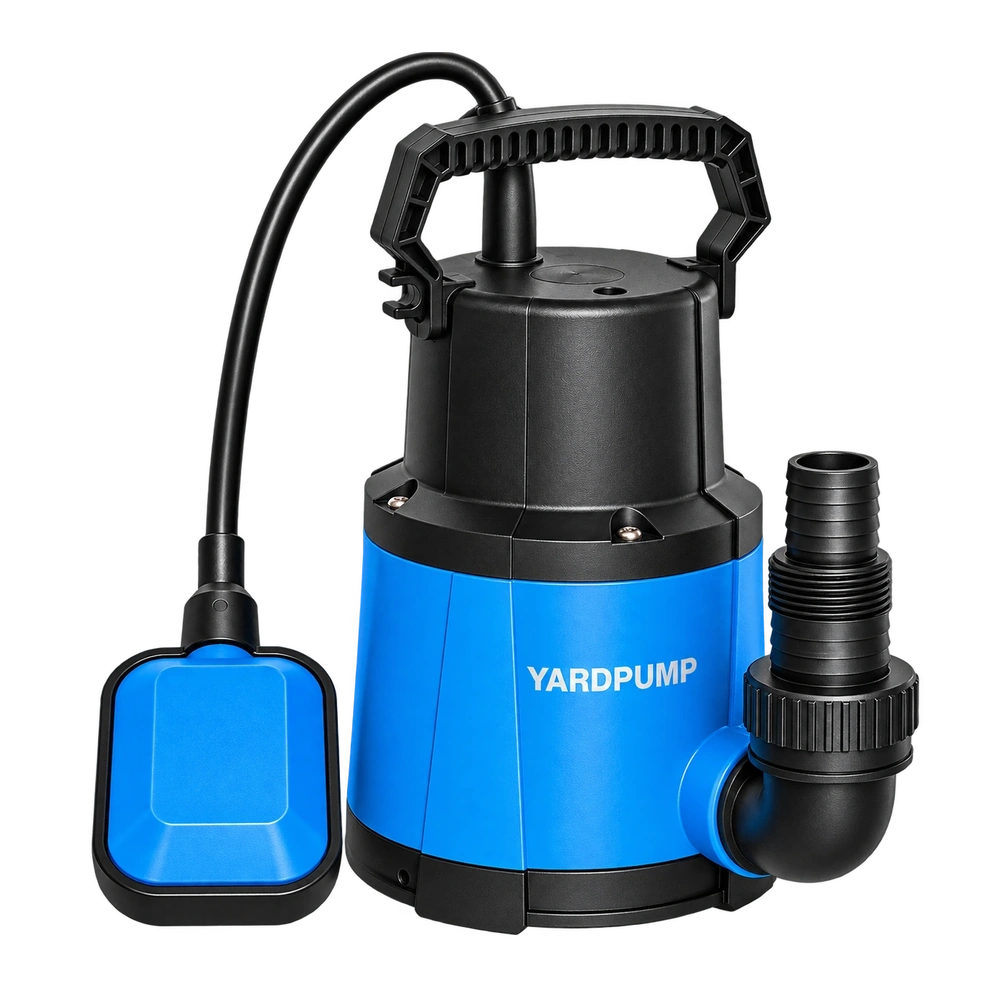
A pump can have a stainless-steel outer sleeve and still contain a different shaft, screws, spring, seal hardware or motor enclosure. Saltwater contacts the components along the wet hydraulic path, not only the part photographed on the listing. Before a supplier calls a model suitable for saline service, the complete bill of wetted materials needs review.
Ask about the impeller and casing, shaft and fasteners, mechanical-seal faces and springs, elastomer O-rings, cable entry and any exposed metallic components. Check whether the motor and oil-chamber arrangements are compatible with the intended liquid. A label such as “304 stainless steel housing” tells you one construction detail; it does not certify the entire assembly for marine use. Type 316 stainless steel often provides improved resistance to chloride-related attack compared with 304, but it is not a universal guarantee against corrosion, particularly in stagnant crevices or aggressive conditions.
A plastic body can reduce one source of metal exposure, yet a plastic-bodied pump still contains other materials and seals. Neither plastic nor stainless construction alone is a pass/fail test.
Think about exposure time, temperature and the next use
A pump used briefly to empty a pool may face a different duty from a unit submerged continuously in an aquaculture pond. Short exposure does not automatically make an incompatible liquid safe, and “IPX8” addresses a defined water-ingress protection condition rather than resistance to salt, disinfectants or chemical attack. Continuous operation also requires the motor and cooling arrangement to be approved for the specific duty.
Temperature changes both pump operation and material behavior. The liquid temperature limit in the manual is a hard selection condition; do not use the thermal protector as a substitute for it. A manufacturer may explicitly exclude hot water and saltwater from a standard garden-pump family even when its product is suitable for ordinary pool drainage. That is why the exact manual matters more than a generic category label.
If the pump will be used around live fish, ask separately about material compatibility, leakage risks, water-quality impact and safe isolation. A water-transfer pump is not automatically a filtration, aeration or life-support system.
A practical approval checklist for buyers and distributors
Before selecting a pump, collect six blocks of information. First, identify the liquid and any salt or chemical treatment. Second, describe the debris and the maximum expected solids, including whether abrasive sand is present. Third, state the required flow at the actual lift and hose arrangement—not two unrelated maximum values. Fourth, record the immersion depth, runtime and operating temperature. Fifth, confirm the local voltage, frequency, plug, cable and protective installation. Sixth, request a model-specific materials list and written confirmation of permitted use, cleaning and inspection requirements.
If a supplier offers a saltwater configuration, record the exact approved variant and the changes from the standard pump. A change of seal elastomer, spring material or motor sleeve can affect the complete approved specification. Keep the sample, drawing, test plan and commercial quotation tied to the same revision. Do not transfer a claim from one special configuration to every pump in the family.
For YARDPUMP, the WQD-PH and WQD-PJ families are possible starting points when the job requires larger-volume pond transfer; QDX-SC and WQD-SD offer 304 stainless-steel-housing options for different water categories. These are starting points for a technical inquiry, not declarations that the standard versions are seawater-rated. The precise wetted materials, salinity limits, solids, duty point and market electrical version must be agreed before a recommendation.
The safest buying answer is sometimes “not yet confirmed”
Imagine a distributor receives a request for a 230 V pump to drain a saltwater pool twice a year. The pool owner knows the approximate volume but cannot supply the water chemistry or the discharge route. Rather than promise that any stainless pump will work, the distributor should ask for the liquid treatment, intended exposure time, total head and installation constraints. Only then can a compatible configuration be assessed.
For coastal aquaculture, the same discipline matters even more because pump failure may affect water management and living stock. A material claim should be traceable to a real approved product version, not inferred from a photograph or a broad “corrosion-resistant” slogan.
Bottom line: Choose the liquid compatibility first, the hydraulic duty second and the construction variant third. If saltwater suitability has not been confirmed for the exact model, do not treat the pump as approved for that use.
Frequently Asked Questions
Can I use a normal clean-water submersible pump in seawater? Not unless the manufacturer confirms the exact model and configuration are suitable for the actual seawater conditions.
Is a 304 stainless-steel housing enough for a saltwater pool? No. The shaft, fasteners, seal hardware, elastomers, cable entry and other wetted parts also matter. Pool treatment chemistry must be checked.
Does IPX8 mean a pump resists saltwater corrosion? No. An ingress-protection rating does not establish chemical compatibility.
Can a dirty-water pump move saline pond water with debris? Only if both the liquid chemistry and the debris type/size are within the approved limits; an allowance for soft solids does not automatically cover sand or salt.
What should I send an OEM supplier? Liquid source and chemistry, temperature, solids, flow at working head, immersion depth, duty cycle, electrical market and required materials/documentation.