Start by confirming what changed
“The pump throws water out when nothing is connected. Attach my garden hose, and the flow becomes a trickle.” Record the setup before and after the hose is attached instead of immediately blaming motor power. Note the hose length and actual inside diameter, the height from the source water to the highest point and outlet, and any added bends, valves, nozzles or small-bore fittings.
If the pump performs normally through a short, clear adapter but slows sharply with the longer hose, inspect the discharge system first. Disconnect the electrical supply before adjusting the setup, and follow the exact model's instructions. Never work on energized equipment while standing in water.
Step 1: Check the hose's true inside diameter and narrowest fitting
A listing that says a pump can connect to a garden hose confirms a possible physical connection, not that the hose will preserve the pump's flow. Reducing a larger outlet to a small-bore hose changes velocity and friction loss. Check the narrowest passage through the entire route, including adapters and quick connectors, rather than relying only on the pump's nominal outlet size.
Step 2: Check kinks, flattened sections and expandable designs
A lightweight hose can be convenient to store, yet a bend, reel or collapsed section may create local resistance. Not every expandable hose is unsuitable; inspect its actual construction and behavior under the intended duty. If a correctly sized, unobstructed conventional hose restores flow after a safe, power-isolated change, the discharge line was a likely contributor.
Step 3: Record the highest point and the route
Do not look only at where the outlet finally ends. The hose may climb over a railing, wall or tank rim first. That high point changes the lift and can affect air management during starting. If the pump does not discharge, do not drill holes into the pump or hose based on generic online advice; follow the exact model's approved installation and troubleshooting instructions.
Step 4: Check the intake screen, fittings and return-flow components
Leaves, silt or other debris around the intake can reduce available flow. A small quick connector, check valve or spray nozzle can also restrict the discharge. Disconnect power before cleaning and use only the methods allowed by the manufacturer. Do not remove protective parts or compare configurations by dismantling energized equipment.
Step 5: Confirm the duty point before replacing the pump
A more powerful pump has a different performance curve, but it cannot clear a narrow hose or straighten a crushed section. Record the target flow, vertical lift, hose length and bore, fitting arrangement and whether the route can be changed. Then check the selected power variant's Q–H curve at the required working point. Maximum flow and maximum head are different ends of a curve, not two outputs achieved simultaneously.
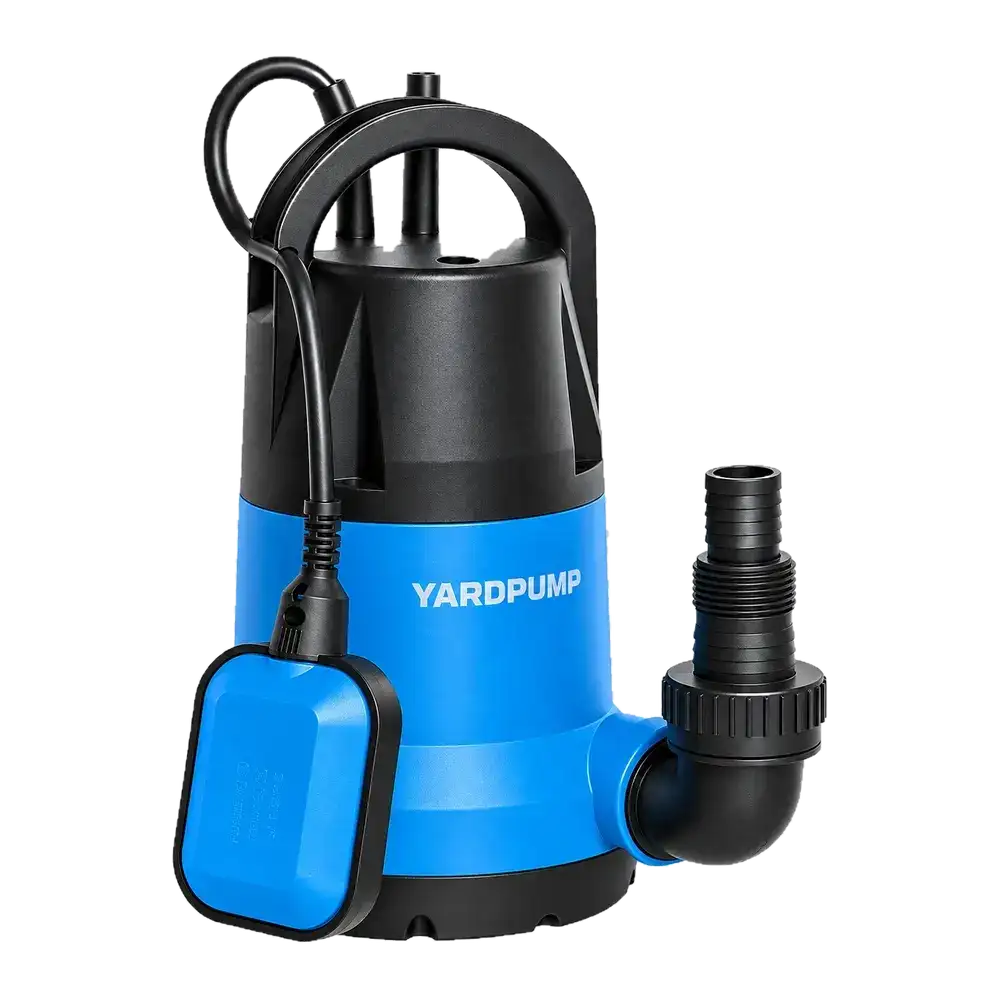
YARDPUMP QDX-PA is a clean-water family for suitable transfer duties, while QDX-PH is a low-level clean-water option. Neither should be sold with a fixed hose-end flow promise based on wattage or Qmax alone. Record the hose and fitting configuration and check the exact variant's curve.
A five-question customer-service script
Ask the customer: Does the pump work with a short, clear discharge? What are the hose length and inside diameter? How high is the highest point above the source water? Are there kinks, collapsible sections or a restrictive nozzle? Is the intake screen clear?
These answers often reveal more than the pump's wattage. If the unit overheats, trips a protective device, leaks electricity or makes abnormal sounds, stop using it and seek qualified inspection instead of continuing trial-and-error tests.
FAQ
Does a longer garden hose always reduce flow? With other conditions equal, extra length generally adds friction loss. The size of the effect depends on bore, flow, fittings and elevation.
Why is the pump strong without a hose but weak through a 3/4-inch hose? Check the true inside diameter, length, narrow fittings and working head. The nominal connection size alone does not identify the cause.
Should I buy a higher-horsepower pump? Check the line and intake first, then use the exact variant's performance curve at the required duty point.
Should I drill an air-release hole into the pump or hose? Not based on generic online advice. Follow the exact model's approved installation and troubleshooting instructions.