“The motor has a 1.15 service factor. Can we specify a pump that needs 15 percent more power all the time?” Do not budget overload this way. A stated motor service factor belongs to defined nameplate and operating conditions. It does not automatically increase the complete pump's hydraulic, thermal, sealing or continuous-service limits, and it should not be assumed where the actual motor has no such declaration.
Identify which power the factor refers to
Motor service factor concerns the applicable motor loading basis, normally related to rated mechanical output in the relevant nameplate system. It is not a multiplier for maximum flow, maximum head, electrical input or every other rating. Confirm the motor documentation and its conditions before performing any calculation.
For a hypothetical arithmetic example only, a motor rated at 0.4 kilowatts of mechanical output with a documented factor of 1.15 gives 0.46 kilowatts on that multiplication. It does not prove that the assembled pump may operate at that load indefinitely in any water temperature. Nor does it turn a 0.4-kilowatt electrical-input marking into a shaft-output rating.
Overload margin is not free thermal capacity
Higher mechanical load generally changes current, losses and heat. Operation in an overload allowance can also alter efficiency, power factor and speed from their rated-load values. Manufacturer guidance warns that using service-factor loading can reduce expected motor life compared with rated loading. There is no basis for assigning a universal life reduction from the factor alone.
Voltage, frequency, cooling and the relevant temperature conditions remain important. A small submersible pump's cooling depends on its actual design and permitted immersion or water-flow conditions. A service-factor statement from an unrelated air-cooled industrial motor cannot define the liquid limit of a compact underwater pump.
The motor is only one part of the pump
An impeller change that raises shaft demand can also change hydraulic thrust, internal flow, vibration and sealing conditions. Even if the motor has documented load capability, the bearing arrangement, shaft connection, housing and control equipment still need their own approval. The pump's allowed operating region must remain intact.
Do not multiply the entire curve by 1.15. Flow and head follow hydraulic relationships, not the service-factor label. A larger impeller or different speed needs measured performance and load evidence. The electrical supply, switching components and protection must also suit the approved configuration; they cannot be resized from a simple factor without a competent system assessment.
Write the procurement decision clearly
Specify the required flow at total head and identify the exact electrical and cooling conditions. Ask for the actual motor declaration, the pump's permitted operating envelope and verification at the required duty. Compare normal operation with rated conditions rather than choosing a permanently overloaded base duty and calling it reserve.
If a supplier proposes service-factor operation, have the responsible engineering team document its permitted conditions, consequences and full-pump evidence. Keep that separate from the model's ordinary catalogue claim. Testing requires suitable instrumentation and qualified personnel; a short low-temperature run does not establish every thermal or endurance condition.
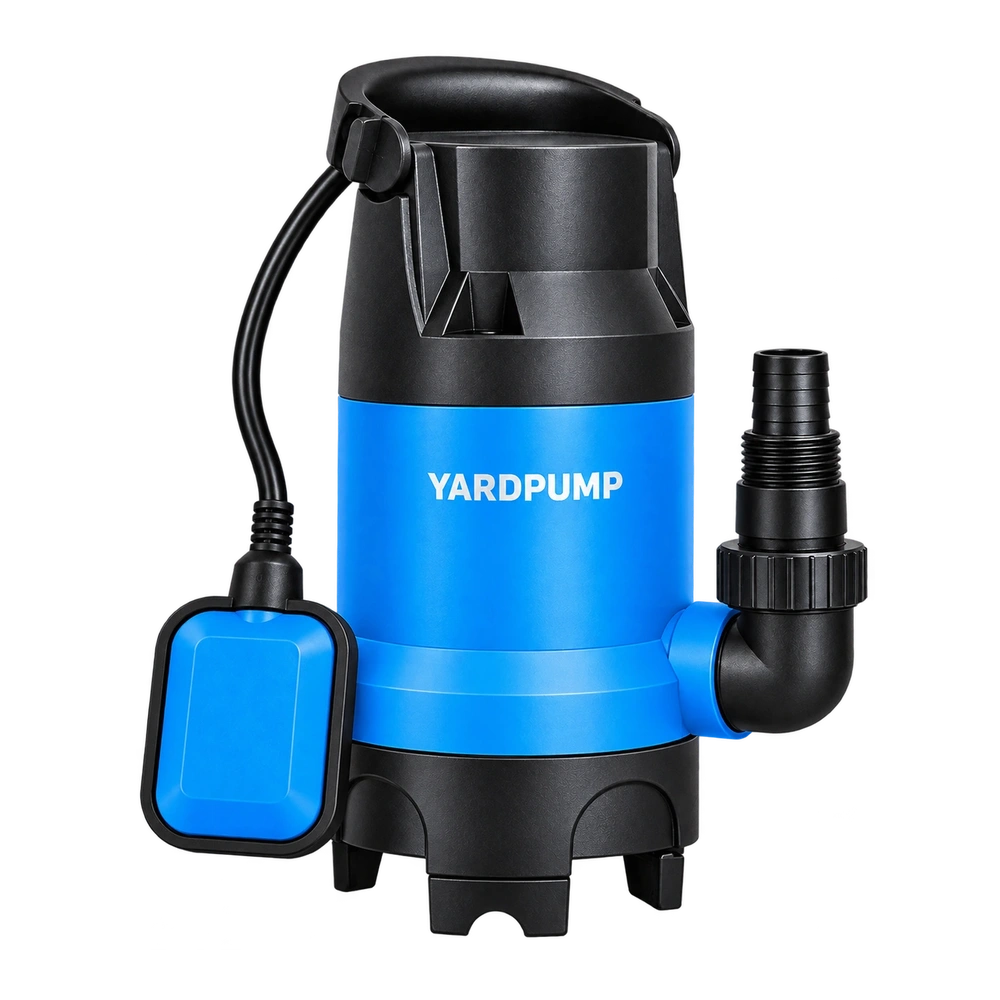
For YARDPUMP compact pump selection, use the current approved model data and do not assume a 1.15 factor across the range. The practical conclusion is to select a pump that meets the job within its released limits. A declared motor allowance is a conditional engineering input, not extra performance that can be spent before the installation is defined.
Keep the evidence boundary explicit when comparing two suppliers. One may declare motor shaft output with a service factor, while another lists complete-pump electrical input without that field. Those labels cannot be ranked by adding the factor to whichever watt number is larger. Request equal-duty hydraulic delivery, real input power and the required thermal evidence, then compare the supported complete assemblies on the same basis.
| Declaration | What it describes | What it does not increase automatically |
|---|---|---|
| Motor service factor | A conditional motor-load allowance | Pump flow or head |
| Duty rating | The intended operating time pattern | Permitted liquid temperature |
| Complete-pump operating limits | The released assembly and conditions | Unapproved component capacity |
Frequently asked questions
Does service factor mean the pump can handle hotter water?
No. The liquid-temperature and cooling limits require separate model-specific approval.
Can I multiply the maximum flow by the factor?
No. It is not a hydraulic performance multiplier.
Is service factor the same as an S1 or S3 duty rating?
No. Duty describes the operating time pattern; a service-factor declaration addresses a different loading allowance under stated conditions.