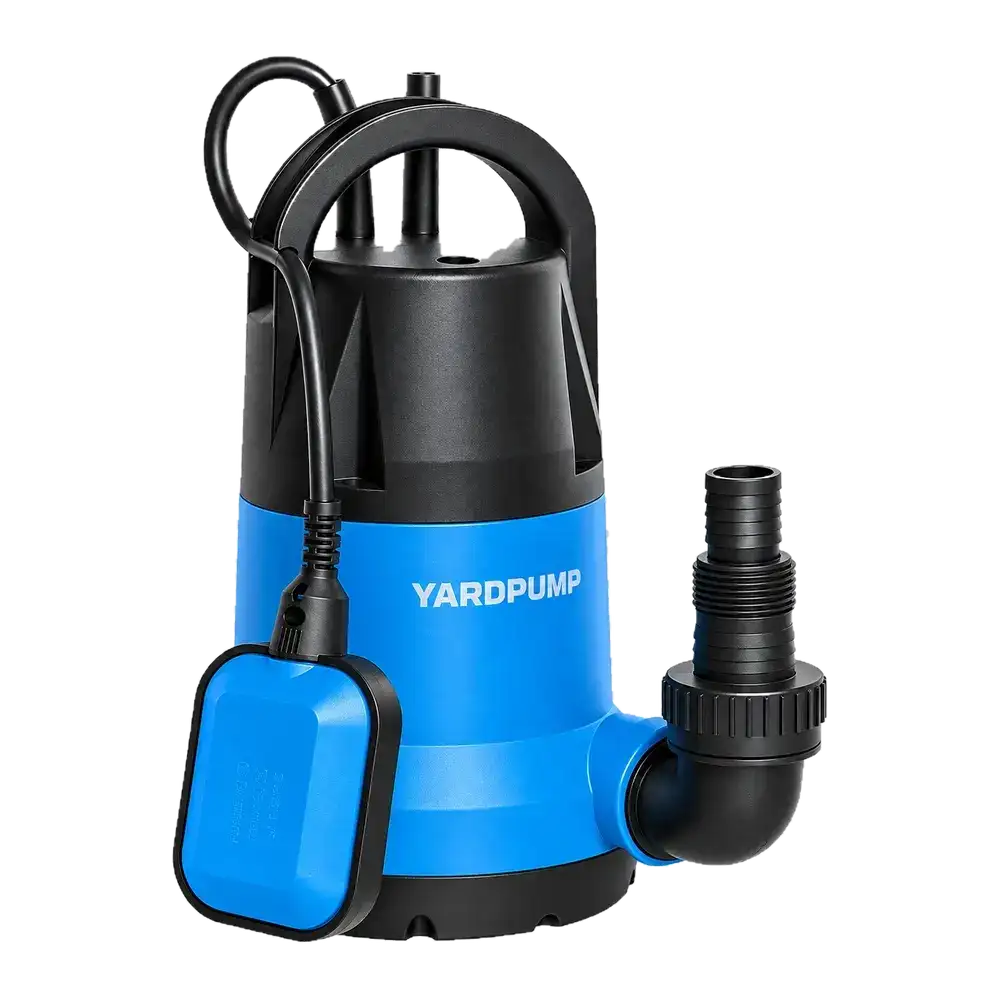
Imagine a compact centrifugal pump that turns freely after a hydraulic stage is serviced. Rotation is correct, and the impeller does not rub, but the head at the requested flow is lower. In a design with a stationary vaned diffuser, check the diffuser part and its permitted assembly orientation. Free rotation shows that parts clear each other. It does not show that the fluid leaving the impeller meets the diffuser passages at the intended angle or that downstream ports line up.
The impeller and diffuser do different work
The impeller adds energy to the water. Its outlet flow generally has both outward and circumferential components. A diffuser gives the fluid passages in which velocity can decrease and some of the velocity head can be recovered as static pressure. There are losses during that process. Vanes are shaped for the expected flow direction and range; the leading edge and passage entry help determine whether the incoming flow enters smoothly or separates. A replacement with the wrong vane shape can fit the housing and still change the head curve.
Orientation matters only where the assembly has a meaningful direction or alignment. Some diffuser rings have repeated identical passages and are rotationally symmetric. In that case, rotating the same ring by an equivalent vane pitch may not change anything. Other assemblies have a preferred face, keys or slots feeding a casing passage, an interstage channel or a separate balancing feature. Flipping a ring, using a mirror-image design, or not seating it to its locating feature can have a different effect. Consult the actual section drawing rather than assuming every diffuser can be “clocked” to improve it.
Compare the geometry before turning the pump on
With the pump isolated and depressurized, document the impeller’s rotation arrow as viewed from the side specified by the drawing. Check the diffuser identification, which face points toward the impeller, seating, clearance and alignment to the collecting passage. Look for damage, mould flash or a gasket that partly blocks the passage. A dry fit or turning the shaft by hand can find interference. It cannot confirm pressure recovery.
For illustration, suppose a baseline assembly reaches 9 metres of head at 55 litres per minute, and a repaired one reaches 7 metres at the same flow and speed. The drop shows a difference at that duty. It does not identify the diffuser as the only cause. First confirm the installed impeller, speed, measurement taps, air and bypass conditions. If replacing the suspect diffuser with an identified approved one restores performance under the same conditions, the paired test adds strong evidence. Record what stayed unchanged. A reading taken at shutoff alone would not test the passage’s behavior at the required flow.
Decide whether the part is wrong or the build is wrong
If a part is seated incorrectly, correct the assembly per the drawing and verify it at several meaningful flow points. If the replacement design changes the shape, count or handedness of the vanes, obtain approval for the hydraulic stage as a combination. Measure head and input over the allowed range and check for unusual noise or instability. Do not grind or bend vanes in place. In a multistage design, check the ordering and orientation of interstage parts as well as the first visible ring. If the pump uses only a volute and has no stationary vaned diffuser, use its own casing diagnostics.
When a repaired pump looks right but delivers the wrong curve, look at the stationary passages as part of the fluid’s path. The useful release condition is a correct assembly verified at flow, not just a rotor that can be turned by hand.
Frequently asked questions
Does every diffuser ring need a particular angle?
No. A symmetric ring may have equivalent positions. Keys, ports and the approved drawing determine whether orientation is significant.
Can bad diffuser alignment raise current?
Input can change when the flow and losses change, but the direction is not universal. Compare input and head at matched conditions.
Can I confirm a repair using the maximum-head value only?
No. Check the agreed flowing duty and other relevant points. A stationary passage can behave differently at working flow.