A filter in the wrong place can create a new problem
Water in a rain barrel may look clear, yet the pump loses flow repeatedly. Cleaning the inlet restores delivery for a while, then the problem returns. The instinct is to wrap a very fine cloth around the intake. That can backfire: a fine layer clogs quickly, adds inlet resistance and may starve the pump of water.
Think of the system as four separate stages: screening leaves before water enters storage, diverting the initial roof runoff, managing sediment and intake location inside the tank, and filtering more finely for drippers or nozzles downstream. They handle different materials. The pump inlet should not be asked to perform every stage at once.
Stage one: stop leaves before they reach the barrel
Gutters, downspouts and collection openings can carry leaves, twigs and insects. An accessible leaf screen reduces large debris entering the barrel. A neglected screen can also overflow or redirect runoff, so it must be easy to inspect and clean while maintaining a safe overflow route.
In a leaf-heavy season, maintenance frequency should respond to actual debris loading rather than a fixed calendar alone. A leaf screen captures visible solids; it does not make roof runoff drinkable.
Stage two: first-flush diversion serves a different purpose
Dust, pollen, animal droppings and fine contaminants can accumulate on a roof between rain events. A first-flush device diverts some of the initial runoff away from storage, reducing the amount of that material entering the barrel. It does not replace a leaf screen. One addresses part of the initial wash-off; the other intercepts larger visible debris.
Diversion volume, discharge location and cleaning procedure depend on catchment area, local guidance and the actual device. First-flush diversion does not sterilize stored water or guarantee that it is safe for contact with edible produce.
Stage three: keep the inlet out of accumulated sediment
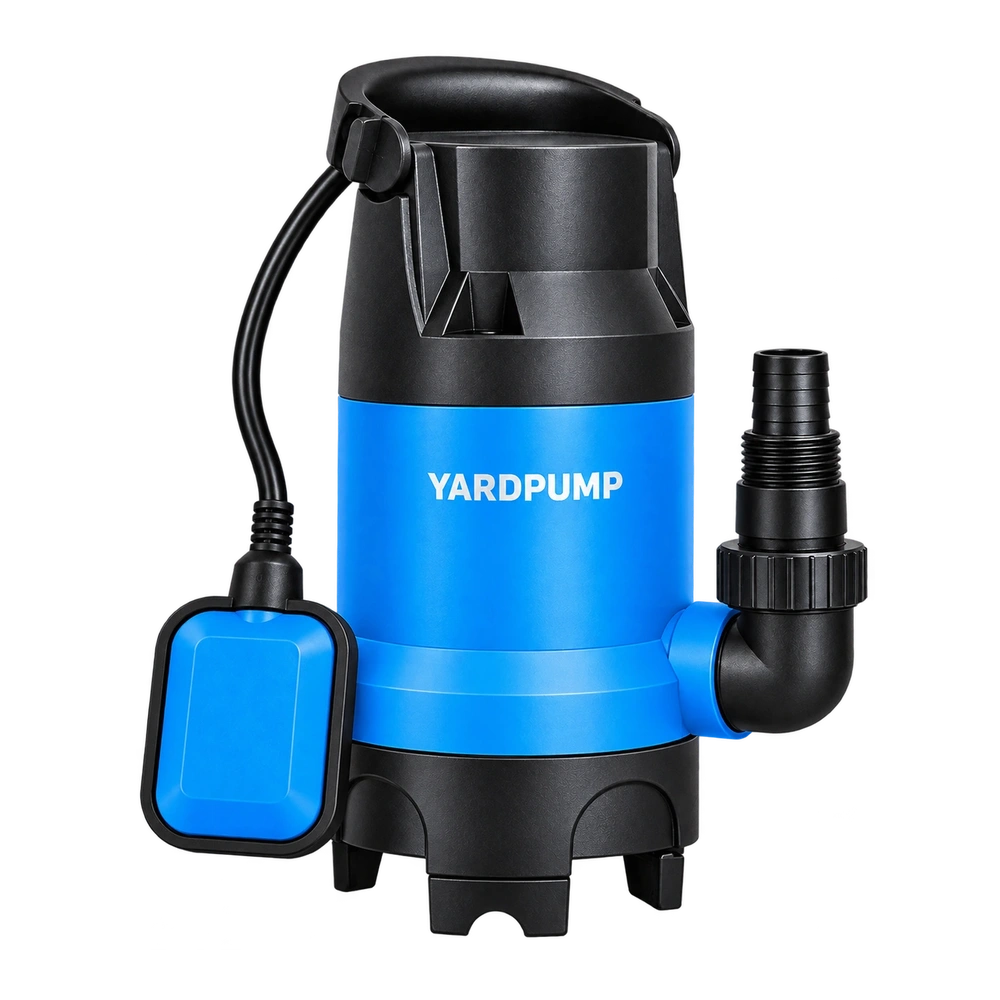
Sediment gradually settles at the bottom of a barrel. For a submersible pump, choose the position permitted by the exact manual, preserve adequate inlet clearance and respect minimum water level, cooling and particle limits. Do not improvise supports, tilt the pump or suspend it unless the installation instructions allow that arrangement.
For a surface garden pump, follow the specified suction-pipe, strainer and check-valve arrangement. An excessively fine inlet strainer, blocked suction hose or air leak can reduce supply. Suction-side and discharge-side filtration are not interchangeable: resistance before the pump directly affects intake conditions.
If sediment builds up, clean the barrel safely with the electrical equipment isolated. Do not compensate by forcing grit through a clean-water pump or assuming it is suitable for abrasive slurry.
Stage four: fine filtration must match the irrigation outlet
Drip emitters have small passages and may require finer filtration than a handheld hose. Choose filtration to match the emitter, valve and filter specifications. A cartridge that is unnecessarily fine may load quickly, increase pressure loss and reduce flow at the outlets. Filter area, rated flow, cleanability and maintenance access matter as much as nominal mesh size.
Imagine a system delivering 20 L/min when clean but only 12 L/min after a filter becomes restricted. The ideal time to transfer 200 L rises from 10 minutes to about 16.7 minutes. This is a calculation illustrating a possible consequence of restriction, not a test result for a YARDPUMP pump or filter.
A useful troubleshooting order
First confirm there is enough stored water and that the electrical condition is safe. With power reliably isolated, inspect collection screens, tank sediment, the pump inlet, hose kinks and the downstream filter. If cleaning one component restores flow, record the before-and-after conditions and how quickly the restriction returns. The remedy may be more filter area, better upstream screening or a different maintenance interval.
Do not open a pressurized filter housing, reach into an inlet or move energized connections while the pump is operating. Unusual noise, overheating, a ground-fault trip or damaged cable requires shutdown and qualified assessment.
Irrigation filtration is not drinking-water treatment
Leaf screens, first-flush devices and ordinary irrigation filters are intended to reduce debris and help equipment operate. They do not establish drinking-water quality or microbiological safety. Roof runoff can carry chemical and biological contaminants; follow local public-health guidance for edible crops.
An effective sourcing brief covers rainwater source, upstream screening, sediment conditions, pump and intake type, permitted solids, flow at working head, filter pressure loss, emitter requirements and maintenance responsibility. That is more useful than simply asking for “a finer filter.”