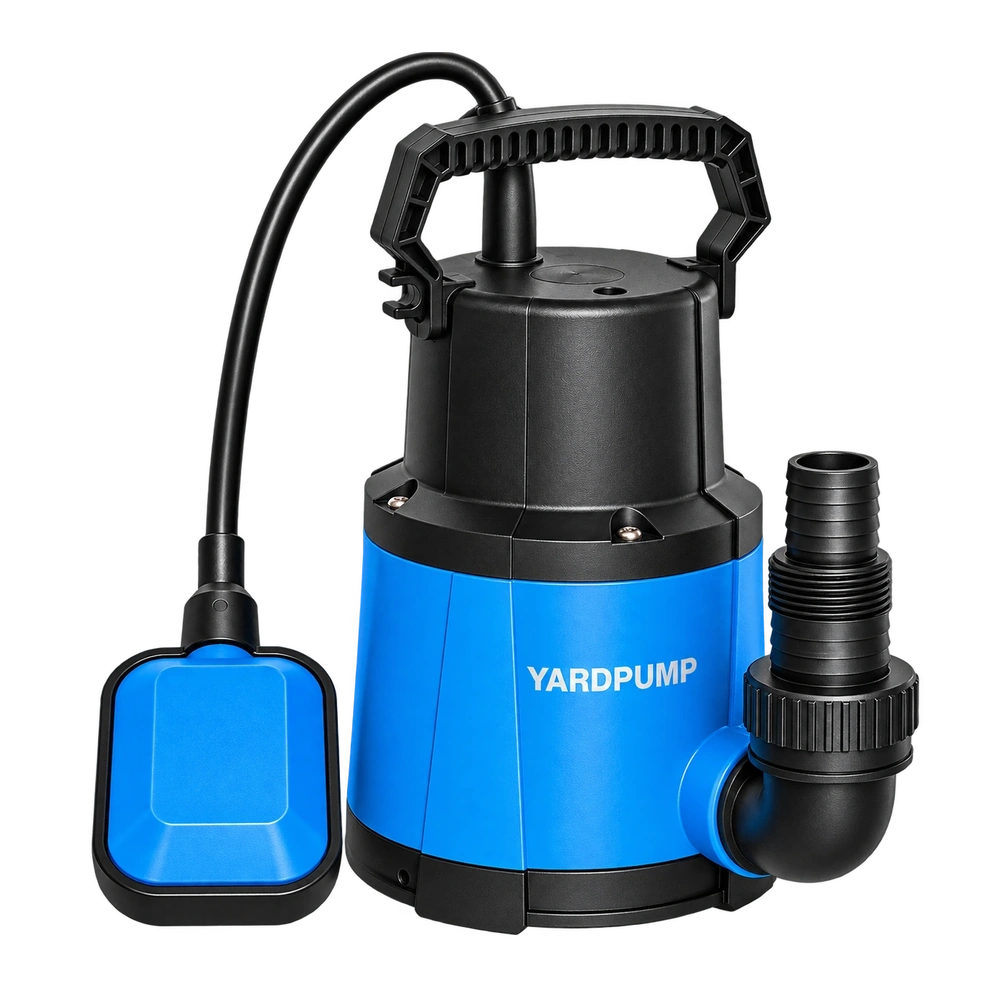
A plastic submersible pump passes a bench check with its cord resting naturally. On site, the cord turns over an edge and moisture appears near the entry. Check whether the routing transmits sideways force to the seal and whether that routing is allowed for the model. A static immersion check establishes what was found for that setup. It does not automatically cover every direction of cord load. If there is protective tripping or suspected ingress, stop use and have qualified personnel isolate the pump. Do not move the cord while the pump is energized to search for a leak.
Distinguish the parts that hold the cord and the parts that seal it
An entry may use compression or a seal against the cord jacket, potting, a separate gland or another form of strain relief. A sideways load can change contact locally or transfer force to the jacket, housing and neighbouring seals. Load paths differ by design. A bend alone does not prove leakage. Strain relief can reduce force at the entry, but passing that check does not establish sealing under every permitted routing.
Confirm that moisture really starts at the cord entry. A wet external connection, water running along the jacket or a leak from a nearby joint can leave the entry looking wet. Preserve the route, support, bend or pull location and the point where moisture first appeared. If the jacket is cut, distorted or exposes a conductor, do not try an operating reproduction. Have qualified service assess the damage.
Change one condition at a time in a controlled comparison
Have the factory or authorized service use approved equipment. Compare the natural permitted route with the reported loaded condition using the same pump, cord and assembly versions. If the reported route is outside the allowed range, record that before deciding how to investigate. An improvised test beyond the limits is not an acceptance check. Under an approved procedure, document the fixing position, angle or applied load, temperature, pressure and hold time. Note whether the result changes when load is removed. Do not press or pry at a submerged energized pump or improvise pressure testing.
In an illustrative comparison, one sample stays dry with the cord straight and after load is removed, but the first wet trace repeats under an approved loaded condition. That suggests a contact path may open under load. Another returned unit leaks without load and has a fatigue crack near the jacket. That calls for closer investigation of damage rather than a temporary movement alone. Neither result is a universal diagnosis. Check jacket dimensions, bore or gland condition, potting, assembly direction and nearby joints.
Decide whether routing, assembly or the part needs correction
If the issue occurs only with a route outside the instructions, correct support and provide the required bend and service clearance. Verify the operating cycle in the approved layout. If a leak can be reproduced under a permitted route, review the seal, jacket fit, assembly and design margins. Tightening the gland alone is not a diagnosis. Verify a proposed change under the model's applicable sealing and electrical checks before release. Tell the distributor which configurations were covered and which were not. A static pass cannot stand for all cord layouts.
Define what the inspection can detect and how the first wet trace will be recorded. One visual check after immersion may miss a small or short-lived path. Under the approved procedure, retain an unloaded control and note the start and end of loading. Repeat under comparable temperature and liquid conditions so water carried out on the outside of the pump is not mistaken for a seal failure.
Frequently asked questions
Can an uncracked entry still leak under load?
Yes, contact can change temporarily or water can follow another path. Check actual routing and the approved inspection.
Will adding a cable tie stop the leak?
Use support only where and as permitted. Do not crush the jacket or use a tie to conceal existing damage.
Can I bend the cord while the pump is powered underwater to find the leak?
No. Stop use and have qualified personnel isolate it and follow the approved inspection.