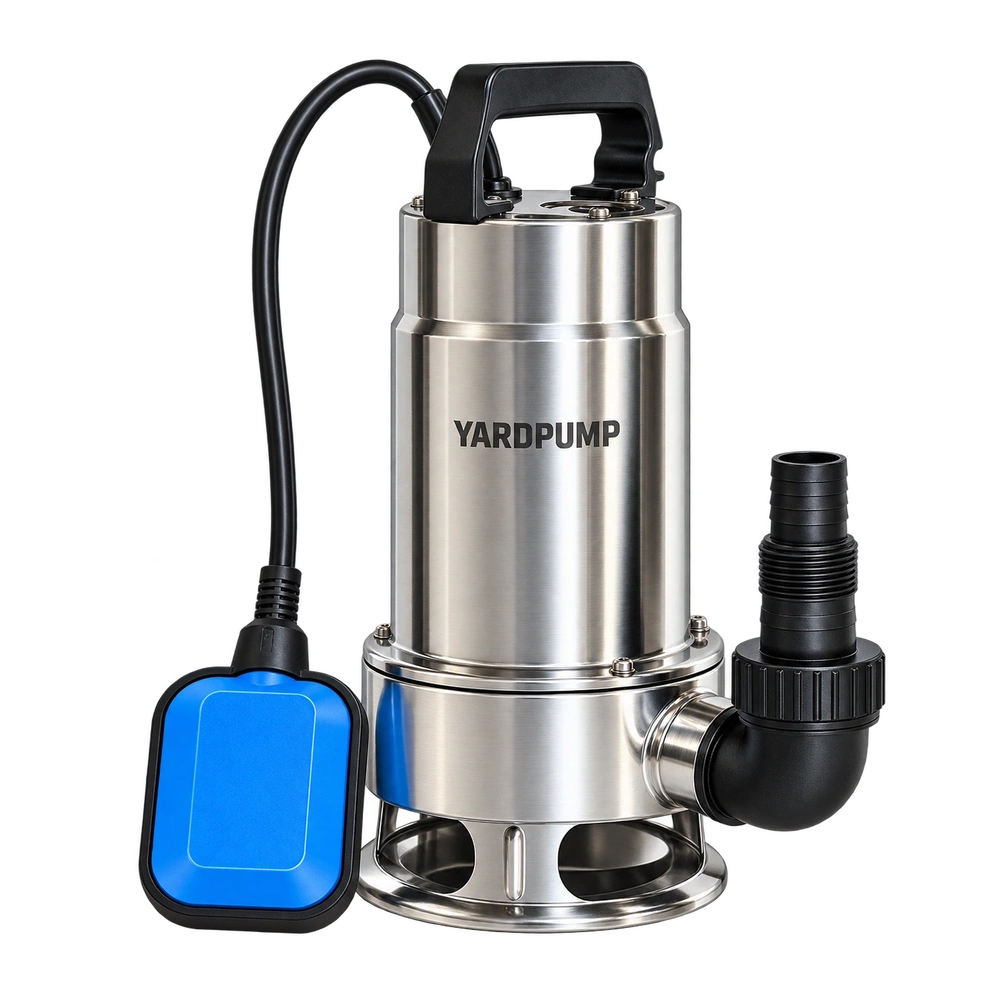
YARDPUMP BOM engineering
“The screws are a tiny part of the cost. Why not use the cheapest plated steel everywhere?”
External pump hardware lives wet, while internal screws may be more protected. Treating every fastener the same can either waste money or create rust, seized joints and cracked plastic bosses.
Specify fasteners by exposure and joint design. Corrosion resistance, torque and thread geometry matter together; the strongest or most stainless screw is not automatically the best joint.
Think of it like this
The screw is cheap; the joint it protects is not
A small fastener may hold a seal cover, casing half or handle. If it rusts solid or strips the boss, the service cost can exceed the value of the screw many times over.
The correct fastener therefore depends on what it clamps and how often that joint must survive wet storage, vibration or service.
BOM percentage is not the same as reliability importance.
A composite service failure
The pump still worked, but nobody could open it
Imagine a pump stored damp between seasons. Zinc-plated external screws corrode and seize. When the seal eventually needs service, several heads strip and the housing is damaged during removal.
The hydraulic system was fine; serviceability was lost at the joint.
This is the kind of field cost that disappears from the factory BOM spreadsheet.
Corrosion
Fastener and joint materials have to be considered together
Bossard corrosion guidance notes that galvanic combinations and protective finishes matter in fastener selection. Stainless can improve corrosion resistance, but surrounding materials and environment still influence the joint.
A2/304 and A4/316 options solve different exposure levels; they should be used where the environment justifies the cost.
Internal dry locations may not need the same material as exterior wet hardware.
Torque and plastics
A stronger screw can crack a weak boss
Thread-forming screws for thermoplastics use geometry that reduces radial stress and improves load distribution. That illustrates a broader point: joint design must match the substrate.
Over-torque can split bosses or strip threads even when the fastener itself is excellent.
For OEM control, material, screw type, torque and locking method should be specified together.
Stainless has its own failure mode
The corrosion-resistant screw that galled during assembly
Stainless threads can seize through galling when friction and material adhesion become high during tightening.
Bossard recommends design and process controls such as lubrication or suitable surface treatment to reduce that risk.
Upgrading to stainless therefore changes assembly requirements as well as corrosion performance.
Where fastener upgrades stop
No screw material can compensate for a poor joint design
Boss strength, sealing compression, vibration and torque control still govern the connection.
Select the fastener as part of the joint, not as an isolated hardware line.
Engineering decision layer
What to lock before you approve this component.
The narrative explains why the decision matters. This reference layer turns that reasoning into BOM, validation and supplier-control points.
- Zinc-plated carbon steel — economical and strong for protected dry/internal locations.
- A2 / 304 stainless — common corrosion-resistant hardware for wet environments.
- A4 / 316 stainless — higher chloride resistance for more demanding environments.
Fasteners are a small percentage of BOM cost, but stainless upgrades across many screws add up in high-volume products.
Fastener material does not change pump flow; it affects serviceability, structural clamping and corrosion at joints.
Rusting screws can seize, stain housings or lose clamping force; stainless can gall if assembled poorly.
Failures include stripped plastic bosses, rusted screws, galling, loosened fasteners and galvanic corrosion.
Audit torque, material markings where applicable and corrosion testing for exposed hardware.
OEM buyers should specify external/internal fastener materials separately, torque, locking method and galvanic compatibility.
The strongest fastener can still damage a plastic boss if torque control is poor.
YARDPUMP expert takeaway
Treat every fastener as part of a joint. Match corrosion resistance, thread design and torque to the substrate and exposure so the pump stays clamped, sealed and serviceable.