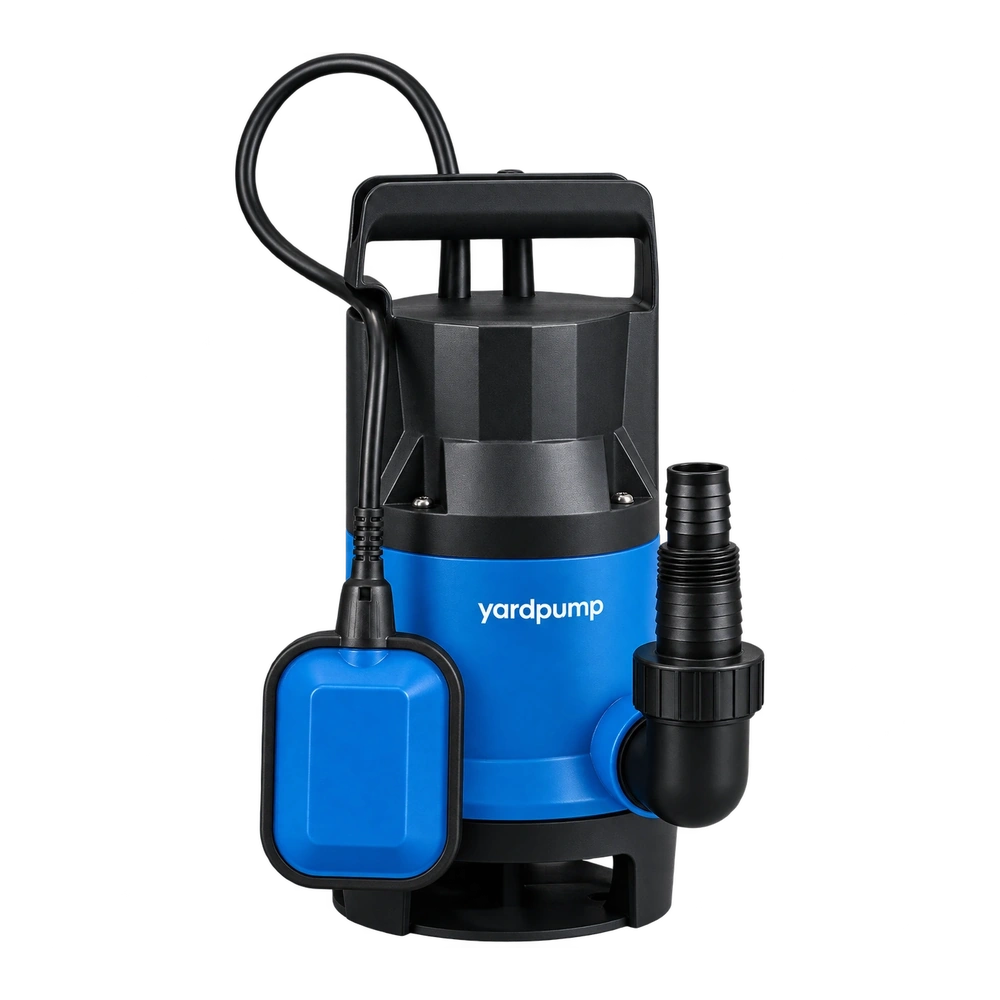
YARDPUMP BOM engineering
“The pump is light. Do we really need to spend more on a stronger handle or dedicated lifting point?”
Pump manuals repeatedly warn users never to lift a submersible pump by the motor cable. That warning exists because poor handling can damage both the cable and the water-tight entry into the motor.
The handle has to be strong, obvious and comfortable enough that users actually use it. If the cable is easier to grab, the product design invites the wrong behavior.
Think of it like this
The best safety feature is the one the user naturally reaches for
A handle can meet a theoretical load requirement and still fail ergonomically if fingers do not fit, the balance is awkward or the cable sits in the easiest grabbing position.
Good lifting design makes the safe action the convenient action.
That protects the user and the pump at the same time.
A common misuse path
The cable was used as a rope because the handle was inconvenient
Imagine a compact pump in a deep pit with a small slippery handle. The user reaches for the cable, pulls the pump upward and repeats the habit over several seasons.
The pump may continue to run, but strain accumulates at the cable entry and conductors until sealing or electrical integrity is compromised.
The failure began with handling design, not with the motor.
Load and geometry
Handle strength must match the complete wet pump and the way it is lifted
Xylem instructions explicitly require lifting by the handle or lifting eye rather than by the motor cable or hose.
Heavier pumps may require a dedicated eye, chain or guide system rather than a small consumer carry handle.
Proof load should include realistic dynamic handling rather than only the dry static weight.
Material and corrosion
Plastic and metal handles fail differently
Integrated polymer handles can be light and ergonomic but depend on ribs, bosses, UV exposure and impact resistance. Metal brackets add strength but introduce fasteners, corrosion and sharp-edge control.
The correct design follows pump weight, handling frequency and environment.
For wet storage, corrosion-resistant hardware and smooth edges are part of user safety.
What QC should test
Proof load and drop testing should include the cable entry after the event
A pump can survive a drop while hidden strain has already damaged the cable gland or internal conductor.
Handle proof-load, drop and handling tests should therefore be followed by cable-entry and enclosure inspection.
The goal is not just to keep the handle attached; it is to keep the pump safe after real handling.
Where a carry handle stops
Deep pits and heavy pumps need lifting systems, not stronger fingers
Professional installations may require chains, guide rails or lifting eyes so the pump can be removed without entering the wet well or disturbing the power cable.
Use the handling system appropriate to the pump mass and installation depth.
Engineering decision layer
What to lock before you approve this component.
The narrative explains why the decision matters. This reference layer turns that reasoning into BOM, validation and supplier-control points.
- Integrated plastic handle — light, ergonomic and economical for compact pumps when molded ribs/bosses are strong enough.
- Metal handle / lifting bracket — stronger for heavier professional pumps and repeated handling, but adds corrosion and fastener considerations.
- Dedicated lifting eye or chain point — appropriate for deeper pits or heavy pumps where the power cable must never be used as a lifting device.
Handles are low-to-moderate cost; metal brackets add forming, hardware and corrosion finishing.
A handle does not affect hydraulics, but it strongly affects user safety, drop risk and cable-entry protection.
Repeated impact, UV aging, corrosion and overloaded lifting points can fail before the pump itself.
Failures include cracked molded handles, loose brackets, sharp edges and users pulling on the cable when the handle is inconvenient.
Proof-load the handle, drop-test packaged and unpackaged pumps and inspect cable strain relief after handling tests.
OEM buyers should specify proof load, drop test, ergonomic clearance and corrosion requirement for lifting hardware.
Heavy pumps may require explicit lifting-chain guidance and should not reuse a small consumer handle design.
YARDPUMP expert takeaway
A handle is part of electrical reliability and user safety. Make the safe lifting point strong, obvious and easy to use so the cable never becomes the unofficial rope.