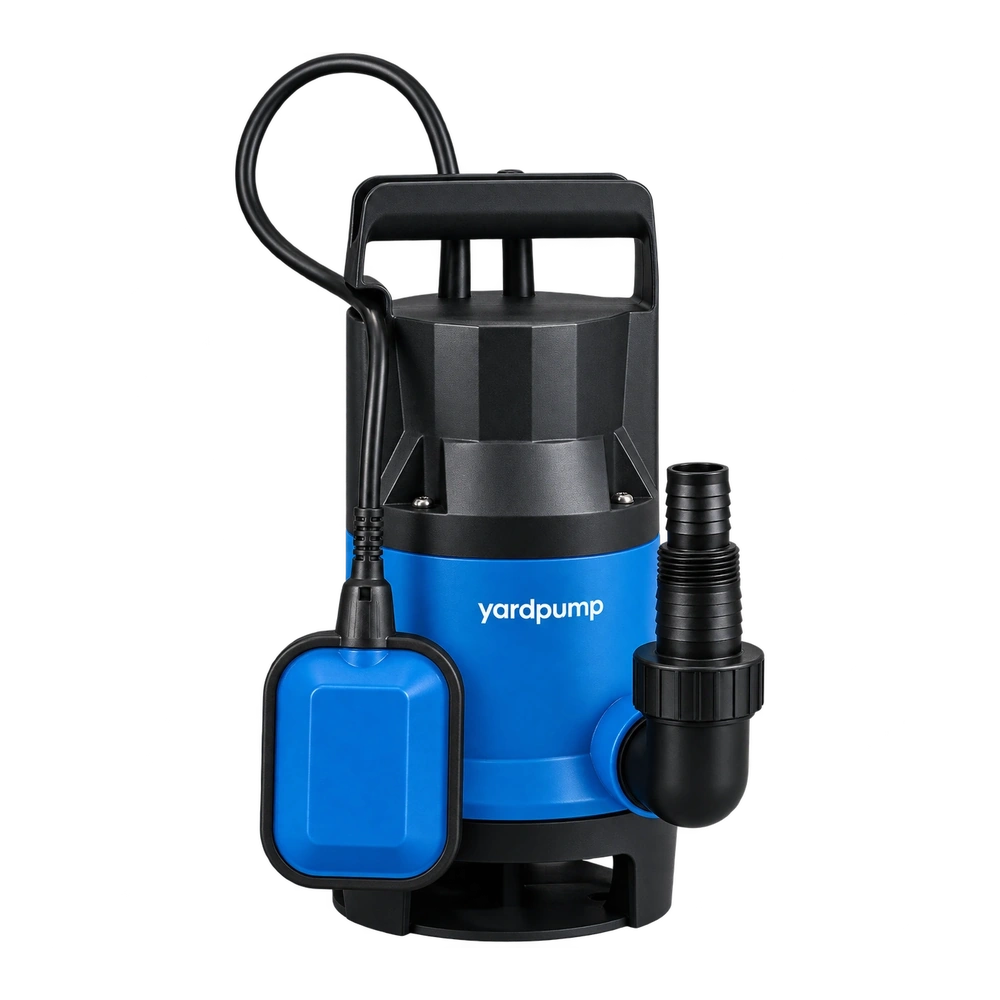
YARDPUMP BOM engineering
“Can we upgrade every model to a double mechanical seal and call it the high-end version?”
Seal count is attractive in sales because it sounds like simple redundancy. In real pumps, however, dry running, abrasive contamination, face material, oil condition, shaft runout and assembly quality can dominate whether one or two seal sets survive.
Choose the seal arrangement from the liquid, duty hours, contamination and consequence of leakage. A well-executed single seal can be right for clean light duty; a dual arrangement earns its cost when the second barrier and lubricated chamber solve a real risk.
Think of it like this
Two doors are useful only when the space between them is controlled
A building with two doors creates an airlock only if the doors, frame and space between them are designed to work together. Adding a second loose door to a bad frame does not double security.
A dual mechanical-seal arrangement is similar. The second seal can create another barrier and an oil or buffer chamber can improve lubrication and isolation, but the chamber, faces, shaft and assembly must all be correct.
The phrase “double seal” therefore describes architecture, not guaranteed life.
A composite OEM upgrade
The buyer who paid for two seals but kept the same dry-running problem
Imagine a utility pump used in shallow water where operators routinely let the level fall below the intended minimum. The OEM upgrades the product from one mechanical seal to two and expects warranty returns to disappear.
Returns improve only slightly because the root stress remains: seal faces and motor cooling are still exposed to operation outside the validated water level. The second seal delays leakage but does not remove the thermal problem.
The better redesign may combine control changes, minimum-water-level behavior and the appropriate seal arrangement rather than treating seal count as the entire solution.
Single mechanical seal
A single seal can be entirely appropriate when the liquid and lubrication are friendly
A mechanical seal works through precisely finished faces held together under controlled conditions. Clean water, correct submergence, acceptable shaft runout and adequate lubrication can make a single arrangement reliable for many compact-pump duties.
Its advantages are simplicity, fewer parts and lower assembly cost. Its limitation is that one primary face set separates the liquid from the protected side of the system.
Whether that is enough depends on duty severity and consequence of leakage—not on whether the product is marketed as “premium.”
Dual arrangement
A second seal creates value when the intermediate chamber has a job
Many submersible designs use two seal sets with an oil or buffer region between them. That architecture can isolate the upper seal from process water, provide lubrication and create additional protection if the lower seal begins to degrade.
The benefit depends on oil volume, fill process, face materials, chamber cleanliness and leak testing. A contaminated or incorrectly filled chamber can undermine the very reliability the extra hardware was meant to create.
For harsher abrasive or high-duty service, dedicated seal designs may also use harder face materials and cooling strategies rather than relying on seal count alone.
Dry running and abrasion
Seal faces care about the operating environment more than the brochure hierarchy
Manufacturer guidance warns that dry running can damage mechanical seals and motors in wastewater pumps. Abrasive slurry services use specialized seal materials and architectures because particles can score faces, jam springs or destroy lubrication films.
This is why a carbon/ceramic single seal in clean water and a silicon-carbide dual arrangement in abrasive service are not simply “low” and “high” tiers of the same application. They answer different risk profiles.
The correct BOM ties arrangement and face materials to the intended liquid and operation.
What QC should verify
The seal arrangement is only as good as the surfaces and process around it
Useful production controls include shaft runout, seal-face cleanliness, spring and elastomer condition, oil fill mass where applicable and pressure or vacuum leak testing of the assembled pump.
Endurance samples should reflect realistic starts, stops and water conditions. A supplier certificate for “double seal” does not verify that the chamber was filled correctly or that a chipped ceramic face escaped assembly inspection.
Returned pumps should be opened carefully enough to identify the actual leak path before the seal set is discarded.
Where this guide stops
Seal selection must follow the exact liquid and model architecture
Chemical compatibility, temperature, solids, shaft speed and pressure can change the appropriate face, elastomer and seal arrangement. Industrial slurry and chemical duties require specialized engineering beyond a compact utility-pump comparison.
For the current YARDPUMP range, any seal option should be stated only where it has been validated for the exact model and configuration.
Engineering decision layer
What to lock before you approve this component.
The narrative explains why the decision matters. This reference layer turns that reasoning into BOM, validation and supplier-control points.
- Radial lip / skeleton seal — low cost and compact; useful as a secondary barrier or in light-duty designs, but the lip runs directly on the shaft/sleeve.
- Single mechanical seal — one pair of lapped faces; common for clean non-hazardous water when lubrication/cooling is adequate.
- Dual mechanical seal — two seal sets with an oil/buffer space in many submersible designs, increasing protection and redundancy at higher cost and complexity.
Lip seals are cheapest, single mechanical seals add precision faces/springs, and dual seals add a second seal plus oil chamber or support hardware.
Mechanical seals control leakage with precision faces. John Crane notes single seals normally use process fluid for face lubrication, while dual arrangements use buffer/barrier fluid.
Dirty or abrasive water can attack the lower seal; dual arrangements and protected oil lubrication can extend service in harsher duty when correctly designed.
Failures include dry faces, cracked ceramic, worn lip tracks, spring corrosion and contamination of the oil chamber.
Inspect face material, spring hardware and shaft sleeve; perform pressure/vacuum leak tests and endurance runs with realistic starts/stops.
B2B buyers should specify arrangement, face materials, elastomers, oil volume and leak-test/endurance requirements rather than simply “double seal.”
A dual seal is not automatically better if the oil chamber, face materials or assembly cleanliness are poor.
YARDPUMP expert takeaway
Do not pay for seal count. Pay for a validated barrier system: the right faces, lubrication, shaft condition, assembly process and operating limits for the liquid and duty.