Direct answer. A CE logo on a sample carton is not an import-compliance file. Before placing a compact submersible pump on the EU market, identify the exact electrical and mechanical configuration, determine which EU rules apply to that finished product, obtain the appropriate declaration and supporting documentation, check the importer’s own traceability and language obligations, and separately resolve WEEE and packaging responsibilities in the destination countries. The responsible economic operator must be identified for the actual brand and route to market.
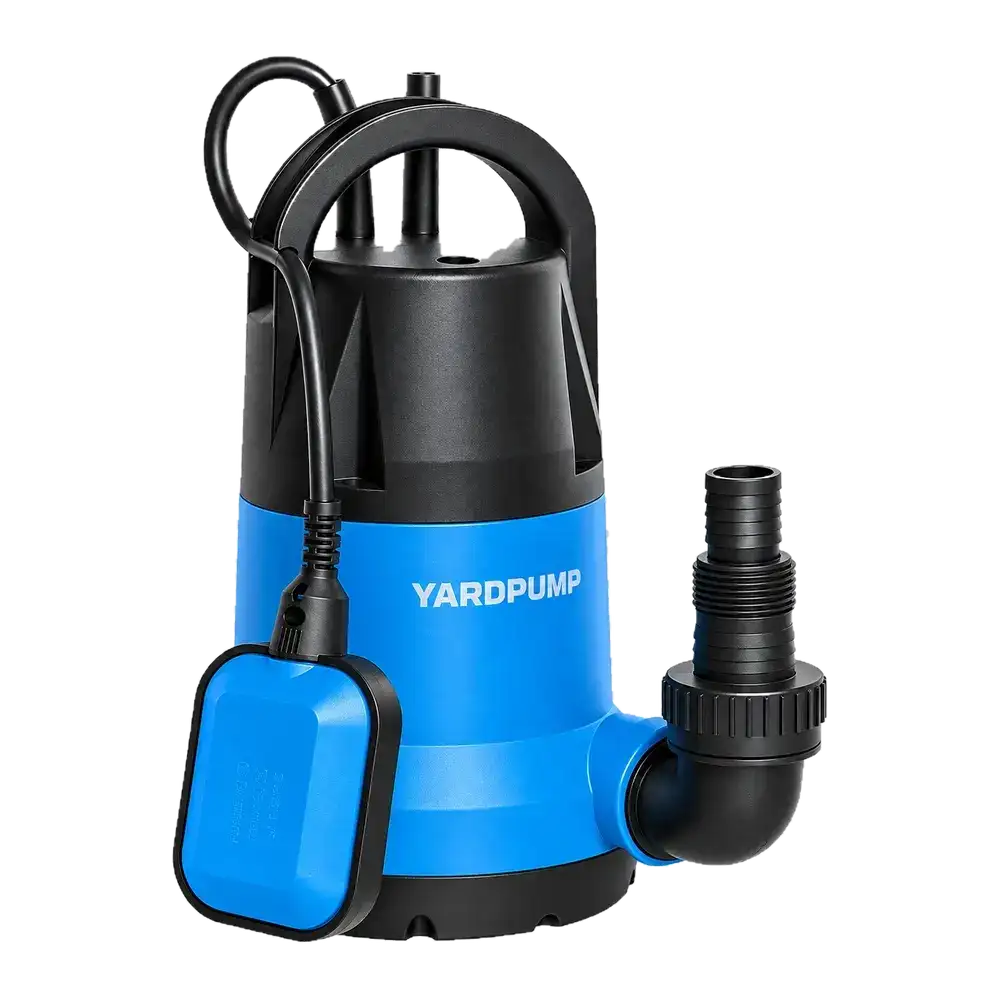
A distributor can approve a blue 550 W pump in the showroom and still receive a different legal product in the container: a different plug, cable length, motor design, float switch or manual language. A visually unchanged housing does not mean the compliance evidence remains valid. That is why the first question is not “Do you have CE?” but “Which exact SKU and version does this evidence cover?”
One product, several compliance questions
| Question | What to request or confirm | Frequent purchasing mistake |
|---|---|---|
| Product identity | Model, electrical version, plug/cable, control, nameplate, intended use and production revision | Accepting a generic certificate covering an unspecified pump family |
| Applicable EU rules | A product-specific legal applicability assessment and the relevant conformity route | Assuming every pump is covered by the same single directive |
| Conformity evidence | Signed EU declaration of conformity where required, referenced standards, test reports and technical documentation availability | Treating a third-party “CE certificate” as the sole legal proof |
| Importer and brand details | Manufacturer/importer identity, contact details, traceability, market-language instructions | Approving artwork before the legal operator and language set are fixed |
| WEEE | Producer/registration and end-of-life financing arrangements for each target market, as applicable | Assuming CE marking automatically resolves electrical waste obligations |
| Packaging | Who places packaging on each market, applicable producer/EPR registration and packaging requirements | Treating a carton-printing approval as packaging-law approval |
CE is a conformity process, not a purchased sticker
The manufacturer of the finished pump must assess the applicable EU requirements, compile the required technical file and issue the declaration where the legislation calls for one. A company selling an OEM pump under its own brand may be treated as the manufacturer for these purposes. An EU importer bringing a pump from outside the EU also has independent checks and traceability duties. The exact legal framework depends on the pump’s intended use, construction and electrical characteristics; it should not be inferred from a product photo or a competitor listing.
As of October 2026, importers should also plan for the machinery-law transition: the EU Machinery Regulation (EU) 2023/1230 is generally scheduled to apply from 20 January 2027, with specific earlier provisions. This is a planning flag, not a claim that every compact pump automatically falls under every machinery rule. Ask the compliance owner to document the applicability decision for each SKU and placing-on-market date.
WEEE and packaging are separate workstreams
Electrical equipment can bring waste-electrical-equipment obligations beyond product safety and CE conformity. Registration, reporting, collection and financing duties may depend on the role of the operator and the Member State where the pump is sold. Packaging has its own producer-responsibility and design requirements. The EU Packaging and Packaging Waste Regulation (EU) 2025/40 began applying in stages from 12 August 2026; individual provisions have their own application dates. A single “EU compliant” carton claim is not a substitute for a country-by-country check.
For private-label projects, ask who owns the brand, who first places the product and packaging on the market, and who maintains each registration and declaration. Put the answers in the purchase agreement instead of leaving them in informal emails.
The seven-document release folder
Before production approval, build one folder per approved electrical SKU: (1) signed product specification and intended-use statement; (2) conformity applicability matrix and current declaration where required; (3) technical/test evidence index and version numbers; (4) approved nameplate, carton and instruction artwork for the destination languages; (5) importer/manufacturer contact and traceability records; (6) WEEE and packaging responsibility matrix by destination country; (7) change-control log linking the golden sample to the production BOM. Record document owner, approval date and next review trigger. Not every item is a single legally prescribed document; together they are a practical buyer-control system.
If the cable, motor, plug, float switch or safety-related construction changes, stop the release and ask the compliance owner which tests, declarations and labels need review. Use the private-label carton approval guide for print claims and the shaft-seal change acceptance guide for a worked example of component-change control.
What YARDPUMP buyers should send with the RFQ
For a compact QDX-PH clean-water pump or another model family, send the destination countries, exact voltage/frequency version, plug and cable specification, intended application, control configuration, branding and packaging languages. Ask for the documents available for that configuration, not a blanket promise of approval. YARDPUMP’s model page is a product-selection starting point, not proof that a particular imported SKU is already compliant in every EU market.
Buyer conclusion: Approve the product, the evidence and the market responsibility together. If one is undefined, the carton is not ready for sign-off.
FAQ
Does a CE mark on a pump mean the importer has no obligations? No. Importers may have independent verification, contact-information, traceability and corrective-action duties.
Is WEEE registration the same as CE certification? No. WEEE concerns waste-electrical-equipment responsibilities; CE relates to conformity with applicable harmonised product requirements.
Can one test report cover every plug and motor version? Not automatically. Ask the compliance owner to justify the exact variant coverage and document the technical differences.
Did all PPWR packaging labels become mandatory on 12 August 2026? No. The regulation applies in phases; check the specific provision and its application date rather than assuming every marking rule started together.