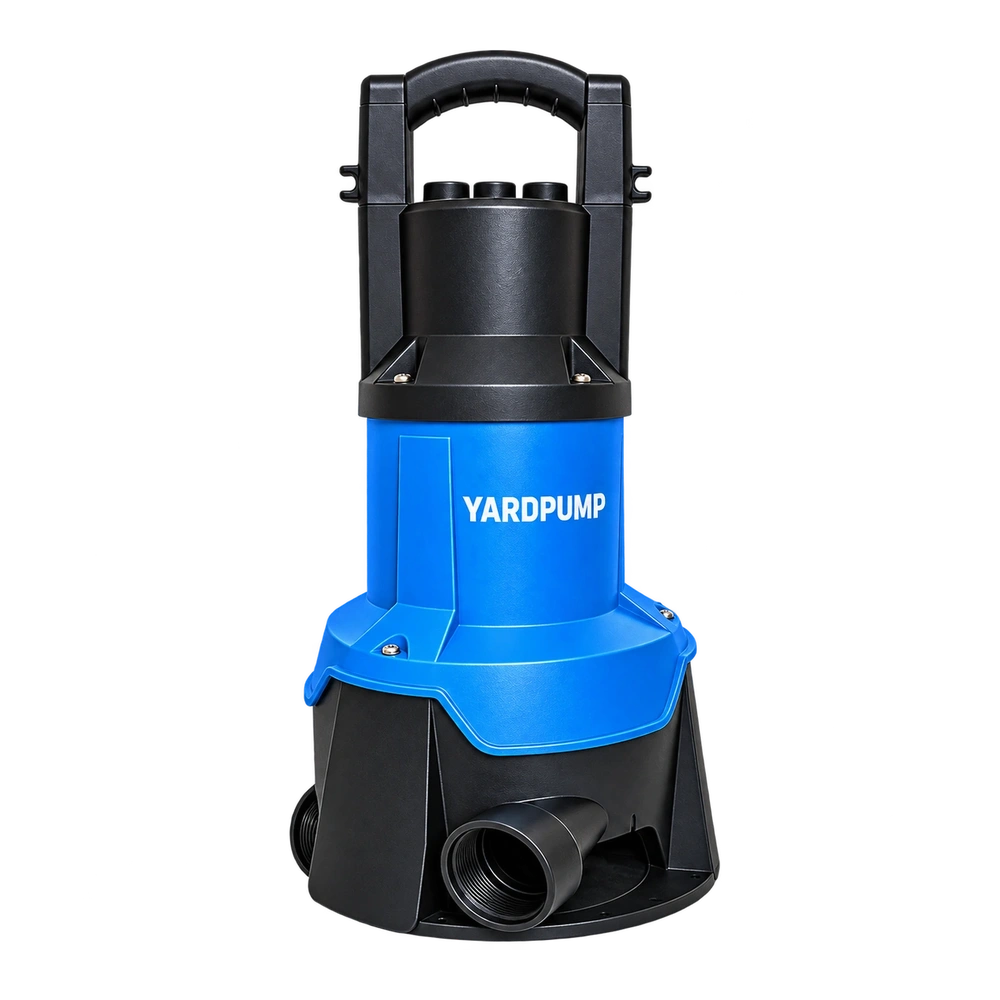
The answer before the artwork deadline
Do not approve a private-label submersible pump carton from a visual mock-up alone. Approve three linked records first: the exact electrical/model variant, the claims-and-evidence sheet, and the pack-out/manual version. The same attractive carton can be wrong for a different voltage, cable, plug, control method or outlet accessory. A small text error becomes expensive when it is repeated on a shipment, an online listing and a reseller’s shelf label.
This is a document-control problem, not simply a graphic-design problem. The purchasing team owns the agreed variant; engineering or quality checks the technical claims; the brand team checks how buyers will understand them; and the factory confirms the version actually being packed.
A claims matrix that can be signed off
| Carton or listing claim | What the reviewer must verify | Typical failure to prevent |
|---|---|---|
| Model and market code | Exact SKU, voltage, frequency, plug and cable | A 230 V image reused for a 120 V listing |
| Power and current | Whether watts mean electrical input or another rating; test conditions | Comparing unlike power definitions |
| Maximum flow and maximum head | Each endpoint separately, with its test basis | Implying both maxima occur together |
| Water and solids suitability | Approved liquid, particle type and limit | Calling a clean-water pump a sewage pump |
| Residual water / start-stop levels | Separate remaining-water, start and stop claims | Advertising a residual level as automatic start depth |
| Immersion, temperature and materials | Exact limits for the selected configuration | Extending a housing claim to the entire wetted assembly |
| Accessories and connection | Outlet thread, hose adaptor, switch, cable and included parts | Photograph shows an accessory not in the carton |
| Safety and compliance marks | Documented approval for the exact market/version | Printing an unverified certification mark |
The matrix should identify the document revision and who signed each row. A blank evidence cell means hold the claim, not ‘assume it is standard’. Avoid broad promises such as ‘works in seawater’, ‘runs dry safely’ or ‘handles sewage’ unless the complete configured product and intended use are supported.
A practical six-gate release sequence
1. Freeze the configuration. Record the pump family, power option, supply, frequency, control, cable, plug, connector, color and carton contents. A family-level specification is not automatically valid for every power variant.
2. Match every number to its source. Use the approved technical sheet and relevant test/inspection record. Separate maximum head from maximum flow; both are endpoints on a pump curve, not one simultaneous operating point.
3. Review the buyer’s likely interpretation. If the front panel says ‘automatic’, specify the control method and operating conditions. If the package says ‘low-level’, clarify whether it means the residual water level, the starting water depth, or both.
4. Check every language and sales channel. Compare carton, manual, data sheet, website listing, marketplace fields and distributor quotation. Translated text must preserve units, safety warnings and limitations.
5. Approve a physical pack-out. Check the real pump, nameplate, connector, manual, warning labels, plug and accessories against the approved artwork. A rendered carton image does not prove the contents.
6. Control changes after approval. If the electrical version, accessory or wording changes, issue a new revision. Retain the previous approval so the team can identify which shipment used which claim set.
What a buyer can send the factory today
A useful approval request contains one spreadsheet with the eight claim groups above, a PDF of the proposed artwork, the intended market, and one photo of the physical sample with its nameplate and accessories visible. Ask for the exact document revisions behind each claim. This is faster than exchanging isolated screenshots and reduces ambiguity when the same pump family has several private-label versions.
For a starting product range, compare the verified model pages in the YARDPUMP product range, review OEM options and the quality-control process, then send the proposed configuration through the quotation form.
Buyer FAQ
Can one carton serve 110 V and 230 V markets? Only when the physical product, mandatory labels, safety instructions, plug/cable and claims are correctly controlled for each version. Do not assume a universal label from a configurable electrical range.
Can maximum head and maximum flow share one badge? They can both appear, but they must not be presented as one operating point. Add a curve or a clear explanation of working-head flow where practical.
What if the supplier cannot substantiate a claim before printing? Remove or qualify the claim until the correct evidence is available. A postponed badge is cheaper than a mislabeled shipment.
Editorial boundary: This is a procurement workflow, not a statement that a particular YARDPUMP configuration holds any unverified certification. All market-specific claims require project confirmation.