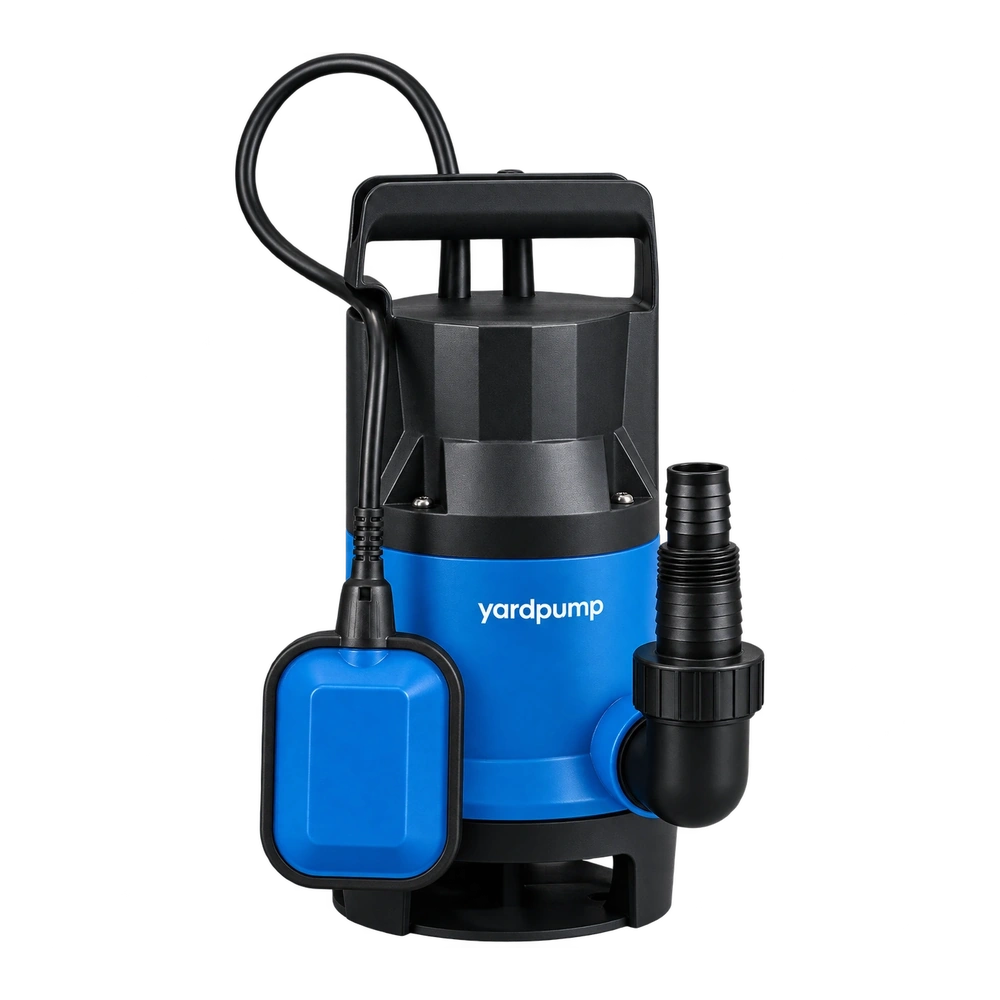
Imagine a sump pump was working in water as intended, but an overflow reached its plug, extension connection and control box. The customer has wiped them dry and asks whether the distributor can switch the system on to see if it works. Do not do that. Approval for the pump body to operate submerged does not extend to every electrical part connected to it. Keep the flooded parts isolated. The manufacturer and qualified personnel need to determine, for the specific component and exposure, whether it can be assessed or serviced, or must be replaced.
Establish the water boundary and who can act safely
Do not enter water with a possible electrical hazard or handle a submerged plug, socket, switch or controller. Have qualified personnel isolate the supply under safe conditions. If it cannot be reached safely, contact the professionals responsible for the facility or the power supplier. A distributor should not ask a customer to try a different socket, bypass protection or open an enclosure to identify the fault. Treat smoke, heat or an immediate shock hazard as a site emergency rather than an opportunity to collect a photo.
From a safe position, record the highest known water line, duration and type of exposure, whether power might have been present and which components have since been moved or replaced. Identify the pump body, cable entry, plug, connectors, socket, controller, alarm and supply protection separately. A visible water line is an observation, not proof of what entered an enclosure. A unit moved after the event may not be in its original orientation.
Surface dryness does not establish electrical safety
Water and deposits may enter contacts, terminals, layers or protective devices. Corrosion or contamination may remain after drying. A brief run without a trip would not establish that insulation and protective functions are sound. A dry-looking plug, a motor sound or time spent on a shelf is not permission to switch the equipment on. Apply the approved disposition for the component, with qualified assessment under controlled conditions. Do not apply the pump body's protection marking to an accessory or supply device with different limits.
Consider two hypothetical returns. In the first, records show water stayed within the pump's approved operating boundary and the plug and controller remained in a dry area. In the second, external connectors and the controller were fully submerged. Both pumps may be reported as failing to start. They still require different handling. The second return is isolated as flood-exposed electrical equipment before any decision on operation. The first also requires a fault assessment under the model instructions; the example does not give it automatic clearance.
Make safety and warranty separate decisions
Mark the return as not cleared for energisation and identify the exposed components. Use the organisation's approved handling and storage process. Obtain the equipment supplier's disposition. Building outlets, fixed wiring and supply protection are for qualified site personnel. The safety hold can be decided immediately. A finding on manufacturing cause or warranty depends separately on the installation boundary, incident history, inspection and contract. The word “flood” in a complaint does not by itself settle responsibility.
If drainage must be restored, suitable personnel should verify a safe supply and an appropriate backup. Keep the uncleared equipment out of the replacement circuit. Where a controller has already been swapped, retain the original device's identity and the exposure timeline; the behaviour after the swap does not reconstruct every original risk.
Record whether any supply protection may also have been flooded. Replacing the pump alone does not establish that the supply is safe. If exposure of one part is uncertain, document it as unknown and keep it isolated pending an appropriate decision.
Frequently asked questions
Can a dry-looking plug be tested once?
No. Appearance is not a release test. Keep exposed electrical parts isolated and follow qualified assessment and manufacturer instructions.
Does the pump's immersion rating cover the controller?
Only the limits for each actual component apply. A pump-body rating cannot be assigned to an external controller, plug or outlet.
Should the original controller be retained after replacement?
If safe and approved, preserve its identity and exposure record. Do not re-energise it to obtain evidence.