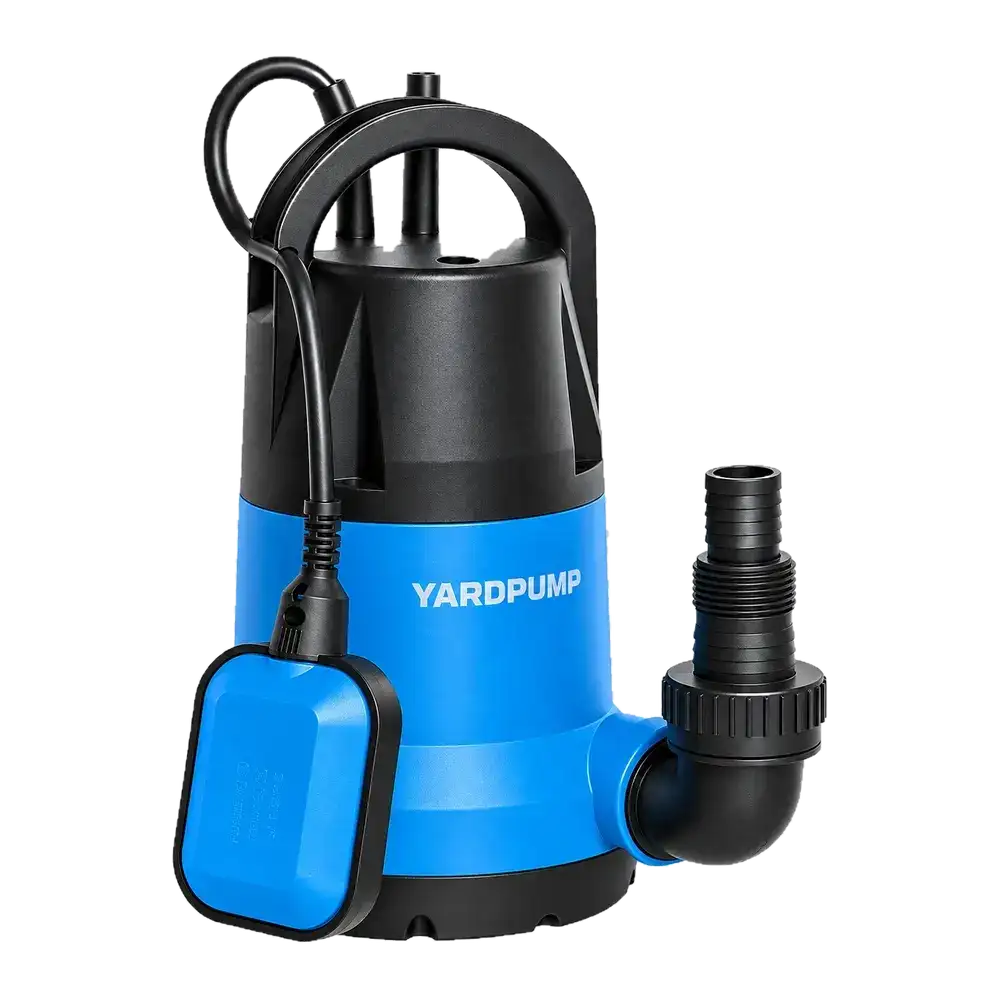
“The pump still moves water, so why does the residual-current device trip?” Hydraulic operation and electrical insulation are separate matters. A turning motor does not prove that the surrounding water or accessible parts are safe. Stop using equipment with suspected electrical leakage and isolate it from a safe, dry position. If the upstream supply cannot be operated safely, obtain qualified assistance rather than entering water to reach a plug.
The path may be outside the motor
Unintended current can involve a damaged cable, wet plug or connection, contaminated insulation, or a winding affected by water or damage. The pump, extension arrangement and supply circuit need to be distinguished. A trip after connecting a pump is a reason to investigate, not immediate proof that one particular component caused it.
A plastic housing does not automatically establish a double-insulated complete product. Confirm the protection class and construction for the actual model. Protective-earth integrity matters where required; other protection classes have their own design and assessment requirements. Do not improvise changes to those arrangements.
Water ingress and insulation damage can interact
Shaft seals, cable entries, cover joints or housing defects can admit water. Moisture and contamination can change insulation behaviour. Overheating, mechanical damage and ageing can also cause electrical problems without obvious extensive flooding of the motor cavity. Visible moisture is therefore one diagnostic clue rather than a complete explanation.
Avoid drying, cleaning or replacing seals before recording the return's original condition. Those actions can remove useful evidence. Preserve photographs of external connections, cable condition and internal moisture, together with the reported operating sequence, before qualified examination.
Identify which protection operated
Overcurrent protection, residual-current protection and motor thermal protection respond to different conditions. A combined device can contain several functions. Record its designation, indication and the timing of operation: immediately on connection, after immersion or after an extended run.
A delayed trip does not automatically identify an undersized capacitor or overload. Temperature, moisture, vibration and cable condition may interact. Repeatedly resetting the device and restarting can increase risk and worsen the fault.
Qualified testing should isolate the sections
After safe isolation and the applicable discharge precautions, qualified personnel can distinguish supply, external cable, entry, internal wiring and motor. Relevant assessments may include insulation resistance, protective-earth continuity, leakage current and water exclusion. A result from one test cannot establish every aspect of safety.
The test voltage, connections, acceptance criteria and treatment of electronic components must follow the particular product requirements. There is no single insulation value suitable for every pump. Customers should never be instructed to assess leakage by touching water or energised parts, or by treating a simple voltage indicator as a complete safety test. The instrument must be suitable for the intended examination.
Restore protection as well as rotation
If a failed entry or seal is confirmed, address both the water path and the affected electrical condition. Drying a winding can temporarily improve a reading while leaving the original route for repeated ingress. Cable, protector or wiring replacements should restore an approved configuration and pass the applicable checks.
Distributors should document removal from service, return, findings and repair verification rather than encouraging consumer dismantling followed by another immersion trial. An actual shock or abnormal energisation requires the relevant local emergency and electrical-safety response. Continuing water delivery is not a reason to treat it as a minor inconvenience.
The professional report should identify moisture condition, temperature and any treatment performed before testing. A satisfactory result after repair does not establish that the original fault never existed. It should be connected to an explanation of the original ingress or damage route and the verification of the correction.
Questions buyers ask
Does removing the earth connection solve a trip? No. Never remove or bypass required protective connections.
Can a larger protective device cure it? Increasing a threshold is not fault diagnosis; identify the cause and use suitable protection.
Does no trip prove no leakage? No. Protection, wiring and fault conditions have limitations; correct design and appropriate testing establish safety.