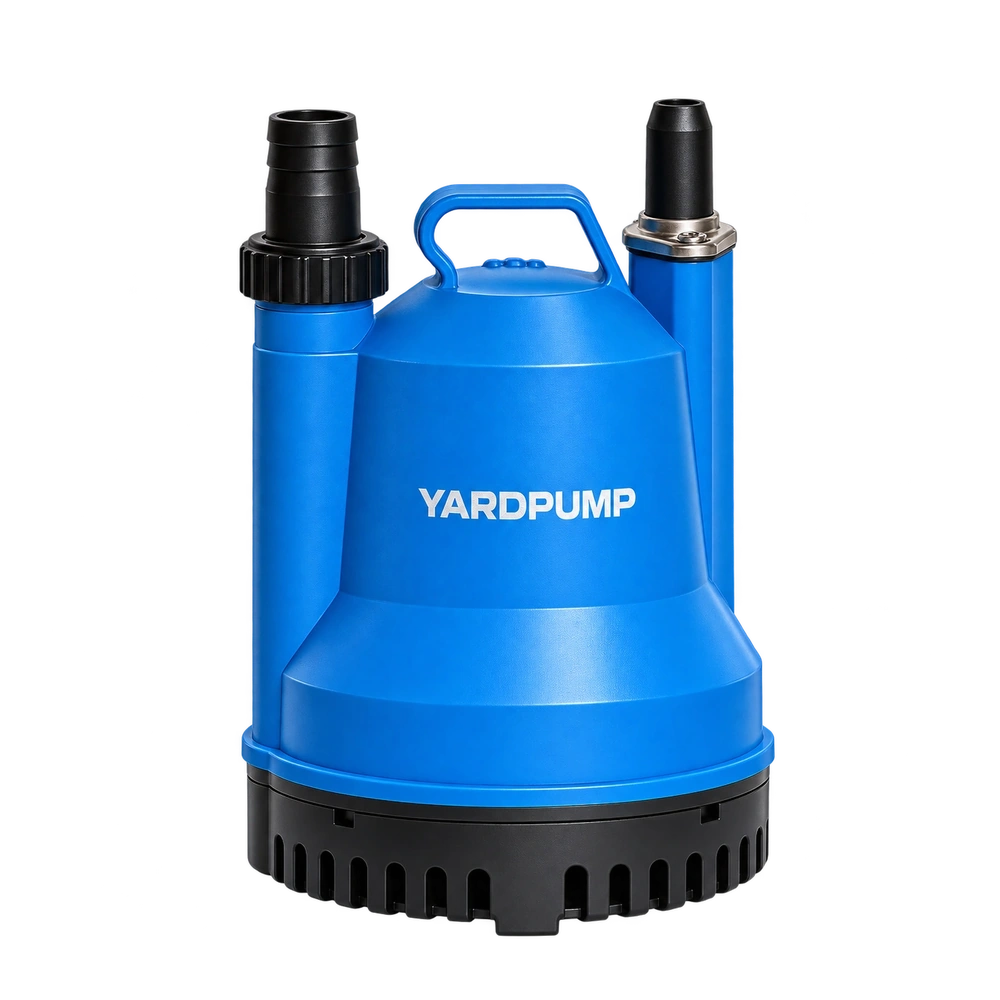
The buyer’s starting point
When a customer says “the submersible pump is broken,” the distributor’s first move is usually not to ask them to open it—or to declare a factory defect. Preserve a claim record that another person can actually review. Without evidence, service becomes guesswork between customer, retailer and supplier.
A return is an information chain, not a broken/not-broken label
The words “no water comes out” can describe very different situations: no usable power supply, a float switch that has not reached its start position, a blocked inlet, a kinked hose, excessive system head or a genuine equipment fault requiring qualified examination. If the service ticket says only “no flow,” purchasing cannot see whether complaints cluster by model, batch or application. The supplier has little basis for a useful response.
A return merchandise authorization (RMA) is not proof of a manufacturing defect. Warranty coverage depends on actual terms, applicable local law, product instructions and the outcome of appropriate assessment. Where electrical shock, overheating or water ingress is suspected, safety comes before responsibility allocation.
First triage: when use must stop immediately
Repeated GFCI/RCD trips, damaged plugs or cables, burning smells, abnormal overheating, signs of water entering electrical areas or any indication of shock demand immediate stop-use action. Power should be isolated safely by a qualified person where appropriate. Never ask an end user to bypass protection, run energized tests in a wet area or open the motor.
For less urgent complaints about low flow, float movement or missing accessories, stop unsafe operation first. Gather only information and photographs that can be obtained safely. Decisions about powered tests, disassembly or electrical measurements belong to competent personnel.
Eight fields for a useful pump warranty-claim checklist
| Evidence field | What to request | Why it matters |
|---|---|---|
| Product identity | Model, power version, nameplate photo | Confirms the exact configuration |
| Traceability | Visible batch/date code, channel, purchase date | Defines the affected population |
| Symptom | No start, low flow, cycling, noise, etc. | Creates a consistent complaint category |
| Liquid and duty | Water condition, debris, level, operating pattern | Checks the application boundary |
| Installation | Lift, hose diameter/length, discharge destination | Supports duty-point review |
| Control | Float clearance, start level, obstruction | Separates control from pump questions |
| Visual record | Safe photos of pump, connections, hose and plug | Shows visible damage or mismatch |
| Actions taken | Stop-use status, first occurrence, prior repair | Preserves safety and evidence |
Use three provisional outcomes, not an instant verdict
First: “insufficient evidence.” A nameplate, installation description or symptom record is missing. Second: “installation or use conditions need review.” A flattened hose, restricted float clearance or an unrealistic expectation based on maximum head may be relevant, but none automatically rules out a product fault. Third: “technical examination required.” Suspected electrical insulation, sealing or abnormal mechanical conditions need qualified investigation under safe procedures.
A retailer can give the customer a clear next step and response checkpoint without promising either “user error” or “factory compensation” before evidence exists. Professional service is often the ability to handle uncertainty transparently.
An illustrative low-flow case
Suppose a customer says the rated flow looks impressive but delivery on site is weak. Record the exact pump version, liquid, vertical lift, hose inside diameter and length, bends and connectors, and a safe installation video. Compare the conditions with the specific pump curve and operating point. Do not treat maximum published flow as a guarantee at every installation. This is a hypothetical example, not a real YARDPUMP case, and it is not an instruction for unqualified energized testing.
Let RMA evidence improve sourcing and product content
Do not leave complaint evidence inside individual support inboxes. Periodically classify confirmed records by model, batch, application, symptom, confidence in root cause and resolution. If buyers repeatedly expect a transfer pump to drive pressure-hungry sprinklers, review the product listing, packaging and sales training for clarity. If similar technical symptoms cluster within a batch, escalate through the agreed quality and contractual process.
Separate the number of complaints from the number of confirmed defects. Account for units sold and time in the field before comparing models. Without reliable denominators, avoid claims about industry return or failure rates.
A customer-facing message a distributor can reuse
“For safety, please stop using the unit if it is behaving abnormally. Do not open it or bypass protective devices. Please send a photo of the model label, purchase information, a description of the symptom, safe photos of the installation and discharge route, and details of the water and operating conditions. We will review the application and exact product version first; suspected electrical or sealing issues will be referred for qualified examination.”
What this means for YARDPUMP channel partners
Clean-water, clean-and-dirty-water and low-level pumps have different liquid and installation limits. Channel partners should use the confirmed documentation for the exact model and market. This article is a service-evidence workflow, not a warranty promise, failure-rate claim or final allocation of liability.
The service manager’s takeaway: one complete evidence card is usually more valuable than ten emails exchanging guesses.