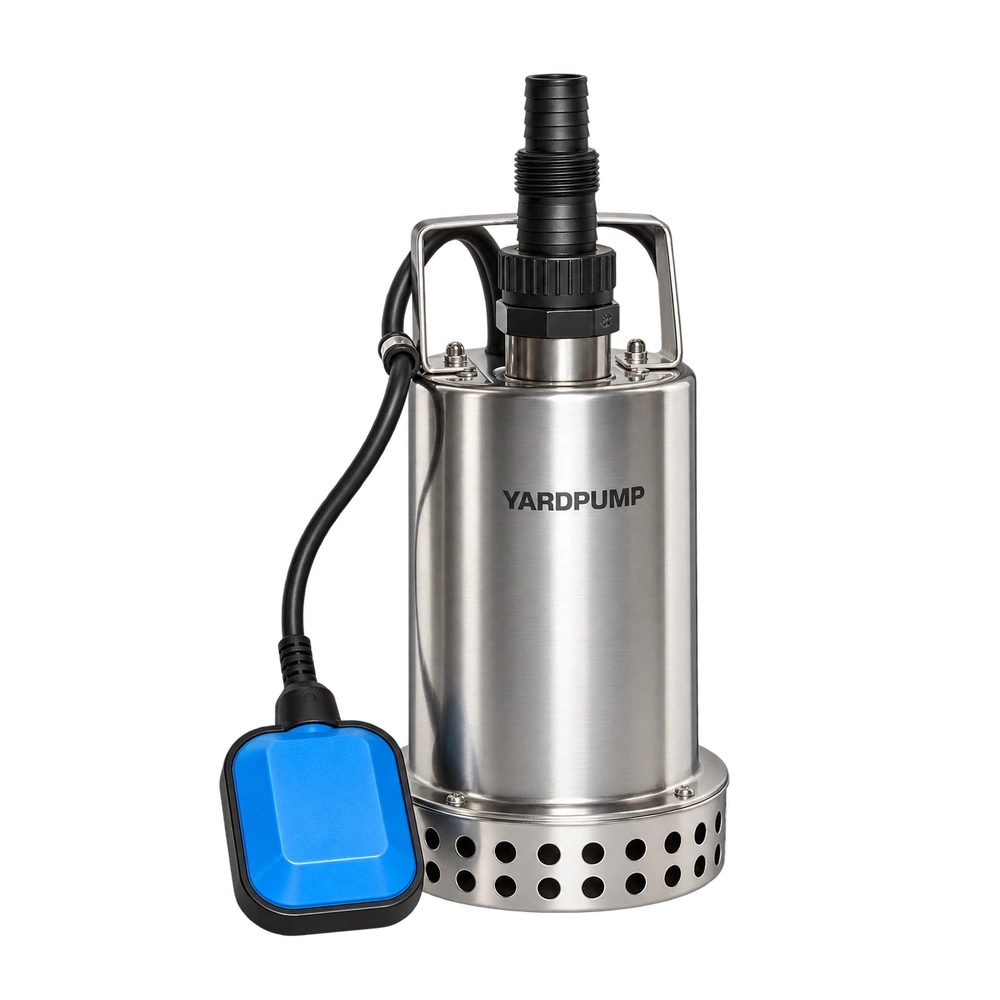
The direct answer
A manual submersible utility pump is not an automatic sump pump just because it fits inside a sump pit. Unless an approved level-control system is supplied and installed under the correct conditions, a manually switched pump does not know when to start or stop. Selling it as an unattended automatic drainage solution can create a serious application mismatch.
A manufacturer may offer an optional external float switch for some manual models. That is a configuration decision requiring compatibility checks; it does not make every manual pump an automatic model by default.
Three products that shoppers often confuse
| Product type | What starts and stops it? | What a dealer must say |
|---|---|---|
| Manual utility pump | Operator or approved external control | Requires attendance or a separately specified compatible control arrangement |
| Pump with tethered float | Float rises and falls through a usable swing path | Needs enough unobstructed room; verify on/off levels and installation |
| Pump with integrated sensor or vertical switch | Built-in level sensing or guided float | Verify sensing levels, contamination limits, cleaning and basin clearance |
Do not use ‘automatic’, ‘sensor’, ‘float included’ and ‘float compatible’ as interchangeable phrases. The last one may describe an accessory option rather than the shipped product.
A real channel scenario without a fabricated customer story
Imagine a reseller’s product page that says ‘ideal for basement and sump drainage’ next to a picture of a portable manual utility pump. The buyer assumes it can be left in a pit while away from home. If the supplied pump has no automatic switch, the product may run after water falls below its safe operating level, or fail to start when water rises. The product may be perfectly functional; the promise was wrong.
This is a hypothetical listing-review scenario, not a claimed YARDPUMP warranty case. The solution is to match the product description to the actual supplied control and the documented operating limits.
Five checks before approving the listing
1. Identify the shipped configuration. Is the level control included, optional or unavailable? If an external control is proposed, confirm its electrical rating, connection and installation instructions.
2. Measure the installation space. A tethered float needs a free arc; a narrow window well or pit wall may stop it moving. The pump body fitting in the pit does not prove the float can operate.
3. Keep three water levels separate. Minimum start depth, switch-on/switch-off level and residual water after pumping are not the same measurement. A low residual-water claim does not prove automatic starting at that depth.
4. Check the discharge and inflow. A hose, check valve, rising main or backflow can change cycling behavior. Compare the expected inflow and installed working-head flow; a maximum-flow headline is not a duty-point guarantee.
5. Keep electrical safety non-negotiable. Use the approved electrical version and required protective installation for the destination market. Disconnect power before any physical inspection. Never suggest bypassing a protective device to keep a pump running.
A clearer dealer description
For a manual product: ‘Portable submersible utility pump for attended water transfer and drainage. Automatic level control is not included. Verify minimum operating water level, liquid limits, discharge hose and electrical requirements before use.’
For an automatic version: state the exact control method, included parts, permitted pit dimensions and verified switching levels. If these data are not available, do not invent them.
Dealers can compare submersible utility pump categories, sump pump selection and the YARDPUMP product range before discussing an exact RFQ configuration.
FAQ
Can I add a generic float switch to any manual pump? No. Confirm compatibility, electrical ratings, switching range and safe installation with the product documentation and responsible supplier.
Does ‘drains to 7 mm’ mean it turns on automatically at 7 mm? No. Residual water and automatic switch-on depth are different claims.
Is a pump’s maximum GPH its output through my installed hose? No. Hose friction, lift and fittings affect the operating point.
Editorial boundary: This is general channel guidance. It does not certify a particular pump for unattended sump duty or override local electrical requirements.