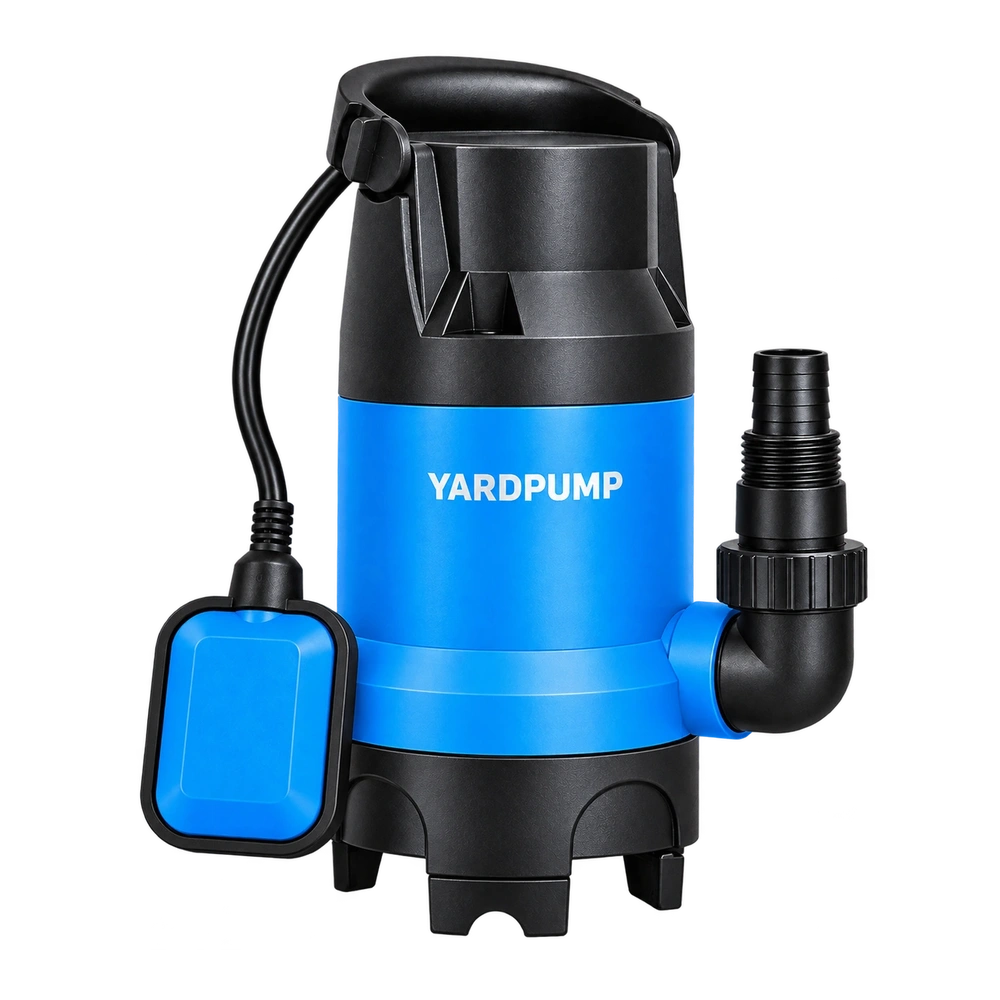
An OEM supplier presents a record of five hundred continuous operating hours without failure. The buyer asks whether this supports a five-year service-life promise. It does not support that conversion by itself. An endurance test establishes what its samples experienced under its stated conditions. A market-life claim additionally needs a relevant failure model, usage assumptions, representative samples and suitable statistical evidence.
Continuous running does not cover every damage mechanism
A clean-water endurance run can reveal particular heating, wear or sealing problems. It may say little about frequent starts, long storage, abrasive sediment, transport vibration or fluctuating low water levels.
If users start the pump many times each day, several weeks of uninterrupted laboratory operation can expose the starting system and control contacts to fewer cycles than field use. Hours and starts are different exposure measures.
Increasing every stress without limit is not automatically a better test. Excessive temperature, abnormal voltage or unrealistic sand concentration can create a failure mechanism absent from the intended application. Faster failure only predicts service life when the acceleration relationship is relevant and supported.
No observed failures is a sample result
Consider an illustrative programme of three pumps, each completing five hundred hours without a predefined failure. That is an observation about three samples under that programme. It is not proof that every production unit will operate for five years without failure.
Sample selection matters. Identify whether the units represent relevant mould cavities, component lots and production processes. Record repairs or replacements. A sample repaired halfway through may still provide engineering information, but it cannot be described as having completed an uninterrupted failure-free exposure.
Define failure before testing. “The motor still turns” can miss declining delivery, leakage, insulation change or repeated protective trips. Establish appropriate functional, performance and safety exit criteria, and retain trends during the run rather than only an end-of-test video.
Build the programme around the intended task
Describe daily operating hours, start frequency, liquid and temperature range, storage intervals, cleaning and acceptable performance change. Then assign major risks to suitable tests. Transport, electrical and material validation may address different risks from the endurance run.
During testing, retain effective running time, starts, liquid condition, temperature, flow, head, input power and maintenance events. Explain power interruptions, cleaning, instrument problems and unplanned dismantling. A believable record makes interventions visible instead of allowing the headline hour count to hide them.
The programme should also identify what it does not assess. A test aimed at bearing wear may not establish elastomer compatibility with a cleaning chemical. A warm-water ageing programme may not represent cold impact during distribution.
Distinguish life targets from warranty promises
A warranty is a commercial commitment with defined scope and conditions. It is not identical to the statistical life of every component. A design-life target is also different from a life claim already supported by field evidence.
Public wording should stay with the verified exposure and conditions unless broader evidence supports a broader statement. Do not multiply laboratory hours by an arbitrary factor to obtain years for the carton.
A distributor seeking a specific life claim should work with engineering on an evidence plan combining appropriate tests, production controls and comparable in-service observations. There is no universal sample count or hour threshold that guarantees pump life for all applications.
Read the conclusion, not just the hour total
The useful report explains the failure mechanisms targeted, the conditions maintained, the changes observed and the exposures still uncovered. That lets an OEM buyer decide whether additional testing is needed for the proposed market. A large hour count without those details is difficult to interpret and easy to overstate.
Before testing, photograph and identify the configuration, then separately record dismantling, oil addition, replacement and instrument interruptions. If declining performance is an exit criterion, distinguish sample degradation from test-rig drift using appropriate reference checks. A failure then remains useful engineering evidence instead of becoming only an unexplained hour total at which someone stopped the programme.
Questions about endurance evidence
Is a sample with more hours necessarily better?
Compare the same programme, configuration, sample basis and failure criteria. Hours alone do not establish superiority.
Can higher water temperature accelerate all ageing?
No. Different materials and failure mechanisms respond differently. An applicable acceleration model and validation are needed.
Does one failure make the model unusable?
Investigate cause and representativeness before deciding on correction and retesting. Neither conceal the failure nor generalise it beyond its conditions.