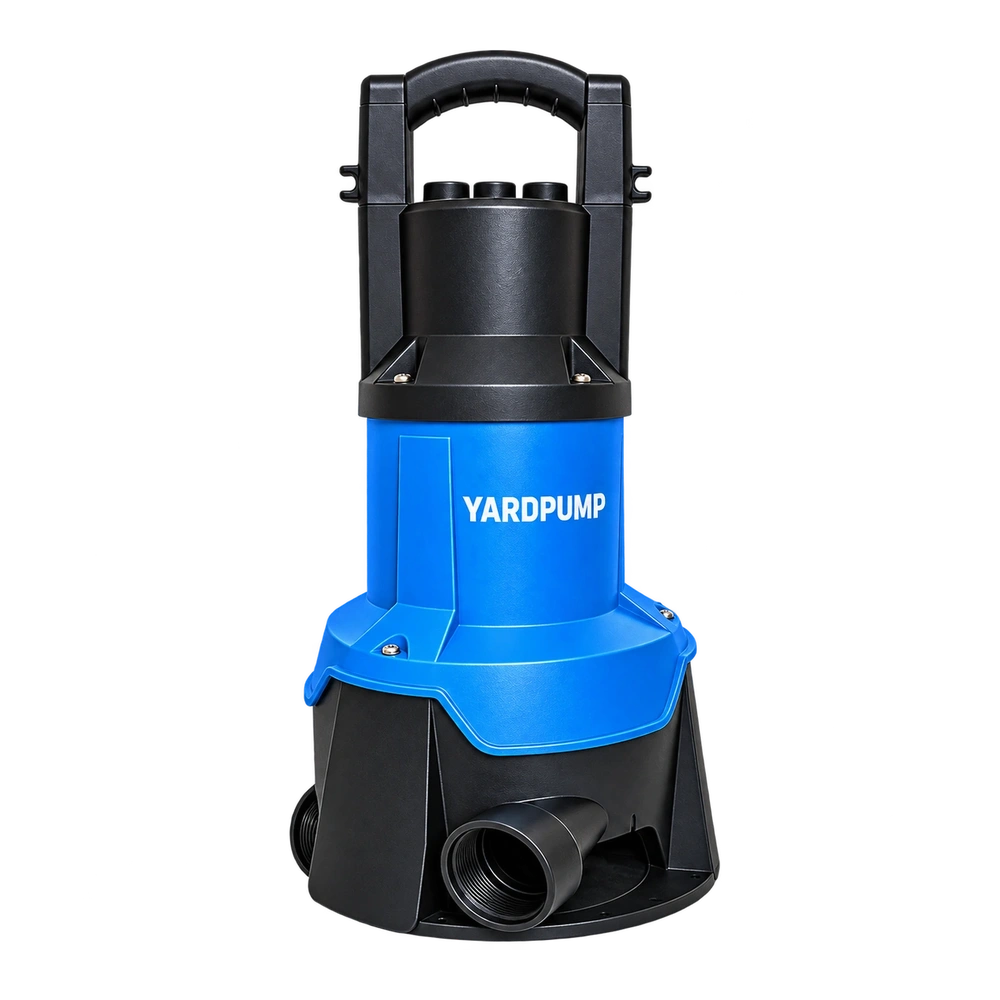
A distributor receives a revised base for a clean-and-dirty-water pump. Both versions can be fitted to the body. In the carton, however, the quick guide for the old base still tells the user to put the movable inlet in a position that now means something different. Before release, check the instructions against the exact wet-end construction and let a person unfamiliar with the change follow them. A tidy drawing that maps the wrong setting to the water type can cause trouble even when every part is present.
Write down what changed in the intake
A convertible inlet may use a removable piece, a sliding adjustment or a different way to expose the intake. Depending on the design, one setup can leave less residual water on a flat, clean surface while another gives the flow path clearance for the specified solids. A different base can alter the movement, the contact surface, the shape the user looks for and the way the part locks. It may leave the generic product name and exterior colour unchanged. No universal direction, colour or number identifies the safe mode.
Put the approved physical states side by side with the actual carton copy. For each state record the part revision, visible position or witness mark, allowed liquid and solids, model-specific water levels, and any movement of the float or sensor that must remain clear. Confirm how the transition is carried out with the pump disconnected. Also confirm which position the pump is packed in and whether any accessory is removed for shipping. A user should be able to match one illustration to the unit in front of them before making a choice.
Observe people following the printed instructions
Take sealed units from the parts and print revisions intended for sale. Ask someone who has not been briefed by engineering to set up clean-water pickup and then the approved dirty-water mode using only the delivered materials. Let them point to the setting they chose, the instruction that led there and the cue that tells them it has locked. Stop if a configuration is incorrect; do not ask them to operate an unapproved assembly. Watch what they miss. If they rely on a colour that looks identical in monochrome or confuse two views, modify the instruction before testing again.
Check the short card, manual, on-product icons, carton and digital guide together. A correct long manual does not prevent the box front from teaching the opposite action. Validate the Chinese and English separately on physical samples. A translation may retain both mode names but reverse which one goes beside a figure or omit the limit that matters. Give interpreters a photo of the actual position and approved parameter mapping, not just the old sentence.
An illustrative trial: the new base locks at two marks. Three unfamiliar people all select the upper mark for dirty water because the card arrow still points to the detent on the old piece. Record that as repeatable instruction failure, even if a technician can choose the correct mark by touch. The example shows how to classify the defect; it does not establish an audit sample size.
Check the corrected setup in water before closing the revision
A qualified team can verify a small number of approved wet conditions using the correct combinations, delivered flow, start and stop behaviour and the usable flow path. Separate the clean test from any authorized test of solids passage. Do not invent a dirty-water recipe or run the pump dry to show the advertised last millimetres. The intended purpose is to verify the physical mode that the instruction assigns, not to publish new performance claims.
Lock product, base, print version and packing implementation in the same change record. If cartons of unknown revision could already be mixed, hold that lot until the cue and contents can be matched. A corrected sheet on a web page does not prove old cartons have been fixed. Approve boxes as shipped and keep a real sample of the correct configuration for the service team.
Frequently asked questions
Can one leaflet cover both base revisions?
Yes, if it identifies both variants unambiguously and the correct steps and limits can be followed for each. Check both in hand.
Does matching residual water depth verify the dirty-water mode too?
No. Those are separate duties. Verify the required liquid, physical state and test of each mode.
Should the photograph show the pump before or after adjustment?
Show both if the change cannot be recognized from one view. Use a fixed reference feature so the reader can tell which way the part moved.