A service quotation lists “one rotor,” and the buyer expects a ready-to-fit assembly. The shipment arrives as a rotor and shaft without bearings or the other parts needed for the repair. Prevent this mismatch by specifying the delivered assembly level. A bare rotor, a rotor-shaft assembly and a complete service assembly can be different products even when the quotation uses the same short name.
Define what crosses the shipping boundary
Use the exploded drawing and bill of materials to list included and excluded items. Identify the shaft, bearing positions, retaining hardware and any seal-related parts relevant to that design. Do not assume that a component visible in a catalogue photograph is supplied. Mark the actual delivery condition in a drawing or a clearly annotated parts list.
Also define which operations remain with the repairer. Bearing mounting, end-position setting, balancing or sealing work may need controlled tools and competence. “Installation-ready” should not mean simply that several loose parts share one bag. The supplier and repairer must agree which assembly and verification steps have already been completed.
Matching size is not full compatibility
Check the exact pump model, electrical variant and revision. Rotor diameter, active length, shaft seats, threads and axial locations need the correct drawing references. A dimensionally similar rotating assembly may have different electrical or mechanical characteristics. A part that slides into the stator is not thereby an approved replacement.
For bearings and seals, retain the full specified identity and configuration. Include the required clearance, lubricant or paired sealing arrangement where applicable. Avoid adding familiar parts from another pump merely because their basic dimensions match. Unapproved combinations can shift axial position or change friction, cooling and operating performance.
Compare complete repair cost
Consider an illustrative quotation table with separate lines for a bare part, a controlled subassembly and a complete pump replacement. For each, show supplied parts, remaining labour, tools, verification and expected service interruption. These are comparison fields, not a claim that one option is always cheapest.
A low bare-part price can be appropriate for a capable service centre and unsuitable for a distributor without assembly equipment. Conversely, a more complete assembly may remove operations but still require model-specific installation and release checks. Include unusable removed parts and any required one-use hardware in the scope instead of discovering them after dismantling.
Make acceptance possible before the repair starts
At receiving, confirm identity, preservation, shipping support and the promised assembly condition. Check for damaged bearing seats, exposed precision surfaces or loose hardware. Do not spin an unprotected assembly with compressed air or run a motor without its required housing and cooling arrangement. Electrical and internal pump work belongs to qualified personnel with the approved procedure.
Keep the supplied assembly record connected to the repaired pump and the subsequent release results. If the delivered scope differs, stop and resolve the purchase discrepancy before improvising the missing steps. A service centre should be able to state what it received, what it added and which final functions it verified.
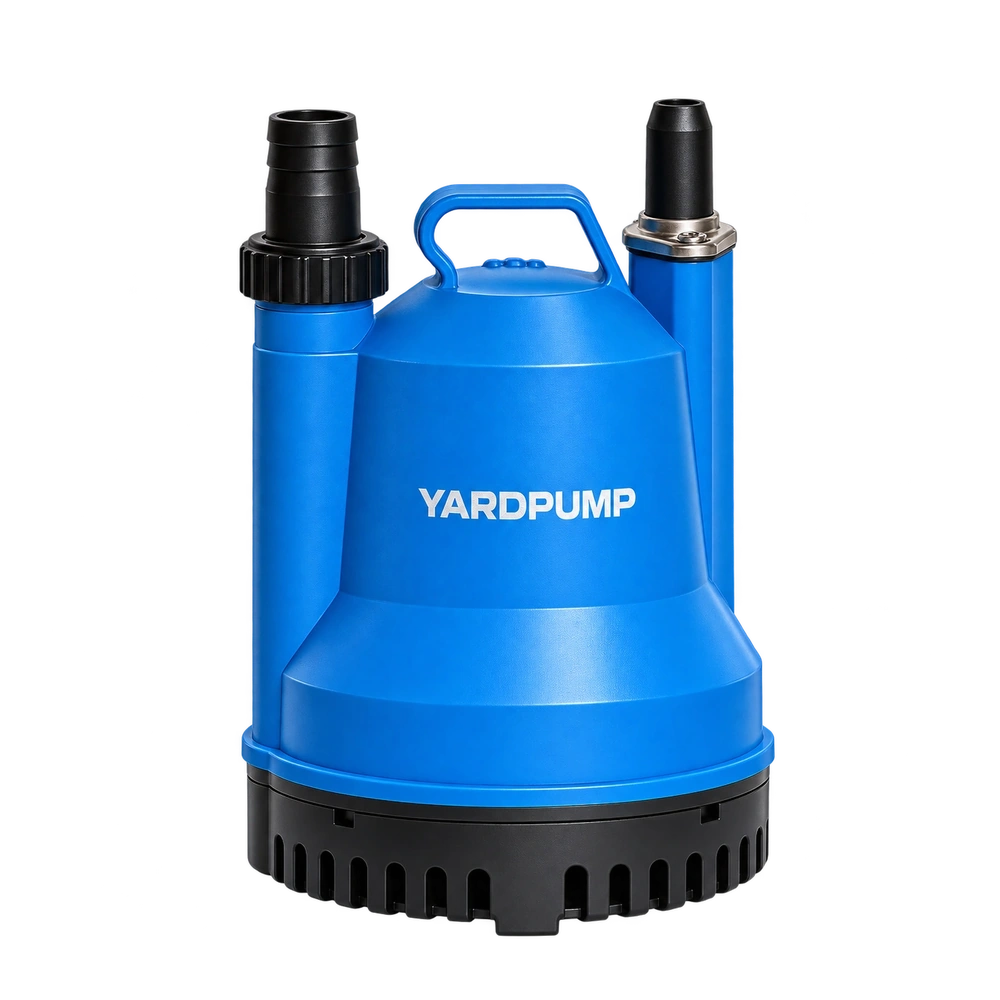
For YARDPUMP compact pump spare enquiries, use current approved parts information and serial or revision applicability. Do not assume every family offers a field-replaceable rotor assembly. Where a supported repair assembly or competent process is unavailable, a complete replacement may be the appropriate commercial and technical choice. The useful RFQ is precise about the repair boundary, not merely the noun “rotor.”
Specify preservation and support during transport, especially where bearing seats or balanced surfaces remain exposed. A correctly built subassembly can arrive damaged if its shaft is used as a packing support or loose hardware strikes a precision feature. Receiving acceptance should distinguish transport condition from supplied scope, with photographs before unpacking restraints are removed. That avoids converting a packaging defect into an unexplained installation problem later.
| Quoted scope | Clarify before ordering |
|---|---|
| Bare rotor or shaft component | Remaining assembly and fit work |
| Controlled rotating subassembly | Included bearings, hardware and completed checks |
| Complete pump replacement | Correct electrical version, accessories and installation |
Frequently asked questions
Does a rotor quotation normally include bearings?
There is no universal rule. State the included bearing parts and assembly operations explicitly.
Can matching shaft dimensions establish equivalence?
No. Electrical design, axial geometry, interfaces and approved revision also matter.
Is a complete assembly ready for immediate customer use?
Not automatically. The repaired pump still needs the required installation and release verification.