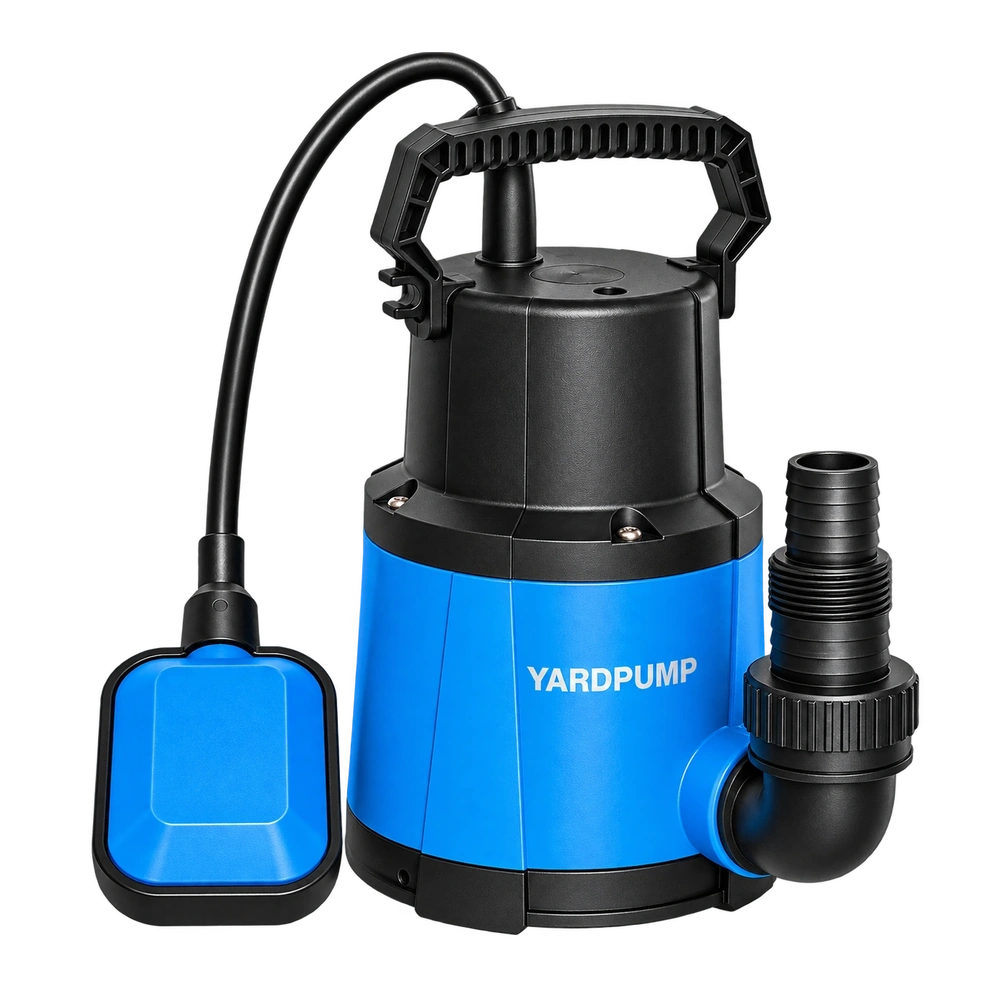
Use this hypothetical catalogue interpretation as an example. A run capacitor catalogue lists 10,000 hours, and a buyer wants the pump carton to promise the same service life. Does the component number justify that claim? No. The figure belongs to a specified capacitor and its defined rating or test basis. A complete pump has other components and failure mechanisms, and its installed capacitor may experience different electrical and thermal conditions. Use the figure to assess the part, not to invent a whole-pump guarantee.
Keep the hours attached to their conditions
Obtain the exact capacitor datasheet, applicable life classification and the conditions behind the stated hours. Voltage, temperature, frequency and other limits matter. Some products provide different life statements for different voltage conditions. A headline number detached from those conditions is not a fair comparison between suppliers.
Also distinguish a life-related classification from safety construction and approval. Two different fields on the datasheet can answer different questions. A protective disconnector does not make its component immortal, and a longer stated life does not automatically preserve the required protective construction. Confirm the actual part version and its approval scope rather than borrowing values from a similar-looking can.
Measure the capacitor's environment inside the pump
Line voltage alone does not establish capacitor-terminal voltage in a single-phase motor. Nor does surrounding water temperature establish the capacitor's actual thermal exposure inside the enclosure. Mounting, adjacent parts, electrical losses and duty can all affect its conditions. The appropriate measurement locations and safety arrangements need to come from the approved test method.
For an illustrative sourcing comparison, capacitor A offers a longer stated life under one voltage condition, while capacitor B's quoted life uses another voltage or temperature basis. Ranking only the hour figures is inconclusive. First compare the candidates at conditions relevant to the approved motor circuit. These are hypothetical alternatives, not measured performance or an endorsement of a supplier.
| Purchasing question | Evidence needed |
|---|---|
| What do the stated hours represent? | Defined classification, method and conditions |
| Does that basis fit the installation? | Actual capacitor voltage and thermal exposure |
| Is the part suitable beyond life rating? | Capacitance, tolerance, current, mounting and protection |
| Can the pump carry a durability claim? | Appropriate complete-product evidence |
| What is the warranty? | Explicit commercial terms, separate from component classification |
Do not turn operating hours into calendar promises
Dividing 10,000 hours by two hours per day produces 5,000 days mathematically. It does not establish service for that calendar period. Storage, moisture, starts, temperature cycling and other mechanisms are not represented by that division. A pump may fail elsewhere before the capacitor, or its capacitor may face conditions not covered by the quoted basis.
Do not invent a universal acceleration rule, such as every fixed reduction in temperature doubling life, unless the actual component model and validation support it. Applying a familiar rule from another capacitor technology can create a confident but unsupported forecast. A statistical or classified life statement is also not a promise that every individual part reaches the same hour count.
Use component evidence within a system plan
For an OEM change, compare the full capacitor specification and its installed validation, then retain the result with the existing BOM approval. If a longer-life component is selected, state exactly what evidence improved. Whole-pump endurance testing should still represent the relevant duty, liquid, starts, controls and other limiting parts.
For importers and distributors, public wording should stay with supported product statements. Warranty length is a commercial commitment whose scope must be stated; it should not be reverse-engineered from a component's catalogue hours. The useful purchasing decision is which capacitor meets the exact motor requirements with appropriate evidence. The useful marketing decision is what the complete pump evidence actually supports. Those decisions can inform each other without becoming the same claim.
Frequently asked questions
Does 10,000 hours mean the capacitor fails at that instant?
No. Interpret the defined rating and test basis. It is not a countdown applicable identically to every individual component.
Can a longer-life capacitor improve reliability?
It can support a design improvement when correctly specified and validated. It does not establish the life of bearings, seals, controls or the complete pump.
Is a life-class letter the same as a safety class?
Do not assume so. Check the separate definitions and fields in the actual component documentation.